support@biotechpeptides.ca
-
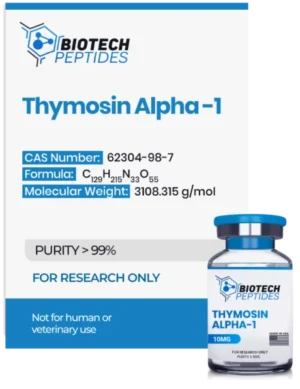
Thymosin Alpha-1 (10mg)
Thymosin Alpha-1, also known as TA1 or Tα1, is a naturally occurring peptide fragment that was discovered in 1972 and researched for its potential action within the context of studies relating to cystic fibrosis, infection (e.g., tuberculosis, cytomegalovirus), respiratory disorders, chronic hepatitis, and cancer. It is also referred to as Thymalfasin when synthetically developed. Originally, research on Thymosin Alpha-1 centered around its potential role in immune modulation. It is hypothesized that it might increase levels of Major Histocompatibility Complex (MHC) class I molecules and boost cytokine production, key components of the immune system that may enhance immune responses.[1][2] There is also a possibility that it might improve the activity of natural killer cells, which target virus-infected cells and tumors. Furthermore, it might enhance the expression of specific markers on T cells that are considered critical for their identification and function in the immune system, indicating a significant role in immune regulation. Thymosin Alpha-1 is also thought to possibly increase the presence of high-affinity interleukin-2 receptors on cell surfaces, potentially leading to the vigorous activation and proliferation of T lymphocytes, elements of immune response. There is speculation that it may affect both T-helper and cytotoxic T-cell populations, deemed essential for eliminating infected cells. Additionally, it might prompt the differentiation of thymocytes—precursor cells in the thymus—and peripheral blood lymphocytes into mature immune cells, increase natural killer cell numbers, and promote cytokine-driven inflammatory responses. Research also explores its potential role in enhancing macrophage efficiency—cells that engulf and digest pathogens—and in regulating the activity of alpha thrombin, a protein involved in blood clotting, highlighting its broad potential on immune function.
$130.00 -
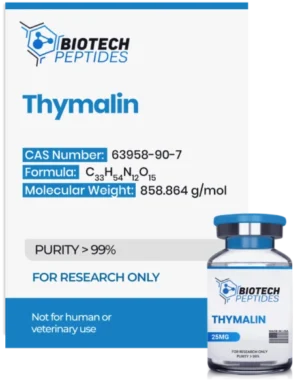
Thymalin (25mg)
Thymalin, sometimes referred to as Thymalin Alpha-1, is the synthetic variant of the endogenous Thymulin, which was first isolated from the thymus in 1977. The endogenously produced Thymalin has been researched for its potential in a wide landscape of research areas, with its influence speculated to extend to regulatory action on inflammation, mitigation of pain perception, neuroprotective action, and immune function support. Early studies have suggested that Thymalin and other thymus and pineal gland secretions may also support cell longevity.
$114.00 -
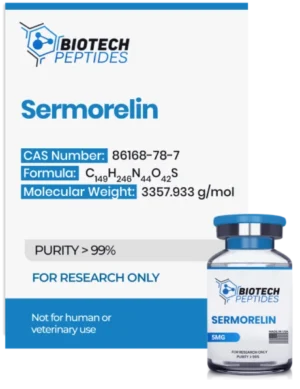
Sermorelin (5mg)
Sermorelin is among the growth hormone-releasing hormone (GHRH) analogs. It is classified as a GHRH as researchers have suggested that the peptide acts to induce the endogenous production and release of growth hormone (hGH). Growth hormone has been associated with numerous physiological activities, making Sermorelin and other GHRH analogs, potentially relevant in growth hormone-related research. Examples of studies employing GHRH analogs include research in the context of tissue scarring following cardiac dysfunction, as well as those examining bone density, renal function, dementia and seizure activity.
$43.00 -
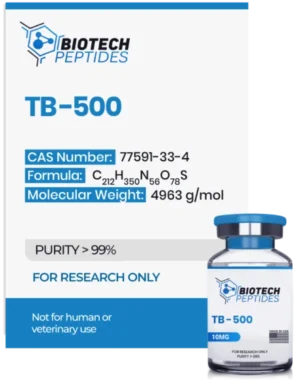
TB-500 (Thymosin Beta-4) (10mg)
TB-500, or synthetic Thymosin Beta-4, also known as synthetic Tβ4, is a synthetic analog of the endogenous Thymosin Beta-4 protein, which is considered to be ubiquitously present in cells. The peptide belongs to a widespread family of 16 related molecules observed to exhibit a high degree of sequence conservation and localization in most tissues and circulating cells. TB-500 was developed to sequester and block actin polymerization in eukaryotic cells.
$119.00 -
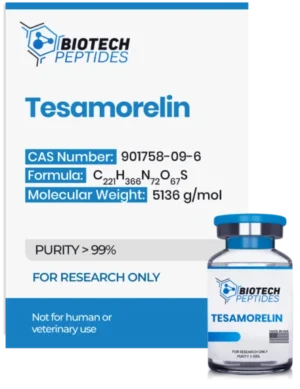
Tesamorelin (5mg & 10mg)
Tesamorelin is a chemically altered growth hormone-releasing hormone (GHRH) analog, that similar to the original is made of 44 amino acids. This peptide is a trans-3-hexanoic acid version of natural GHRH. The trans-3-hexanoic acid group is added to the N-terminus, while the C-terminus is amidated and acetylated. Tesamorelin appears to mediate the positive influence of GHRH and other GHRH analogs such as GRF (1-29), CJC-1295, and Sermorelin. The trans-3-hexanoic acid modification may increase its stability and half-life. Both Tesamorelin and CJC-1295 appear to maintain the physiological activity of GHRH, without disrupting the physiological rhythm of GH release.
Price range: $38.00 through $73.00Tesamorelin (5mg & 10mg)
Price range: $38.00 through $73.00 Select options This product has multiple variants. The options may be chosen on the product page -
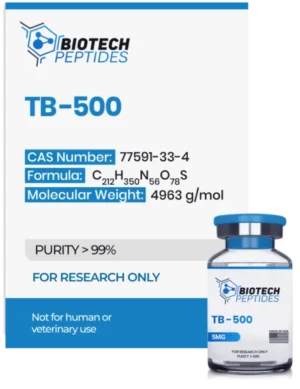
TB-500 (Thymosin Beta-4) (5mg)
TB-500, or Thymosin Beta-4, is a synthetic analog of the endogenous Thymosin beta 4 protein, which is considered ubiquitously present in cells. The peptide belongs to a widespread family of 16 related molecules considered to exhibit a high degree of sequence conservation and localization in the majority of tissues and circulating cells.
Thymosin Beta-4 is speculated to encompass a unique peptide sequence, LKKTETQ, found between the 16th and 24th amino acids. This sequence is thought to assist in actin binding potentially. Actins are proteins believed to be vital to the cell’s cytoskeleton. They appear to maintain the cell’s structural framework and are considered by experts to be crucial for primary cellular activities, such as movement.
It is hypothesized that Thymosin Beta-4 associates with actin by attaching to globular actin (G-actin), the monomeric form of actin, before it forms filamentous actin (F-actin). This suggested interaction between Thymosin Beta-4 and G-actin might impede the polymerization process, a mechanism known as actin sequestration. This interference might potentially increase the concentration of G-actin.
The assumed inhibition of F-actin polymerization by Thymosin Beta-4 might result in alterations to the cellular cytoskeleton’s structure. These changes may impact the cell’s ability to move and undergo shape transformations.[1] TB-500 was developed with the intention of sequestering and blocking actin polymerization in eukaryotic cells and influencing cell motility and transformation in experimental settings.
$70.00 -
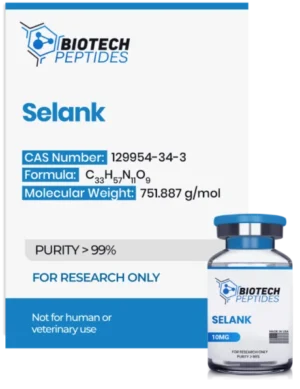
Selank (10mg)
Selank is a small peptide studied for its potential nootropic and behavior-modifying functions in experimental models. It is a synthetic analog of naturally occurring Tuftsin. This immunomodulatory peptide is a short fragment from the immunoglobulin G (IgG), a natural tetrapeptide involved in certain functions that may regulate the immune system. Selank is also posited to possess additional potential for regulating immune cells, IL-6, a wide range of neurotransmitter systems, and brain-derived neurotrophic factor (BDNF).
Selank differs in structure from the endogenous Tuftsin by an additional three amino acids in its chain, which have been supposed to enhance the metabolic stability and half-life of the synthetic peptide. Specifically, that is the Pro-Gly-Pro segment at the C-terminus of Selank, which might enhance its ability to move through various models, including the blood-brain barrier (BBB). The BBB is a highly selective and semi-permeable barrier that separates circulating blood from the tissues and extracellular fluid of the central nervous system, playing a vital role in regulating substance passage.
The inclusion of Pro-Gly-Pro may possibly increase BBB permeability by affecting the peptide’s hydrophilicity or lipophilicity, which may enhance its affinity for the BBB’s lipid-rich environment. Furthermore, the Pro-Gly-Pro sequence might interact with specific transport mechanisms or receptors at the BBB, possibly initiating facilitated transport or receptor-mediated endocytosis. These processes may enable Selank to circumvent the tight junctions that are said to typically restrict larger molecules.
$46.00 -
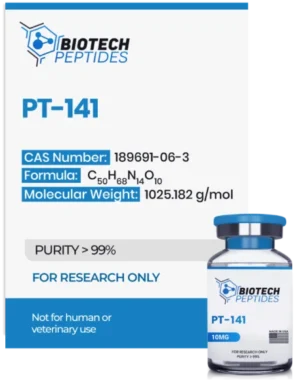
PT-141 (Bremelanotide) (10mg)
PT-141, also known as Bremelanotide, was derived from a synthetic melanocortin analog known as Melanotan 2 (MT-2). A melanocortin analog, such as PT-141 and MT-2, is considered to be any synthetic compound designed to mimic or influence the functions of natural melanocortin peptides. These peptides, such as the alpha-melanocyte stimulating hormone (α-MSH), may be involved in a range of physiological processes including appetite regulation, energy homeostasis, immune responses, and skin cell pigmentation. PT-141 is a melanocortin analog that was developed to interact with Melanocortin-4 Receptor (MC-4R). It has been studied for a variety of potential characteristics and bioactivities through its interaction with this receptor. Apart from MC-4R, there are other melanocortin receptors like MC-1R, MC-2R, MC-3R, and MC-5R, each associated with different potential functions. For instance, MC-1R may be primarily involved in skin cell and hair follicle pigmentation, MC-2R appears to play a crucial role in the adrenal axis and stress response, MC-3R is implicated in the regulation of energy homeostasis, and MC-5R has been linked to exocrine function and thus impacts processes such as sweating and sebum production.
$45.00 -
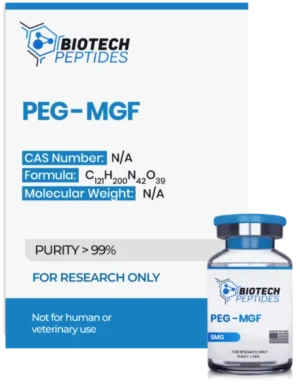
PEG-MGF (Pegylated MGF) (5mg)
Pegylated Mechano-growth factor (PEG-MGF) is a peptide that originates from the IGF-I (main anabolic mediator of growth hormone) gene sequence, which undergoes a process called alternative splicing.[1] This process allows for the synthesis of additional segments, which form new functional molecules. During stress or injury, it has been suggested that muscles produce an alternative peptide called IGF-IEc, which contains extra “exons” or domains. This is thought to result in an additional segment at the C-terminus of IGF-I, known as the Ec-peptide, which comprises 40 amino acids.[2]
MGF, or mechano-growth factor, is a synthetic peptide that represents the last 24 amino acids from the naturally occurring IGF-IEc molecule (the Ec-peptide). This 24 amino acid fragment is also called the E-domain or MGF-E and is thought to mediate the beneficial actions of IGF-IEc on muscle recovery and cell proliferation.[5]. It appears to stimulate myoblast (muscle cell) proliferation and differentiation. It has further been researched for its potential to increase endurance, stimulate the function of the immune system, and possible applications that may decrease cholesterol. PEG-MGF may also hasten wound healing via immune function regulation. The up-regulation of IGF-IEc, sometimes referred to as full-length MGF, during periods of stress or injury has been correlated by researchers with the proliferation of satellite cells and muscle cells. This suggests a potential role in muscle tissue repair and regeneration.[3][4]
The attachment of a polyethylene glycol moiety to another chemical compound is termed “Pegylation.” Pegylation appears to increase the plasma stability of a compound like MGF by decreasing its clearance and potentially masking its immunogenicity. Pegylation may be considered a common and typically advantageous modification. MGF appears to have a shorter half-life than other peptides. With this in mind, the pegylation of the peptide may overcome any rapid clearance.
$79.00 -
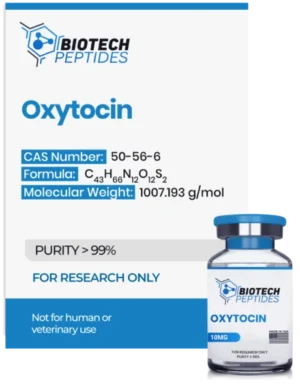
Oxytocin (10mg)
Oxytocin is a small peptide comprising only nine amino acids, naturally produced in the hypothalamus and secreted by the posterior pituitary gland cells. It has also been isolated from placenta, ovaries, testes, adrenal glands, thymus, retina, and pancreas tissues. The active hormone is obtained by proteolytic cleavage of a larger precursor protein. It is no longer considered merely a neurohypophyseal hormone as its actions are considered to be far-reaching and include interaction with additional peptides. Oxytocin appears to be a protein with two independent natural functions. First, it appears to act as a neuropeptide produced by the hypothalamus to regulate bonding, reproduction, and birth. Oxytocin appears to be bloodborne and secreted by the placenta of pregnant animals to influence birth, milk production, and bonding with their young. Small amounts of the protein produced from testes may promote mating behavior and pair bonding.
$45.00 -
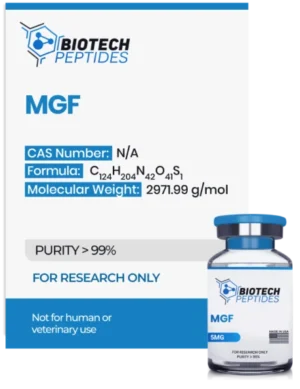
MGF (Mechano-Growth Factor) (5mg)
Mechano-Growth Factor (MGF) is an alternative name for the Insulin-like Growth Factor-1Eb (IGF-1Eb), an isoform of IGF-1. It has been studied for its potential in remodeling muscles, cellular survival, and cellular proliferation.[1] New studies on this specific isoform highlight its potential for activating satellite cells in skeletal muscle, suggesting that this particular isoform may also activate satellite cells in skeletal muscle, protect neurons, and help overcome muscle mass loss.[2] The principal function of MGF is its possible efficacy in reparating severe muscle wear and tear. Further, its concentration appears to correspond with skeletal muscle growth and differentiation found in rodent models.
$59.00 -
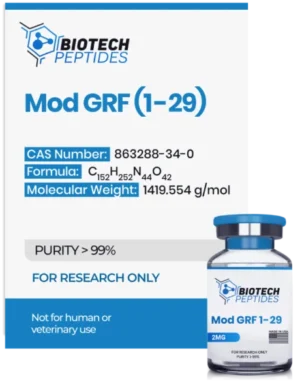
Mod GRF 1-29 (CJC-1295 NO DAC) (2mg)
Modified GRF (1-29), or Mod GRF (1-29), is a synthetic peptide analog of growth hormone-releasing hormone (GHRH). It was first developed in the 1980s when studies indicated that the first 29 amino acids of GHRH may possess all of the biological roles associated with the full-length 44 residue protein.[1] The initially designed peptide, known as GRF (1-29), is the shortest segment of GHRH, and appears to possess all the properties of the full-length hormone. A truncated synthetic form of GHRH known as Sermorelin, or GRF 1-29, also has 29 amino acids. Modified GRF (1-29) undergoes alteration to include four substituted amino groups in its chain.[2] The intention behind these amino modifications is to protect the peptide from both oxidation and degradation during manufacture. The modification also appears to increase the binding affinity to GHRH receptors. Modified GRF (1-29) is also known as Mod GRF, or Tetra-substituted GRF (1-29). The latter name clarifies that the modified peptide differs from GRF (1-29) as a result of changes in four of its amino acids. Modified GRF (1-29) is structurally identical to CJC-1295 without DAC.
$22.00 -
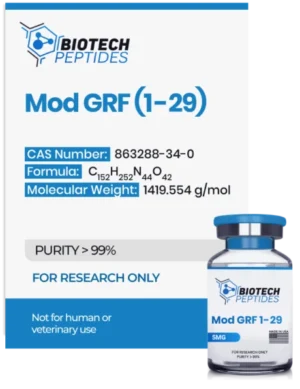
Mod GRF 1-29 (CJC-1295 NO DAC) (5mg)
Modified GRF (1-29), or Mod GRF (1-29), is a synthetic peptide that is a modified fragment of the endogenously occurring growth hormone-releasing hormone (GHRH). It was first developed in the 1980s when studies indicated that the first 29 amino acids of GHRH may possess all of the biological potential associated with the full-length 44 GHRH molecule.[1]
This discovery led to the development of a truncated version called GRF (1-29), also referred to as Sermorelin by researchers. Mod GRF (1-29) introduces specific modifications to support the peptide’s stability and efficacy. Four amino acids in the sequence are substituted at positions 2, 8, 15, and 27.[2] Here is what some researchers believe about these modifications:
– Position 2: The amino acid alanine is replaced with its mirror image, D-alanine. This substitution aims to increase resistance to enzymatic degradation, thereby improving the peptide’s stability.
– Position 8: Asparagine is substituted with lysine, an amino acid with a positively charged side chain. This change may support the peptide’s binding affinity to GHRH receptors, potentially increasing its biological activity.
– Position 15: Histidine is replaced with D-phenylalanine, another D-amino acid. This modification is intended to protect the peptide from further enzymatic breakdown.
– Position 27: Cysteine is substituted with N-methylglycine, also referred to as sarcosine. This alteration may extend the peptide’s half-life by mitigating enzymatic cleavage.These modifications collectively aim to produce a peptide with increased stability, a longer half-life, and better-supported interaction with GHRH receptors compared to the original GRF (1-29). Modified GRF (1-29) is structurally identical to CJC-1295 without DAC. The DAC in CJC-1295 serves to modify its pharmacokinetic properties.
$46.00 -
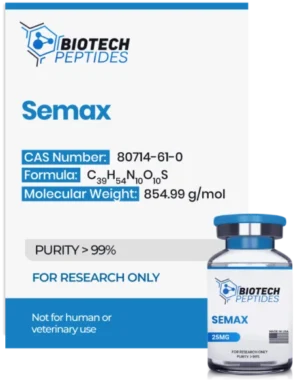
Semax (25mg)
Semax is a synthetic analog of adrenocorticotropic hormone (ACTH) comprising the amino acids 4 through 10 of ACTH. Semax has primarily been implicated in research on cognitive impairment and stroke. The peptide has also been studied closely within the context of dementia and certain inflammations of the optic nerve. Researchers posit that the peptide may exert neurotrophic action, suggesting that the peptide may act to increase the production of brain-derived neurotrophic factor (BDNF) in the central nervous system, with potential consequences in serotonin and dopamine release. Some researchers also suggest that Semax may interact with serotonin and enkephalin levels in the central nervous system.
$53.00 -
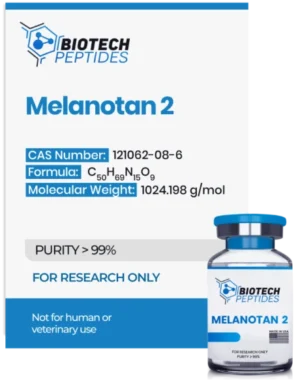
Melanotan 2 (2mg & 10mg)
Melanotan 2 (MT-2) is a synthetic analog of the alpha-melanocyte-stimulating hormone (alpha-MSH). A study conducted at the University of Arizona observed the involvement of alpha-MSH in skin pigmentation in rodents.[1] This finding then led to the development of MT-2 in the 1980s by a team of researchers at the university. It has been examined frequently in laboratory settings to determine its potential in melanin production and various ancillary impacts on the brain.
Price range: $16.00 through $47.00Melanotan 2 (2mg & 10mg)
Price range: $16.00 through $47.00 Select options This product has multiple variants. The options may be chosen on the product page