support@biotechpeptides.ca
-
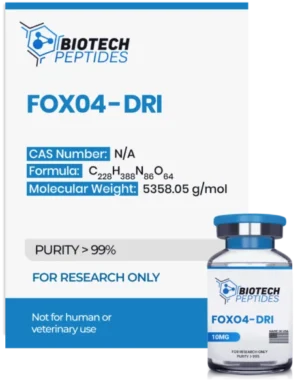
FOXO4-DRI (Proxofim) (10mg)
FOXO4-DRI is a synthetic version of FOXO4, containing D amino acids instead of L amino acids. This modification is intended to allow the peptide to retain the functionality of the original protein but with a longer shelf life and lower clearance. Its most prominent function has been suggested to regulate apoptosis in senescent cells.[1] It has been suggested in scientific studies that senescent cells might exhibit resistance to apoptosis, aka programmed cell death. This resistance has been associated with increased binding of FOXO4 with another protein, p53, which should trigger apoptosis but become inactivated.
$270.00 -
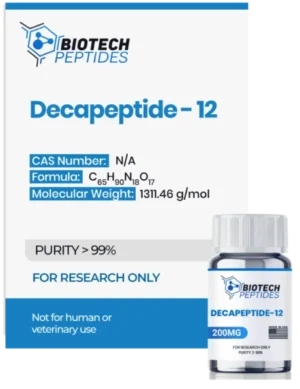
Decapeptide-12 (200mg)
Decapeptide-12 is an oligopeptide with proposed anti-tyrosinase activity, composed of twelve amino acids and exhibiting the sequence Try-Arg-Ser-Aar-Lysd-Tyr-Ser-Ser-Trp-Tyr. It is thought to function primarily to restrain Tyrosinase—the enzyme researchers believe is responsible for the excessive production of melanin, which may result in patchy pigmentation upon the epidermal layer’s surface.
$226.00 -
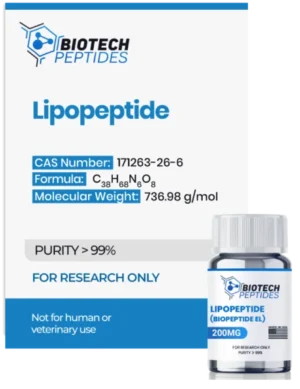
Lipopeptide (Biopeptide EL) (200mg)
Lipopeptide is a common name for Biopeptide EL, also known as palmitoyl hexapeptide-12. As the name suggests, this peptide is made of six amino acids and has a palmitic fatty acid addition. The inclusion of palmitic acid within the Lipopeptide structure is thought to enhance penetration to the deeper layers of various structures made of skin cells. The amino acids in the peptide are valine-glycine-valine-alanine-proline-glycine (VGVAPG), and the sequence is one of the most common found in naturally occurring proteins like elastin and its precursor, tropoelastin.
By mimicking fragments of elastin, the peptide is thought to interact with fibroblast cells and exert a potential impact on the production of vital proteins to the skin’s extracellular matrix (ECM). Fibroblasts are a subset of cells found in connective tissue, such as the one that provides support for skin cells. Fibroblasts can actively produce ECM proteins, and some of the most important proteins are considered to be collagen, elastin, and hyaluronic acid. According to scientific research, Lipopeptide may potentially enhance the creation and growth of collagen and hyaluronic acid within the ECM.
$220.00 -
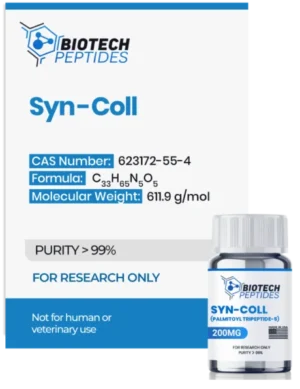
Syn-Coll (Palmitoyl Tripeptide-5) (200mg)
Syn-Coll, otherwise known as Palmitoyl Tripeptide-5 or Tripeptide-5, is a synthetic peptide that was developed to enhance the production of type I collagen. It appears to repair damages caused by photo-aging, and Syn-Coll has also been suggested to support the regeneration of skin protein production, such as elastin or collagen. Syn-Coll (Palmitoyl Tripeptide-5) is the synthetic equivalent of Thrombospondin 1 (TSP-1). TSP-1 is an extracellular matrix protein and is found in the skin near collagen and elastin. Syn-Coll appears to mimic the functions of TSP-1, possibly aiding in the prevention of collagen degeneration via stimulating the release of TGF- induced by TSP-1.[1] TGF-β is an essential growth factor potentially significant in preserving skin integrity and facilitating the development of skin structures, mainly through the promotion of collagen synthesis. Additionally, Syn-Coll, a synthetic peptide, has been the subject of extensive research in animal models and laboratory experiments. The findings tentatively indicate that Syn-Coll might enhance collagen production and potentially inhibit its degradation. The inhibition of collagen breakdown by Syn-Coll is possibly due to its ability to suppress the activity of matrix metalloproteinases (MMPs), including MMP1 and MMP3, which are enzymes studied for their role in the degradation of collagen in the skin. The peptide is palmitoylated, to potentially extend its bioavailability in experiments involving different skin tissue models.
$217.00 -
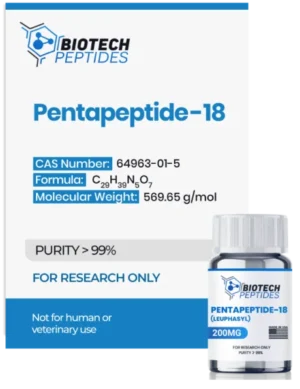
Pentapeptide-18 (Leuphasyl) (200mg)
Pentapeptide-18 (Leuphasyl) is a modified analog of the naturally occurring pentapeptide leu-enkephalin, which is part of a class of peptides called enkephalins which are believed to directly interact with opioid receptors.[1] Structurally, Pentapeptide-18 differs from leu-enkephalin by the addition of D-Alanine in place of glycine at its second position. Pentapeptide-18 is thought to penetrate the epidermal barrier and influence cellular processes that affect muscle cell contraction. Studies suggest that it acts by modulating calcium release in neuronal synapses. By interfering with the signals that trigger muscle contraction, Pentapeptide-18 may help to relax muscles, reducing the formation of fine lines and wrinkles across the skin barrier. Additionally, modified versions of Pentapeptide-18 may interact with melanin production pathways, which is a pigment responsible for adding color to tissues and may play a protective role against UV radiation. By potentially influencing melanin synthesis, modified versions of Pentapeptide-18 may offer research value in skin tissue studies.
$215.00 -
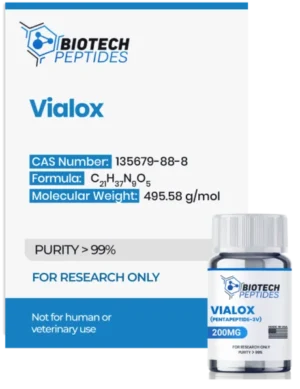
Vialox (Pentapeptide-3V) (200mg)
Vialox, also known as Pentapeptide-3V, is a peptide with a five amino acid sequence (Gly-Pro-Arg-Pro-Ala). It was originally isolated from endogenously produced snake venom. The peptide appears to replicate temporary muscular paralysis. This result has been observed by researchers in paralytic compounds such as botulinum toxin, which are believed to reduce wrinkle depth. Vialox appears to inhibit nicotinic acetylcholine receptors. This potential may enable curare-like actions at the neuromuscular junction, which might block nervous system electrical impulses from reaching muscles. A block like this may ultimately halt muscle contraction.
This mechanism appears to be analogous to the function of tubocurarine. This function is observed through Vialox’s hypothetical interaction with acetylcholine receptors on the postsynaptic membrane of muscle cells. Tubocurarine, a naturally occurring alkaloid compound, is primarily found in the bark of certain plants. This includes Chondrodendron tomentosum, commonly referred to as “curare.” Experts recognize this compound as a potent neurotoxin. Its mode of action is considered to function as a non-depolarizing neuromuscular blocker. It is hypothesized that this function obstructs the activity of acetylcholine—a neurotransmitter deemed by researchers to be critical for muscle contraction—at the neuromuscular junction, which might inhibit muscle contraction.
$210.00 -
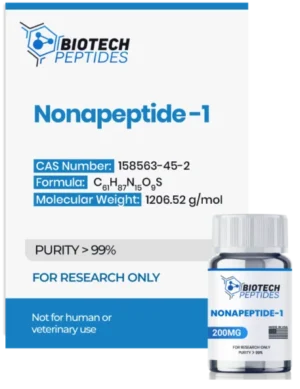
Nonapeptide-1 (200mg)
Nonapeptide-1, also termed Melanostatine-5, is a peptide that may prevent the activation of pigment-producing cells in the skin called melanocytes. It appears to be one of the most potent inhibitors of a receptor found in these pigment-producing cells, called the melanocortin-1 receptor (MC1R). Researchers have explored a peptide library containing 31,360 structurally different compounds, and it appears that the most potent inhibitor identified was Met-Pro-D-Phe-Arg-D-Trp-Phe-Lys-Pro-Val-NH₂, aka Nonapeptide-1.[1] Structural analysis has revealed that specific amino acids, such as D-Trp at position 5 and Phe at position 6, are considered crucial for their antagonistic potential. The presence of D-Phe at position 3 further underscores such potential. Research on animal models suggests that Nonapeptide-1 may inhibit the synthesis of melanin, bringing it to the forefront of research on conditions impacting skin pigmentation, such as melasma. Studies in animal models posit that Nonapeptide-1 may reduce the synthesis of melanin and potentially decrease pigmentation on a considerable scale.
$210.00 -
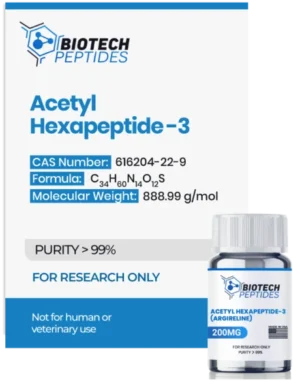
Acetyl Hexapeptide-3 (Argireline) (200mg)
Acetyl Hexapeptide-3 (Argireline) is a peptide chain of amino acids with the following sequence: Ac-Glu-Glu-Met-Gln-Arg-Arg-NH2. It is a fragment of the SNAP-25 (synaptosome-associated protein 25 kDa).[1] SNAP-25 is a key component of the SNARE (Soluble N-ethylmaleimide-sensitive factor Attachment protein Receptor)-Synaptotagmin-1 complex. This is a protein assembly that facilitates the release of neurotransmitters, such as acetylcholine, into the synaptic cleft between nerve cells and muscle cells. SNAP-25 is considered to be critical in this process because it appears to be in the assembly of the SNARE complex. This may also lead to the release of acetylcholine, thus triggering muscle contraction. Acetyl Hexapeptide-3 resembles the SNAP-25 protein, particularly the portion that is believed essential for SNARE complex formation.
By inhibiting its formation, the peptide may also prevent neurotransmitter release and muscle contraction. Researchers have investigated Acetyl Hexapeptide-3 (Argireline) for its potential to support skin cell structure and reduce wrinkling along the stratum corneum. Continuous muscle movements result in wrinkling, and the devitalization of muscle contractions may possibly inhibit the development of new lines and decrease the depth of existing skin tissue creases and wrinkles. Acetyl Hexapeptide-3 (Argireline) may prevent muscles from moving or contracting. Researchers also posit that the peptide may support endogenous collagen production to preserve the skin’s extracellular matrix.
$210.00 -
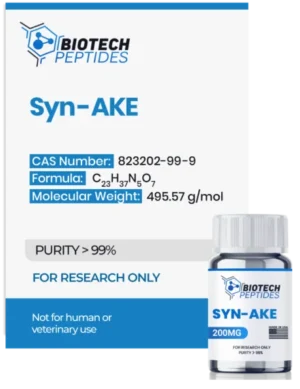
Syn-AKE (200mg)
Syn-AKE is a peptide, also known as tripeptide-3 or dipeptide diaminobutyroyl benzyl amide diacetate. Syn-AKE, a synthetic peptide ingredient, appears to mimic the actions of the Waglerin-1 peptide, which is 21 amino acids in length. Waglerin-1 functions primarily as a muscle relaxant by inhibiting the activity of acetylcholine at the neuromuscular junction, which may potentially result in reduced muscle contractions. Acetylcholine is a neurotransmitter considered essential for muscle movement, and its inhibition at the neuromuscular junction prevents the normal contraction signals from reaching muscles. In the development of Syn-AKE, researchers sought to synthesize a peptide that might potentially mimic this action. Thus, the peptide Syn-AKE was engineered to emulate the mechanism by which Waglerin-1 acts, but in a more selective manner. Researchers suggest Syn-AKE may act to reduce transmission between muscles and nerves, working similarly to botulinum toxin to relax muscles and thus reduce instances of creasing and wrinkle development along epidermal surfaces, as suggested in animal model research. The apparent reduction of this transmission appears to be reversible when triggered by Syn-AKE. Therefore its action is temporary.[1] According to Pentapharm, “the Syn-AKE invokes its action by blocking the muscle nAChR in a reversible manner by blocking the ion channel. As a result, the Na+ uptake is substantially disturbed, and the muscles remain relaxed.”
$210.00 -
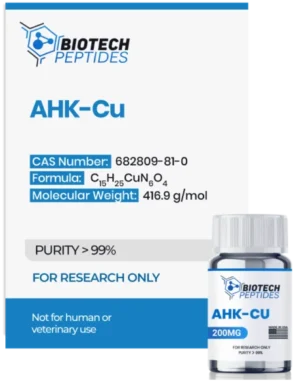
AHK-Cu (200mg)
AHK-Cu is a tripeptide containing a copper atom. It is a short peptide in which the copper atom is attached between the histidine and alanine residues of the alanine-histidine-lysine tripeptide. The copper atom is linked to three nitrogen atoms in this molecule. It is a naturally occurring compound that has been suggested to add support in cell growth and regulation, and cell death, particularly in the case of vascular endothelial cells (the innermost layer of blood vessels). AHK-Cu has also been studied extensively in animal models under laboratory conditions for its suggested impact on collagen synthesis. Researchers posit that the peptide appears to regulate various cellular processes primarily by controlling the production of two compounds: Vascular Endothelial Growth Factor (VEGF) and Transforming Growth Factor beta (TGF-B).[1] According to the researchers “TGF-beta1 induction of angiogenesis requires a rapid and transient apoptotic effect mediated by VEGF/VEGFR2.” AHK-Cu, by enhancing levels of the Vascular Endothelial Growth Factor, may possibly activate fibroblasts and endothelial cells. Fibroblasts are considered to lead to the production of two complex compounds; elastin and collagen. Endothelial cells are considered responsible for the growth and function of blood vessels that supply nutrition to hair follicles and skin cells. The activation of endothelial cells in association with the fibroblasts may lead to a strengthened skin barrier and increased skin elasticity, as well as potential acceleration in tissue repair. Some laboratory studies done on dermal cells indicate an increase in collagen type 1 production to the extent of as much as 300%.
$192.00 -
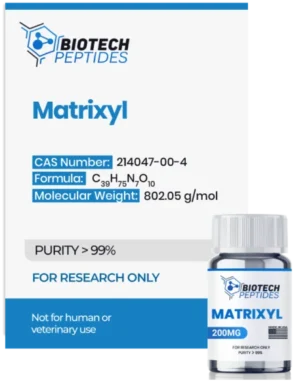
Matrixyl (200mg)
Matrixyl is a lipopeptide that combines fatty acids with amino acids. The peptide is also sometimes referred to as palmitoyl pentapeptide-4 or palmitoyl pentapeptide-3. The palmitoylated sequence of Lys-Thr-Thr-Lys-Ser-OH, which makes up the peptide, is posited to be a signal peptide fragment of the C-terminal propeptide of type I collagen.[1] Researchers report that “The conjugation with the palmitoyl moiety [may] result in more [impactful] delivery across the skin and better stability to skin proteases.” Overall, this signal peptide is posited to act as a stimulus to fibroblasts and stimulate them into producing extracellular matrix (ECM) proteins such as collagen. Therefore, Matrixyl is considered by researchers to be a matrikine – a messenger peptide capable of regulating cell activities by interacting with their specific receptors.
$190.00 -
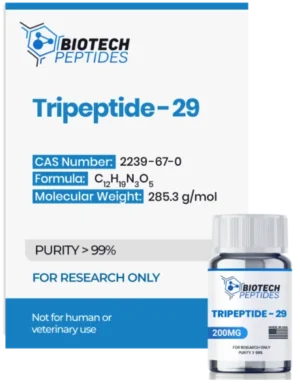
Tripeptide-29 (200mg)
Tripeptide-29 is a peptide that is one of the basic monomers of collagen. Collagen is a long-chain polymer composed of short monomers made of three consecutive amino acids. These monomers combine to form a secondary structure, which then may form tertiary and even quaternary structures. These complex structures may have many potential emergent properties. For example, most collagen molecules are thought to play roles in providing structural integrity and elasticity to the cellular complexes in tissues like the stratum corneum, tendons, and bones.
Collagen subunits most often follow the pattern of Gly-Pro-X, Gly-Xo-X, or Gly-X-Hyp. Tripeptide-29 is a GlyPro Hyp peptide, a complete synthetic analog of common collagen building blocks. Beyond its proposed involvement in collagen synthesis, researchers speculate that Tripeptide-29 may have additional biological implications. For instance, some preliminary studies suggest it may act as an antioxidant, potentially aiding in the protection of cells against oxidative stress, which is the imbalance between free radicals and antioxidants that may lead to cellular damage.
It is hypothesized that Tripeptide-29 might exhibit anti-inflammatory properties, possibly reducing inflammation; anti-fibrotic actions, which may help mitigate excessive formation of fibrous connective tissue; and anti-melanogenic characteristics, potentially influencing melanin production and affecting pigmentation processes in the dermal and epidermal layer.
$189.00 -
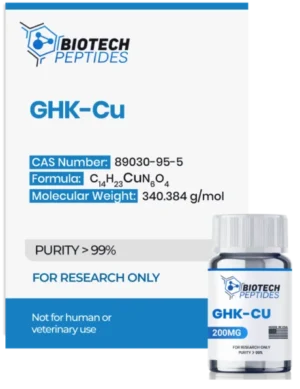
GHK-Cu (200mg)
GHK-Cu (Copper Tripeptide) is a tripeptide that scientists assert is naturally present in blood plasma. It has a sequence of Gly-His-Lys (glycine, histidine, and lysine,) which readily binds with copper to form the copper tripeptide. Scientific studies carried out in different research laboratories worldwide have explored its various biological roles. GHK-Cu exhibits some potential to influence various biological pathways, including an apparent induction of tissue repair, attraction of immune cells, antioxidant and anti-inflammatory characteristics, activation of collagen and glycosaminoglycan synthesis in skin fibroblasts, regulation of extracellular matrix components like decorin, and possible promotion of blood vessel growth. Recent studies indicate its potential role in stem cell biology and anti-tumor research as well.
$186.00 -
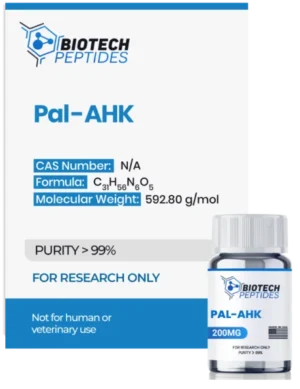
Pal-AHK (200mg)
Pal-AHK, also referred to as Palmitoyl Tripeptide-3, is a tripeptide with a fatty acid attachment. It consists of amino acid sequences (alanine-histidine-lysine) and appears to be attached to a Palmitoyl fatty acid molecule. The fatty-acid component of AHK makes it lipophilic (soluble in fat), which may increase the potential of the peptide for penetration and absorption by epidermal cells in experimental models while maintaining the same mechanisms of action as regular AHK. AHK appears to be a multifunctional copper-binding peptide that has been studied for its potential role in supporting cellular functions related to the kin’s extracellular matrix.
Research indicates that AHK-Cu may increase the proliferation and viability of dermal fibroblasts—the primary cells responsible for producing collagen and other essential proteins in the extracellular matrix (ECM).[1] Moreover, the peptide appears to possess significant antioxidative potential compared to other tripeptides when investigated via chromatographic evaluations. This appears to be related to its potent metal-chelating properties.
$180.00 -
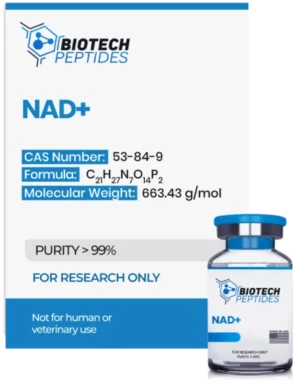
NAD+ (100mg & 500mg)
Nicotinamide Adenine Dinucleotide (NAD+) is an oxidized form of NADH (Nicotinamide Adenine Dinucleotide Hydroxide). NAD+ is a component of the Electron Transport Chain (ETC), which researchers have suggested to act in carrying electrons and thus energy within cells. The peptide has also been posited to potentially act as a mediator for various physiological processes, such as post-translational modification of the proteins and activation/deactivation of some enzymes. It is believed to be a critical component in maintaining cell-to-cell communication.
Price range: $46.00 through $179.00NAD+ (100mg & 500mg)
Price range: $46.00 through $179.00 Select options This product has multiple variants. The options may be chosen on the product page