 support@biotechpeptides.ca
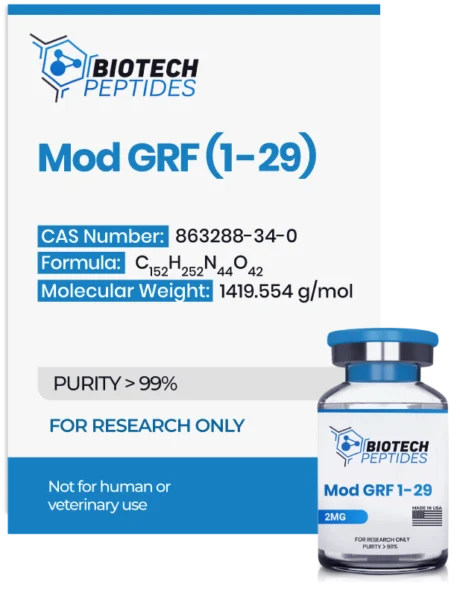
Mod GRF 1-29 (CJC-1295 NO DAC) (2mg)
$22.00
Modified GRF (1-29), or Mod GRF (1-29), is a synthetic peptide analog of growth hormone-releasing hormone (GHRH). It was first developed in the 1980s when studies indicated that the first 29 amino acids of GHRH may possess all of the biological roles associated with the full-length 44 residue protein.[1] The initially designed peptide, known as GRF (1-29), is the shortest segment of GHRH, and appears to possess all the properties of the full-length hormone. A truncated synthetic form of GHRH known as Sermorelin, or GRF 1-29, also has 29 amino acids. Modified GRF (1-29) undergoes alteration to include four substituted amino groups in its chain.[2] The intention behind these amino modifications is to protect the peptide from both oxidation and degradation during manufacture. The modification also appears to increase the binding affinity to GHRH receptors. Modified GRF (1-29) is also known as Mod GRF, or Tetra-substituted GRF (1-29). The latter name clarifies that the modified peptide differs from GRF (1-29) as a result of changes in four of its amino acids. Modified GRF (1-29) is structurally identical to CJC-1295 without DAC.
Specifications
Other Known Titles: Mod GRF (1-29)
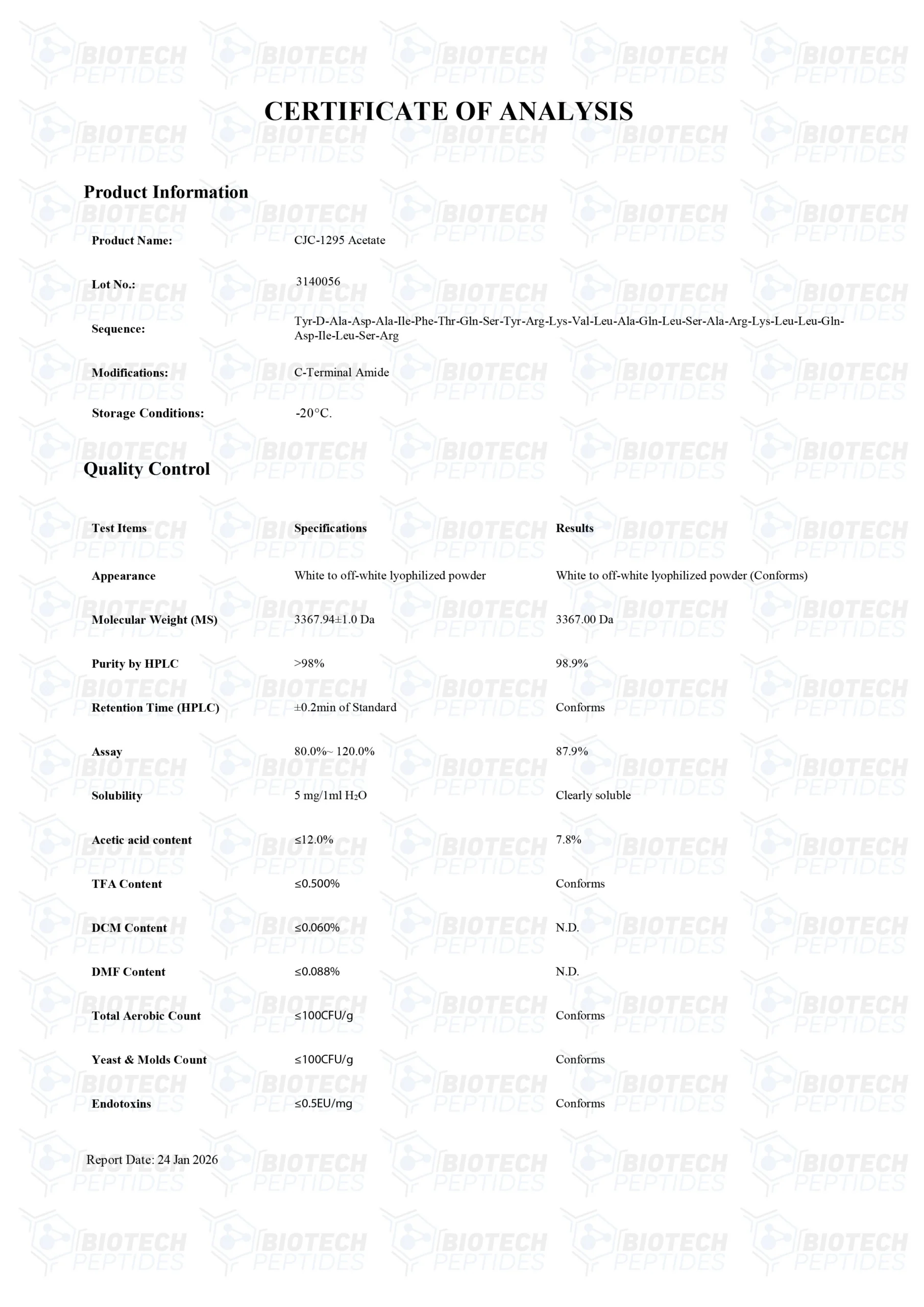
Molecular Formula: C152H252N44O42
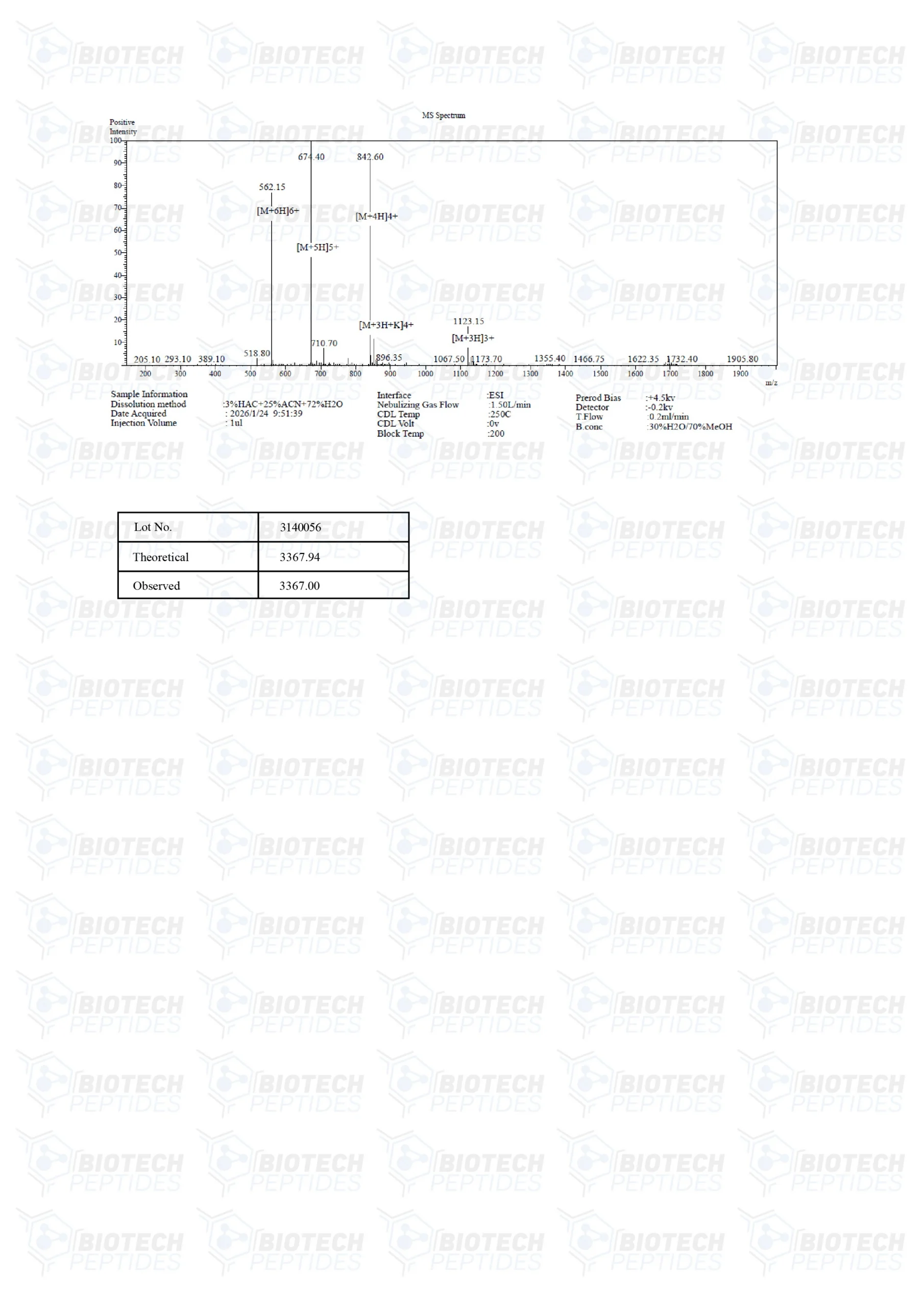
Molecular Weight: 3367.95 g/mol
Sequence: H-Tyr-D-Ala-Asp-Ala-Ile-Phe-Thr-Gln-Ser-Tyr-Arg-Lys-Val-Leu-Ala-Gln-Leu-Ser-Ala-Arg-Lys-Leu-Leu-Gln-Asp-Ile-Leu-Ser-Arg-NH2
Modified GRF (1-29) Research
Modified GRF 1-29 and Cardiac Function
Research in rodent models has suggested that modified GRF and other GHRH derivatives may improve the capacity of the heart to pump blood, even following cardiac dysfunction.[3] More specifically, the researchers comment that “Various studies [suggest] that GHRH agonists promote repair of cardiac tissue, producing improvement of ejection fraction and reduction of infarct size in rats, reduction of infarct scar in swine, and attenuation of cardiac hypertrophy in mice.”
Modified GRF 1-29 and Thyroid, Growth Hormone
Malfunctioning of the thyroid gland is often associated with concomitant issues in growth hormone release. Research studies have suggested that research models of hyperthyroidism under the influence of thyroid replacement hormone may demonstrate stronger reactions to GRF, providing a possible a link between thyroid hormone and growth hormone.[6] The scientists commented that “These data indicate that thyroid hormone […] enhances the responsiveness of the somatotroph to GRF 1-29.”
Modified GRF 1-29 and the Intestine
Research in monkeys suggested that Modified GRF 1-29 may bind with vasoactive intestinal peptide (VIP) receptors to potentially improve bowel motility. Improved bowel movement is considered to be crucial in inflammatory bowel diseases. The peptide appears to interact with VIPC1, present on the smooth muscle of the reproductive, gastrointestinal as well as urinary systems.[4] [5] These conditions may potentially trigger a great deal of morbidity.
References
- Cen, L. P., Ng, T. K., Chu, W. K., & Pang, C. P. (2022). Growth hormone-releasing hormone receptor signaling in experimental ocular inflammation and neuroprotection. Neural regeneration research, 17(12), 2643–2648. https://doi.org/10.4103/1673-5374.336135
- Jetté, L., Léger, R., Thibaudeau, K., Benquet, C., Robitaille, M., Pellerin, I., Paradis, V., van Wyk, P., Pham, K., & Bridon, D. P. (2005). Human growth hormone-releasing factor (hGRF)1-29-albumin bioconjugates activate the GRF receptor on the anterior pituitary in rats: identification of CJC-1295 as a long-lasting GRF analog. Endocrinology, 146(7), 3052–3058. https://doi.org/10.1210/en.2004-1286
- Schally, A. V., Zhang, X., Cai, R., Hare, J. M., Granata, R., & Bartoli, M. (2019). Actions and Potential Therapeutic Applications of Growth Hormone-Releasing Hormone Agonists. Endocrinology, 160(7), 1600–1612. https://doi.org/10.1210/en.2019-00111
- Ito, T., Igarashi, H., Pradhan, T. K., Hou, W., Mantey, S. A., Taylor, J. E., Murphy, W. A., Coy, D. H., & Jensen, R. T. (2001). GI side-effects of a possible therapeutic GRF analogue in monkeys are likely due to VIP receptor agonist activity. Peptides, 22(7), 1139–1151. https://doi.org/10.1016/s0196-9781(01)00436-3
- Waelbroeck, M., Robberecht, P., Coy, D. H., Camus, J. C., De Neef, P., & Christophe, J. (1985). Interaction of growth hormone-releasing factor (GRF) and 14 GRF analogs with vasoactive intestinal peptide (VIP) receptors of rat pancreas. Discovery of (N-Ac-Tyr1,D-Phe2)-GRF(1-29)-NH2 as a VIP antagonist. Endocrinology, 116(6), 2643–2649. https://doi.org/10.1210/endo-116-6-2643
- Valcavi, R., Jordan, V., Dieguez, C., John, R., Manicardi, E., Portioli, I., Rodriguez-Arnao, M. D., Gomez-Pan, A., Hall, R., & Scanlon, M. F. (1986). Growth hormone responses to GRF 1-29 in patients with primary hypothyroidism before and during replacement therapy with thyroxine. Clinical endocrinology, 24(6), 693–698. https://doi.org/10.1111/j.1365-2265.1986.tb01666.x
Reviews
There are no reviews yet.