support@biotechpeptides.ca
-
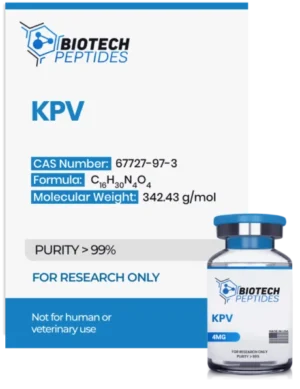
KPV (4mg)
KPV is the C-terminal peptide stretch of alpha-melanocyte-stimulating hormone (alpha-MSH). The peptide consists of the last three amino acids of the alpha-MSH hormone. It has been explored for its potential anti-inflammatory properties at the cellular level. Comprising the amino acids L-Lys-L-Pro-L-Val, KPV represents the minimal sequence that may mitigate inflammation in experimental models. However, the precise mechanisms of its action still need to be further studied in order to be more fully understood.
This peptide’s various mechanisms may potentially differentiate from that of alpha-MSH, which researchers believe interacts with the melanocortin-1 receptors by theoretically activating the cAMP pathway. Instead, studies suggest a rapid and acute increase in intracellular calcium when KPV is introduced alongside N6-(L-2-phenyl isopropyl) adenosine (PIA), an adenosine agonist that inhibits the cAMP pathway.
Further data-gathering investigations using cells transfected with melanocortin-1 receptors have indicated that KPV may, in theory, elevate intracellular calcium levels. This may imply an additional type of interaction with this receptor. This calcium signaling is thought to contribute to the inhibition of the activation of nuclear factor kappa-light-chain-enhancer of activated B cells (NF-κB), a transcription factor involved in inflammatory responses. By potentially inhibiting NF-κB activation, KPV might modulate inflammatory processes within cells.
$39.00 -
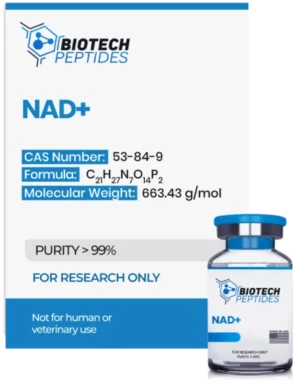
NAD+ (100mg & 500mg)
Nicotinamide Adenine Dinucleotide (NAD+) is an oxidized form of NADH (Nicotinamide Adenine Dinucleotide Hydroxide). NAD+ is a component of the Electron Transport Chain (ETC), which researchers have suggested to act in carrying electrons and thus energy within cells. The peptide has also been posited to potentially act as a mediator for various physiological processes, such as post-translational modification of the proteins and activation/deactivation of some enzymes. It is believed to be a critical component in maintaining cell-to-cell communication.
Price range: $46.00 through $179.00NAD+ (100mg & 500mg)
Price range: $46.00 through $179.00 Select options This product has multiple variants. The options may be chosen on the product page -
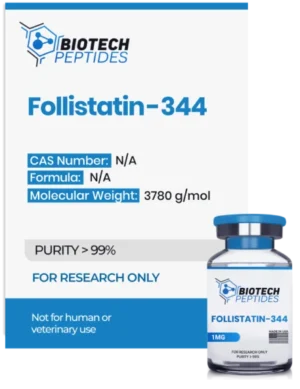
Follistatin-344 (1mg)
Follistatin-344 is a synthetic, full-sized version of a naturally occurring protein bearing the same name. Follistatin-344 occurs in two isomers, varying based on their gene splicing. Follistatin may exist endogenously in two distinct variants, referred to as FST 317 and FST 344. The variants are distinguished by their composition: FST 317 comprises 288 amino acids, whereas FST 344 comprises 315 amino acids. The numerical part of their names reflects the number of amino acids in the precursor molecules from which they are synthesized, with the precursor to FST 317 having 317 amino acids and that to FST 344 having 344 amino acids. It appears that FST 344 is the more commonly occurring form across various tissues. On the other hand, the FST 317 variant likely represents a minor fraction, potentially comprising under 5% of the total mRNA transcript related to Follistatin. Thus, Follistatin-344 appears to be the main constituent. Researchers suggest that its primary role may be to counteract the action of the Tumor Growth Factor-beta (TGF-beta) family. The TGF-beta family comprises Myostatin, Activin, and Follicle Stimulating Growth Hormone (FSH). Follistatin-344 appears to stimulate the Insulin/IGF-1 pathway, and the reported immense potential of the peptide has been published in Follistatin-344 research.
$162.00 -
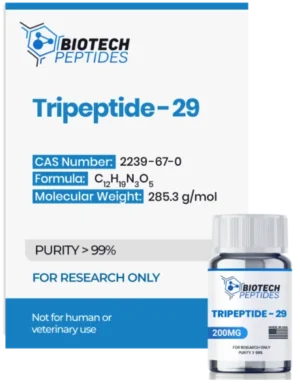
Tripeptide-29 (200mg)
Tripeptide-29 is a peptide that is one of the basic monomers of collagen. Collagen is a long-chain polymer composed of short monomers made of three consecutive amino acids. These monomers combine to form a secondary structure, which then may form tertiary and even quaternary structures. These complex structures may have many potential emergent properties. For example, most collagen molecules are thought to play roles in providing structural integrity and elasticity to the cellular complexes in tissues like the stratum corneum, tendons, and bones.
Collagen subunits most often follow the pattern of Gly-Pro-X, Gly-Xo-X, or Gly-X-Hyp. Tripeptide-29 is a GlyPro Hyp peptide, a complete synthetic analog of common collagen building blocks. Beyond its proposed involvement in collagen synthesis, researchers speculate that Tripeptide-29 may have additional biological implications. For instance, some preliminary studies suggest it may act as an antioxidant, potentially aiding in the protection of cells against oxidative stress, which is the imbalance between free radicals and antioxidants that may lead to cellular damage.
It is hypothesized that Tripeptide-29 might exhibit anti-inflammatory properties, possibly reducing inflammation; anti-fibrotic actions, which may help mitigate excessive formation of fibrous connective tissue; and anti-melanogenic characteristics, potentially influencing melanin production and affecting pigmentation processes in the dermal and epidermal layer.
$189.00 -
SNAP-8 (200mg)
SNAP-8, or Synaptosomal-associated protein 8, is a synthetic octapeptide believed to mimic certain functionalities of its larger counterpart, SNAP-25, a protein deemed integral to neurotransmitter release and muscle contraction.[1] Constructed from eight amino acids, SNAP-8’s structure is designed with specific modifications: an acetylated N-terminus and an amidated C-terminus, culminating in the sequence Ac-Glu-Glu-Met-Gln-Arg-Arg-Ala-Asp-NH2. It is structurally similar to another peptide known as acetyl hexapeptide-3, which also reportedly mimics a fragment of SNAP-25 and inhibits its function, leading to similar anti-wrinkle potential. By adding two amino acids to the chain of acetyl hexapeptide-3, the resultant acetyl octapeptide further enriches the field of research compounds studying cell aging and skin cell rejuvenation.[2]
The synthesis and manufacturing of SNAP-8 comprises a final freeze-drying step called lyophilization. Generally, the crystalline powder obtained due to freeze-drying is in the form of a polymorphous compound. It may be present in aggregates and show variation in the crystal size. However, this does not appear to lead to any chemical discrepancy in its composition. Extensive experimental studies have supported the homogeneity of this compound. The usual shelf life of SNAP-8 is posited to be at least 12 months, provided the compound is stored in a clean, cool, and dry place. If the compound is intended to be stored longer than a year, the temperature should be maintained at 4 degrees Celsius. This may extend the shelf life to approximately 18 months. Refrigeration of the SNAP-8 may potentially lead to its precipitation; however, this doesn’t appear to change the integrity of the compound.
$172.00 -
TRH Thyrotropin (Protirelin) (25mg)
Thyrotropin Releasing Hormone (TRH), often called Protirelin, is a small peptide hormone made of 3 amino acids and synthesized in the hypothalamus. The hormone is thought to function via binding to the thyrotropin-releasing hormone receptors TRH-1 and TRH-2. It was developed by researchers with the intention to stimulate the release of both thyroid-stimulating hormone (TSH) and prolactin from the anterior pituitary. TSH, in turn, acts directly on the thyroid gland to promote the synthesis and release of thyroid hormones, primarily triiodothyronine (T3) and thyroxine (T4). TRH has been employed in the study of anterior pituitary gland function in models of thyroid disorders. TRH may exhibit potential roles in TREK-1 channel, in the regulation of cellular aging, arousal, feeding behaviors, autonomic regulation, and mitigating free radical damage.
$93.00 -
Triptorelin (GnRH) (2mg)
Triptorelin is a synthetic analog of gonadotropin-releasing hormone (GnRH), potentially mimicking the structure and function of the natural hormone. It may bind to GnRH receptors, initially stimulating the hypothalamic-pituitary-gonadal (HPG) axis, leading to a temporary surge in luteinizing hormone (LH) and follicle-stimulating hormone (FSH) levels. In turn, LH and FSH are thought to stimulate endocrine cells, like testicular cells that produce testosterone (T). However, with prolonged exposure, Triptorelin appears to desensitize the GnRH receptors, resulting in suppressed production of LH and FSH, thereby apparently reducing testosterone and estrogen levels. This potential mechanism has been extensively researched in models of androgen deprivation, exploring its potential in various contexts such as prostate cancer cells and receptor-positive breast cancer cells.
$36.00 -
Matrixyl (200mg)
Matrixyl is a lipopeptide that combines fatty acids with amino acids. The peptide is also sometimes referred to as palmitoyl pentapeptide-4 or palmitoyl pentapeptide-3. The palmitoylated sequence of Lys-Thr-Thr-Lys-Ser-OH, which makes up the peptide, is posited to be a signal peptide fragment of the C-terminal propeptide of type I collagen.[1] Researchers report that “The conjugation with the palmitoyl moiety [may] result in more [impactful] delivery across the skin and better stability to skin proteases.” Overall, this signal peptide is posited to act as a stimulus to fibroblasts and stimulate them into producing extracellular matrix (ECM) proteins such as collagen. Therefore, Matrixyl is considered by researchers to be a matrikine – a messenger peptide capable of regulating cell activities by interacting with their specific receptors.
$190.00 -
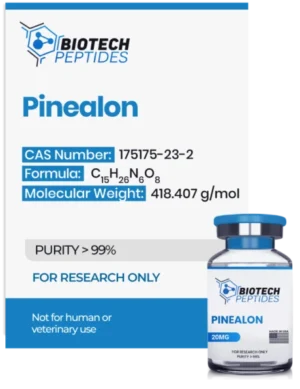
Pinealon (20mg)
Pinealon (also referred to as EDR) is a short peptide comprising only three amino acids (Glu-Asp-Arg). Additionally, it is classified as one of Khavinson’s peptides. EDR is generally extracted from a crude polypeptide extract called Cortexin. Pinealon is considered to be a peptide bioregulator, and it appears to interact directly with DNA. It may contribute to the alteration of gene expression levels. It may potentially exhibit behavior modification and may protect various cell types, including neurons, against hypoxia. Pinealon has been studied for its potential to impact the pineal gland to address issues with metabolism, circadian rhythm disorders, and certain cognitive functions.
$68.00 -
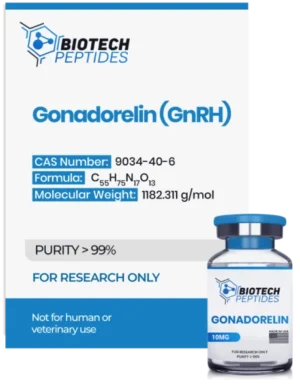
Gonadorelin (GnRH) (10mg)
Gonadorelin (GnRH) is a decapeptide gonadotropin-releasing hormone agonist.[1] It appears to work by stimulating the synthesis and release of luteinizing hormone and follicle-stimulating hormone. It is being researched within the context of infertility and reproductive systems, and hypogonadism. It is also studied for its potential as a diagnostic tool to assess pituitary function.
$79.00 -
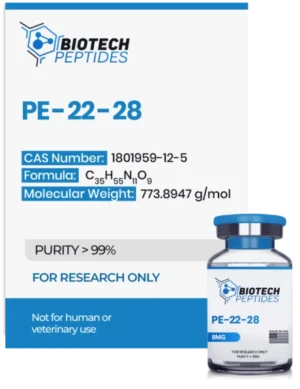
PE-22-28 (8mg)
PE-22-28 is a synthetic variant of the naturally occurring peptide Spadin. Spadin is a secreted peptide obtained from Sortilin. It appears to act as an antagonist of the TREK-1 (TWIK-related-potassium channel) receptor, a two-pore potassium channel identified as a potential target in the context of depression research and as a possible neurogenic regulator. Studies in mice have suggested that TREK-1 receptor deletion may make them resistant to depressive behavior and corresponding chemical imbalances in the brain.[1] PE-22-28 represents a shorter seven amino acid synthetic Spadin analog with potentially higher efficacy and stability. Research in animal models is ongoing.
$55.00 -
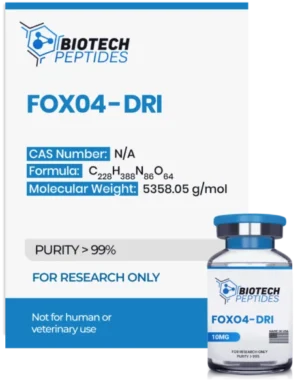
FOXO4-DRI (Proxofim) (10mg)
FOXO4-DRI is a synthetic version of FOXO4, containing D amino acids instead of L amino acids. This modification is intended to allow the peptide to retain the functionality of the original protein but with a longer shelf life and lower clearance. Its most prominent function has been suggested to regulate apoptosis in senescent cells.[1] It has been suggested in scientific studies that senescent cells might exhibit resistance to apoptosis, aka programmed cell death. This resistance has been associated with increased binding of FOXO4 with another protein, p53, which should trigger apoptosis but become inactivated.
$270.00 -
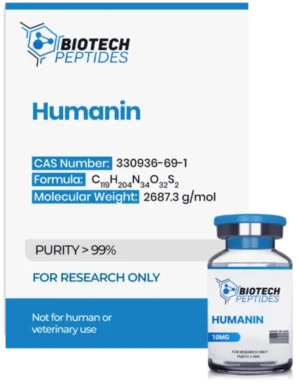
Humanin (10mg)
Humanin is an endogenously occurring unique peptide encoded by mitochondrial DNA. The peptide may exist in two different forms found in the cell: a 21 amino acid sequence found inside the cell’s mitochondria, and a 24 amino acid sequence found outside the cell’s cytosol. Both forms appear to act as cytoprotective proteins and may protect cells from the process of apoptosis (programmed cell death) by interfering with the operation of the Bcl2-related X protein (Bax).[1]
Bax is considered a pro-apoptotic protein that promotes apoptosis by disrupting the mitochondrial outer membrane. It is believed to facilitate the release of cytochrome c from mitochondria into the cytosol, which then triggers a cascade of events leading to cell death. By interfering with Bax’s function, Humanin may help support the initiation of this apoptotic pathway. Researchers posit that Humanin may “[support] the translocation of Bax from the cytosol to mitochondria. Conversely, reducing Humanin expression by small interfering RNAs sensitizes cells to Bax and increases Bax translocation to membranes.”
Apart from research into its possible interaction with Bax, Humanin studies suggest the peptide may also bind with other intracellular molecules, such as actinin-4 and phosphoprotein 8, which are both involved in cellular apoptosis. Binding with these proteins is also thought to contribute to Humanin’s cytoprotective potential.[2] Thus, studies suggest that Humanin may be important for protecting a variety of cells, most notably neurons. In addition, studies also suggest it may have a protective potential for cells in heart tissue, muscle cells, the retina of the eye, and the lining of blood vessels.
$140.00 -
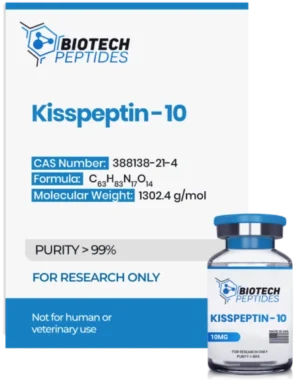
Kisspeptin-10 (10mg)
Kisspeptin-10 is a peptide fragment derived from the full-length Kisspeptin (also referred to as Kisspeptin-54 or Metastin). Specifically, Kisspeptin-10 is a fragment containing the 45-54 sequence from the larger parent molecule. Research into this peptide has suggested that the compound may act as a mediator of endocrine signaling between various endocrine cells.
Originating from the KISS1 gene, which is thought to play a critical role in reproductive cell signaling and physiology, Kisspeptin-10 is particularly interesting to researchers for its potential to influence the secretion of gonadotropin-releasing hormone (GnRH). This, in turn, may affect the release of other reproductive hormones from cells with receptors for GnRH. In addition, researchers posit that the compound may potentially impact the development and regulation of blood vessels and renal function, and some studies have suggested it may mitigate cancer cell proliferation and metastasis.
$52.00 -
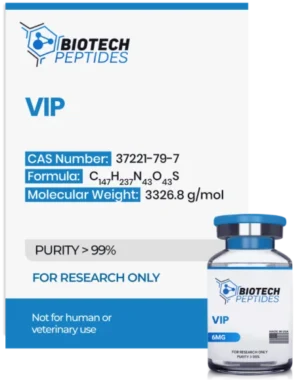
VIP (6mg)
Vasoactive intestinal peptide (VIP, vasoactive intestinal polypeptide, PHM27) is a short peptide hormone endogenously produced in the gastrointestinal tract, pancreas, and brain of most vertebrate animals. Researchers have suggested that the peptide may exhibit potential to influence inflammation, particularly in the cases of neurodegenerative disease, pulmonary fibrosis, inflammatory bowel disease, and cardiac fibrosis. VIP has been suggested to act as an immune system regulator and has been classified by scientists as an anti-inflammatory peptide. It is of active scientific interest for its proposed ability to support cognitive function in the setting of neurodegenerative disease. VIP has been hypothesized to bind to class II G protein-coupled receptors.
$71.00