support@biotechpeptides.ca
-
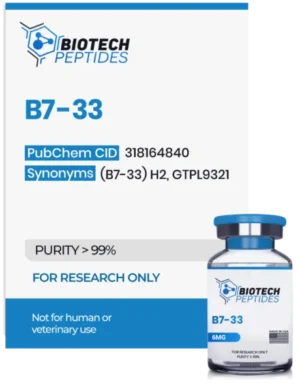
B7-33 (6mg)
B7-33 is a soluble synthetic single-chain peptide obtained from the larger, naturally occurring protein H2-relaxin (Relaxin), which is considered to induce pleiotropic actions impacting the musculoskeletal system, cardiovascular system, and reproduction.[1] B7-33 appears to retain the anti-fibrotic properties of Relaxin without enhancing cAMP production, it may also stimulate ERK1/2 phosphorylation and promote matrix metalloproteinase 2 (MMP2) expression and the degradation of extracellular collagen. The Relaxin family of peptides has four endogenous receptors divided into two pairs (RXFP1/2 and RXFP3/4).[2] The Relaxin receptors appear to be stimulated by cAMP, orexin, corticotropin-releasing factor (CRF), several insulin-like peptides, and GLP-1. The agonists have been observed to exhibit anti-inflammatory, antioxidant, and tissue-repairing characteristics.
$62.00 -
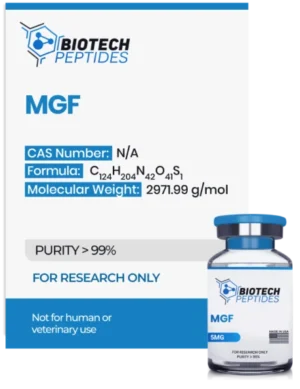
MGF (Mechano-Growth Factor) (5mg)
Mechano-Growth Factor (MGF) is an alternative name for the Insulin-like Growth Factor-1Eb (IGF-1Eb), an isoform of IGF-1. It has been studied for its potential in remodeling muscles, cellular survival, and cellular proliferation.[1] New studies on this specific isoform highlight its potential for activating satellite cells in skeletal muscle, suggesting that this particular isoform may also activate satellite cells in skeletal muscle, protect neurons, and help overcome muscle mass loss.[2] The principal function of MGF is its possible efficacy in reparating severe muscle wear and tear. Further, its concentration appears to correspond with skeletal muscle growth and differentiation found in rodent models.
$59.00 -
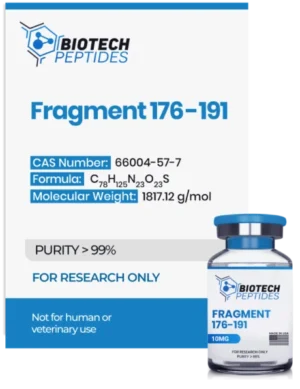
Fragment 176-191 (10mg)
Specifications
Other Known Titles: Frag 176-191
Molecular Formula: C78H125N23O23S2
Molecular Weight: 1817.1 g/mol
Sequence: Tyr-Leu-Arg-Ile-Val-Gin-Cys-Arg-Ser-Val-Glu-Gly-Ser-Cys-Gly-Phe
$67.00 -
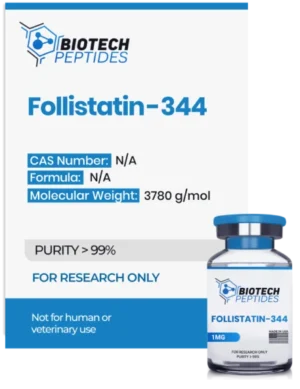
Follistatin-344 (1mg)
Follistatin-344 is a synthetic, full-sized version of a naturally occurring protein bearing the same name. Follistatin-344 occurs in two isomers, varying based on their gene splicing. Follistatin may exist endogenously in two distinct variants, referred to as FST 317 and FST 344. The variants are distinguished by their composition: FST 317 comprises 288 amino acids, whereas FST 344 comprises 315 amino acids. The numerical part of their names reflects the number of amino acids in the precursor molecules from which they are synthesized, with the precursor to FST 317 having 317 amino acids and that to FST 344 having 344 amino acids. It appears that FST 344 is the more commonly occurring form across various tissues. On the other hand, the FST 317 variant likely represents a minor fraction, potentially comprising under 5% of the total mRNA transcript related to Follistatin. Thus, Follistatin-344 appears to be the main constituent. Researchers suggest that its primary role may be to counteract the action of the Tumor Growth Factor-beta (TGF-beta) family. The TGF-beta family comprises Myostatin, Activin, and Follicle Stimulating Growth Hormone (FSH). Follistatin-344 appears to stimulate the Insulin/IGF-1 pathway, and the reported immense potential of the peptide has been published in Follistatin-344 research.
$162.00 -
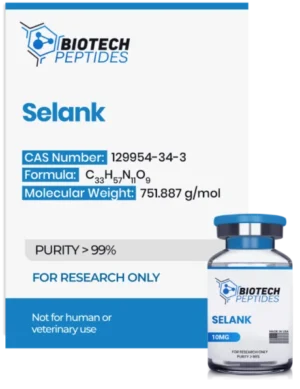
Selank (10mg)
Selank is a small peptide studied for its potential nootropic and behavior-modifying functions in experimental models. It is a synthetic analog of naturally occurring Tuftsin. This immunomodulatory peptide is a short fragment from the immunoglobulin G (IgG), a natural tetrapeptide involved in certain functions that may regulate the immune system. Selank is also posited to possess additional potential for regulating immune cells, IL-6, a wide range of neurotransmitter systems, and brain-derived neurotrophic factor (BDNF).
Selank differs in structure from the endogenous Tuftsin by an additional three amino acids in its chain, which have been supposed to enhance the metabolic stability and half-life of the synthetic peptide. Specifically, that is the Pro-Gly-Pro segment at the C-terminus of Selank, which might enhance its ability to move through various models, including the blood-brain barrier (BBB). The BBB is a highly selective and semi-permeable barrier that separates circulating blood from the tissues and extracellular fluid of the central nervous system, playing a vital role in regulating substance passage.
The inclusion of Pro-Gly-Pro may possibly increase BBB permeability by affecting the peptide’s hydrophilicity or lipophilicity, which may enhance its affinity for the BBB’s lipid-rich environment. Furthermore, the Pro-Gly-Pro sequence might interact with specific transport mechanisms or receptors at the BBB, possibly initiating facilitated transport or receptor-mediated endocytosis. These processes may enable Selank to circumvent the tight junctions that are said to typically restrict larger molecules.
$46.00 -
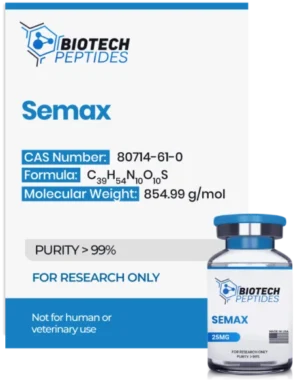
Semax (25mg)
Semax is a synthetic analog of adrenocorticotropic hormone (ACTH) comprising the amino acids 4 through 10 of ACTH. Semax has primarily been implicated in research on cognitive impairment and stroke. The peptide has also been studied closely within the context of dementia and certain inflammations of the optic nerve. Researchers posit that the peptide may exert neurotrophic action, suggesting that the peptide may act to increase the production of brain-derived neurotrophic factor (BDNF) in the central nervous system, with potential consequences in serotonin and dopamine release. Some researchers also suggest that Semax may interact with serotonin and enkephalin levels in the central nervous system.
$53.00 -
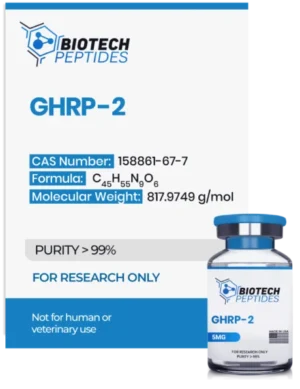
GHRP-2 (5mg)
Specifications
Other Known Titles: Pralmorelin
Molecular Formula: C45H55N9O6
Molecular Weight: 817.9 g/mol
Sequence: H-D-Ala-D-2-Nal-Ala-Trp-D-Phe-Lys-NH2
$20.00 -
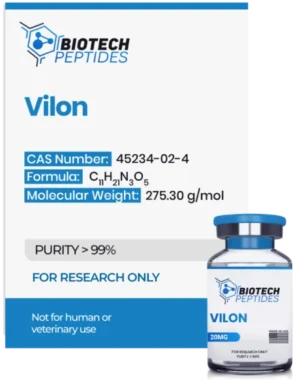
Vilon (20mg)
Vilon (or Lyslglutamic Acid) is a peptide with apparent immunomodulatory and anti-aging bioregulation potential. It is a short peptide with just two amino acids in length. Scientific research suggests it may potentially act to regulate the vascular system and encourage hemostasis. Its functions may be more widespread, with studies indicating its possible influence in reducing the prevalence and growth of spontaneous tumors. Advocate researchers like Dr. Vladimir Anisimov believe that the peptide may become more widespread in contemporary research within the context of geroprotection.
$61.00 -

PTD-DBM (5mg)
PTD-DBM stands for Protein Transduction Domain-fused Disheveled Binding Motif. It is a synthetic peptide which has been studied within a wide range of research areas, including tissue damage and hair follicle development. Researchers have focused on the peptide specifically within the context of follicle development, suggested it may exert stimulating action through interaction with the endogenous proteins linked to follicle damage called CXXC5.[1] It was discovered by Professor Kang-Yell Choi and his team of researchers at the Yonsei University in South Korea. The researchers studied the mechanism of hair follicle loss, and suggested that the cellular pathway Wnt/β-catenin may be crucial for follicle development.
The Wnt/β-catenin pathway is often studied in the context of tissue development and regeneration, Wnt proteins are a family of secreted signaling molecules that bind to cell surface receptors to trigger a cascade of intracellular events. β-catenin is a protein that normally resides in the cytoplasm of cells. Upon activation of the Wnt pathway, β-catenin is thought to accumulate in the cell and translocate to the nucleus, where it may activate the transcription of specific target genes involved in cell growth and differentiation. The activation of β-catenin may have a role in supporting and even increasing hair follicle development and possibly initiating the anagen phase, which represents the growth stage of hair follicles, as observed in murine models.
It has been hypothesized that PTD-DBM may interfere with the binding of CXXC5 and Dishevelled (Dvl) proteins by acting as a competitor. Specifically the peptide might inhibit the interaction between CXXC5 and Dishevelled (Dvl) proteins by binding to the PDZ domain of Dvl, thus interfering with CXXC5’s inhibitory actions on Wnt/β‐catenin signaling. Such a disruption might support the Wnt/β-catenin signaling pathway, thereby possibly promoting the onset of the anagen phase. Data from such murine studies suggests elevated expression levels of β-catenin, alkaline phosphatase (ALP), and proliferating cell nuclear antigen (PCNA), which are markers linked to cellular proliferation and hair follicle functionality.
$86.00 -
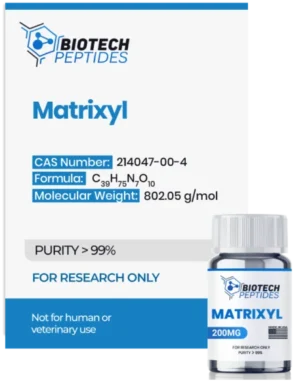
Matrixyl (200mg)
Matrixyl is a lipopeptide that combines fatty acids with amino acids. The peptide is also sometimes referred to as palmitoyl pentapeptide-4 or palmitoyl pentapeptide-3. The palmitoylated sequence of Lys-Thr-Thr-Lys-Ser-OH, which makes up the peptide, is posited to be a signal peptide fragment of the C-terminal propeptide of type I collagen.[1] Researchers report that “The conjugation with the palmitoyl moiety [may] result in more [impactful] delivery across the skin and better stability to skin proteases.” Overall, this signal peptide is posited to act as a stimulus to fibroblasts and stimulate them into producing extracellular matrix (ECM) proteins such as collagen. Therefore, Matrixyl is considered by researchers to be a matrikine – a messenger peptide capable of regulating cell activities by interacting with their specific receptors.
$190.00 -
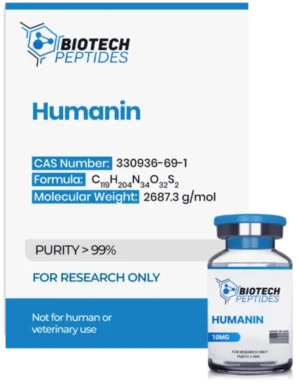
Humanin (10mg)
Humanin is an endogenously occurring unique peptide encoded by mitochondrial DNA. The peptide may exist in two different forms found in the cell: a 21 amino acid sequence found inside the cell’s mitochondria, and a 24 amino acid sequence found outside the cell’s cytosol. Both forms appear to act as cytoprotective proteins and may protect cells from the process of apoptosis (programmed cell death) by interfering with the operation of the Bcl2-related X protein (Bax).[1]
Bax is considered a pro-apoptotic protein that promotes apoptosis by disrupting the mitochondrial outer membrane. It is believed to facilitate the release of cytochrome c from mitochondria into the cytosol, which then triggers a cascade of events leading to cell death. By interfering with Bax’s function, Humanin may help support the initiation of this apoptotic pathway. Researchers posit that Humanin may “[support] the translocation of Bax from the cytosol to mitochondria. Conversely, reducing Humanin expression by small interfering RNAs sensitizes cells to Bax and increases Bax translocation to membranes.”
Apart from research into its possible interaction with Bax, Humanin studies suggest the peptide may also bind with other intracellular molecules, such as actinin-4 and phosphoprotein 8, which are both involved in cellular apoptosis. Binding with these proteins is also thought to contribute to Humanin’s cytoprotective potential.[2] Thus, studies suggest that Humanin may be important for protecting a variety of cells, most notably neurons. In addition, studies also suggest it may have a protective potential for cells in heart tissue, muscle cells, the retina of the eye, and the lining of blood vessels.
$140.00 -
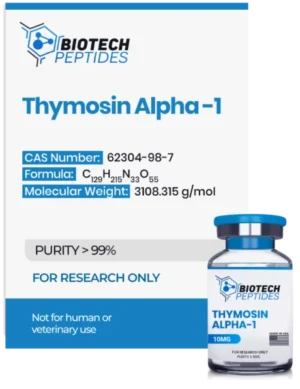
Thymosin Alpha-1 (10mg)
Thymosin Alpha-1, also known as TA1 or Tα1, is a naturally occurring peptide fragment that was discovered in 1972 and researched for its potential action within the context of studies relating to cystic fibrosis, infection (e.g., tuberculosis, cytomegalovirus), respiratory disorders, chronic hepatitis, and cancer. It is also referred to as Thymalfasin when synthetically developed. Originally, research on Thymosin Alpha-1 centered around its potential role in immune modulation. It is hypothesized that it might increase levels of Major Histocompatibility Complex (MHC) class I molecules and boost cytokine production, key components of the immune system that may enhance immune responses.[1][2] There is also a possibility that it might improve the activity of natural killer cells, which target virus-infected cells and tumors. Furthermore, it might enhance the expression of specific markers on T cells that are considered critical for their identification and function in the immune system, indicating a significant role in immune regulation. Thymosin Alpha-1 is also thought to possibly increase the presence of high-affinity interleukin-2 receptors on cell surfaces, potentially leading to the vigorous activation and proliferation of T lymphocytes, elements of immune response. There is speculation that it may affect both T-helper and cytotoxic T-cell populations, deemed essential for eliminating infected cells. Additionally, it might prompt the differentiation of thymocytes—precursor cells in the thymus—and peripheral blood lymphocytes into mature immune cells, increase natural killer cell numbers, and promote cytokine-driven inflammatory responses. Research also explores its potential role in enhancing macrophage efficiency—cells that engulf and digest pathogens—and in regulating the activity of alpha thrombin, a protein involved in blood clotting, highlighting its broad potential on immune function.
$130.00 -
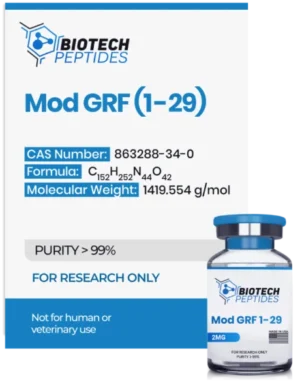
Mod GRF 1-29 (CJC-1295 NO DAC) (2mg)
Modified GRF (1-29), or Mod GRF (1-29), is a synthetic peptide analog of growth hormone-releasing hormone (GHRH). It was first developed in the 1980s when studies indicated that the first 29 amino acids of GHRH may possess all of the biological roles associated with the full-length 44 residue protein.[1] The initially designed peptide, known as GRF (1-29), is the shortest segment of GHRH, and appears to possess all the properties of the full-length hormone. A truncated synthetic form of GHRH known as Sermorelin, or GRF 1-29, also has 29 amino acids. Modified GRF (1-29) undergoes alteration to include four substituted amino groups in its chain.[2] The intention behind these amino modifications is to protect the peptide from both oxidation and degradation during manufacture. The modification also appears to increase the binding affinity to GHRH receptors. Modified GRF (1-29) is also known as Mod GRF, or Tetra-substituted GRF (1-29). The latter name clarifies that the modified peptide differs from GRF (1-29) as a result of changes in four of its amino acids. Modified GRF (1-29) is structurally identical to CJC-1295 without DAC.
$22.00 -
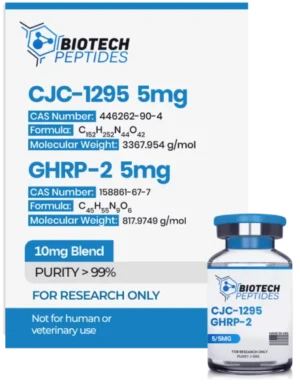
CJC-1295 & GHRP-2 Blend (10mg)
CJC-1295 & GHRP-2 blend combines two peptides with different structures; both have been researched for their proposed affinity for receptors in the pituitary gland and other parts of the central nervous system. Despite activating different receptors, CJC-1295 & GHRP-2 may exhibit similar action.
CJC-1295 is a molecule that appears to bind to the growth hormone-releasing hormone (GHRH) receptors, which may cause the release of growth hormone by pituitary cells. CJC-1295 is derived from GHRH 1-29, the shortest functional sequence of GHRH consisting of the first 29 amino acids. CJC-1295 is a tetrasubstituted version of the peptide that is also modified by adding a drug affinity complex (DAC) component called N-epsilon-3-maleimidopropionamide, which appears to bind to plasma proteins and may improve CJC-1295 pharmacokinetics.
GHRP-2, or Growth Hormone Releasing Peptide 2, is a synthetic hexapeptide composed of six amino acids. This peptide appears to bind to ghrelin or growth hormone secretagogue 1a receptors (GHS-R1a) found in the hypothalamus and the pituitary gland. As a result, GHRP-2 also appears to stimulate the production of growth hormone (GH) in pituitary cells that express this receptor.
$84.00 -
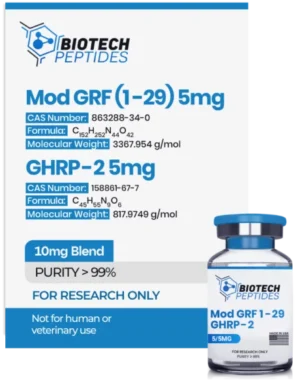
Mod GRF 1-29 & GHRP-2 Blend (10mg)
Modified GRF 1-29 (also abbreviated as Mod GRF 1-29), is a synthetic peptide analog of Growth Hormone Releasing Hormone (GHRH). It is a modified version of the first twenty-nine amino acids of the naturally occurring GHRH. This modification has been suggested to provide better stability and potentially reduce metabolic clearance. More specifically, the modifications may involve the substitution of four specific amino acids within the initial 29 amino acids of Growth Hormone-Releasing Hormone (GHRH). These changes occur at the 2nd, 8th, 15th, and 27th positions and may potentially enhance the peptide’s durability against enzymatic degradation, especially by enzymes such as dipeptidyl peptidase-4 (DPP-4). It is hypothesized that replacing L-alanine with D-alanine at the second position may increase resistance to molecular breakdown. Furthermore, replacing asparagine with glutamine at the eighth position might reduce the likelihood of asparagine reconfiguration and amide hydrolysis. Additionally, substituting glycine with alanine at the 15th position may improve bioactivity. Lastly, the switch from methionine to leucine at the 27th position is thought to help prevent methionine oxidation. It may lead to natural growth hormone production and increased levels of IGF-1 (Insulin-Like Growth Factor-1).
$84.00