support@biotechpeptides.ca
-
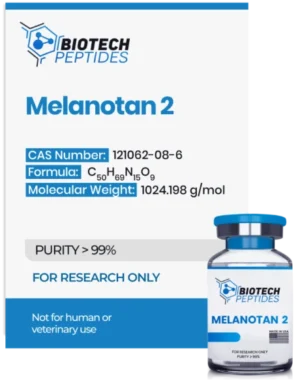
Melanotan 2 (2mg & 10mg)
Melanotan 2 (MT-2) is a synthetic analog of the alpha-melanocyte-stimulating hormone (alpha-MSH). A study conducted at the University of Arizona observed the involvement of alpha-MSH in skin pigmentation in rodents.[1] This finding then led to the development of MT-2 in the 1980s by a team of researchers at the university. It has been examined frequently in laboratory settings to determine its potential in melanin production and various ancillary impacts on the brain.
Price range: $16.00 through $47.00Melanotan 2 (2mg & 10mg)
Price range: $16.00 through $47.00 Select options This product has multiple variants. The options may be chosen on the product page -
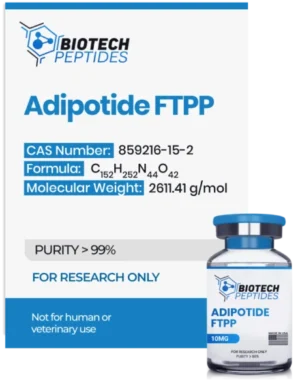
Adipotide FTPP (10mg)
Specifications
Other Known Titles: Adipotide
Molecular Formula: C152H252N44O42
Molecular Weight: 2611.41 g/mol
Sequence: Cys-Lys-Gly-Gly-Arg-Ala-Lys-Asp-Cys—Gly-Gly–(Lys-Leu-Ala-Lys-Leu-Ala-Lys)2
$77.00 -
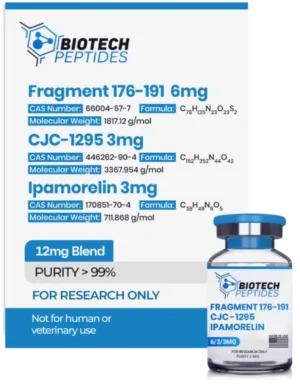
Fragment 176-191 & CJC-1295 & Ipamorelin Blend (12mg)
Fragment 176-191 houses the primary proposed ‘lipolytic fragment’ of the growth hormone (hGH) and it potentially targets the beta-3 adrenergic receptors (ADRB3), which may facilitate its suggested weight-loss potential. This peptide is proposed to amplify fat burning in adipose tissue cells and stimulate ‘thermogenesis’ in skeletal muscle cells via these receptors.[1]
CJC-1295 (Mod GRF 1-29), is an apparently enhanced version of GHRH (1-29) crafted to potentially optimize its pharmacokinetics. It is posited to elevate growth hormone and Insulin-Like Growth Factor 1 (IGF-1) levels. Research suggests it may increase growth hormone production between 200-1000%. Furthermore, CJC-1295 is believed to increase plasma IGF-I concentrations by 1.5- to 3-fold.[2]
Ipamorelin, a five-amino-acid chain, is identified as a Growth Hormone Secretagogue (GHS). It is posited to function similarly to Growth Hormone Releasing Peptides (GHRPs) and to apparently emulate the natural hunger hormone, ghrelin, particularly its potential to stimulate the release of hGH from pituitary cells.[3] A notable feature of Ipamorelin research is its apparent selectivity and its reported negligible influence on the secretion of other pituitary hormones like cortisol, prolactin, and aldosterone.
$87.00 -
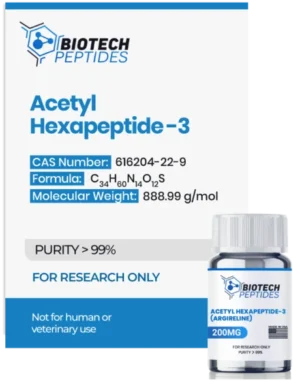
Acetyl Hexapeptide-3 (Argireline) (200mg)
Acetyl Hexapeptide-3 (Argireline) is a peptide chain of amino acids with the following sequence: Ac-Glu-Glu-Met-Gln-Arg-Arg-NH2. It is a fragment of the SNAP-25 (synaptosome-associated protein 25 kDa).[1] SNAP-25 is a key component of the SNARE (Soluble N-ethylmaleimide-sensitive factor Attachment protein Receptor)-Synaptotagmin-1 complex. This is a protein assembly that facilitates the release of neurotransmitters, such as acetylcholine, into the synaptic cleft between nerve cells and muscle cells. SNAP-25 is considered to be critical in this process because it appears to be in the assembly of the SNARE complex. This may also lead to the release of acetylcholine, thus triggering muscle contraction. Acetyl Hexapeptide-3 resembles the SNAP-25 protein, particularly the portion that is believed essential for SNARE complex formation.
By inhibiting its formation, the peptide may also prevent neurotransmitter release and muscle contraction. Researchers have investigated Acetyl Hexapeptide-3 (Argireline) for its potential to support skin cell structure and reduce wrinkling along the stratum corneum. Continuous muscle movements result in wrinkling, and the devitalization of muscle contractions may possibly inhibit the development of new lines and decrease the depth of existing skin tissue creases and wrinkles. Acetyl Hexapeptide-3 (Argireline) may prevent muscles from moving or contracting. Researchers also posit that the peptide may support endogenous collagen production to preserve the skin’s extracellular matrix.
$210.00 -
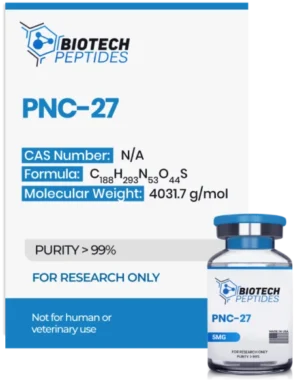
PNC-27 (5mg)
PNC-27 is a synthetic peptide initially developed for its proposed inhibitive action on cancer cell proliferation. It is a member of the PNC family of probe proteins and is designed to attach to malformed cancer cells and induce cell necrosis, but bypass normal functioning cells. The PNC-27 peptide contains the HDM2 binding domain and transmembrane domain corresponding to residue 1226 on p53. Researchers suggest that it exhibits potential to bind to and kill cancer cells through membrane lysis or cell membrane destruction. Research studies have suggested that the PNC-27 peptide may be selective in targeting specific cancer cell types, prompting further research within the context of pancreatic cancer, breast cancer, leukemia, melanoma, and other cancer strains.[1]
The PNC protein was first developed in 2000. The PNC-27 peptide appears to be a non-toxic compound, attaching to and puncturing the membranes of individual cancer cells. As a result, rapid implosion may occur, leading to immediate cell death due to differences in osmotic pressure inside and outside the tumor cells. PNC-27 appears to have this potential through an affinity for binding to a protein called HDM2. Cancer cells typically display HDM2 in their cell membranes.[2] According to the researchers “PNC-27 targets HDM-2 in the membranes of cancer cells, allowing it to induce membranolysis of these cells selectively.” Immediately after exposure to the PNC-27 peptide, studies have observed that the peptide appears to move to HDM2. Binding to them creates pores or holes in the cell membrane, causing “membrane lysis” or death of the cell membrane. This process, in turn, may lead to the destruction of cancer cells. Research is ongoing.
$142.00 -
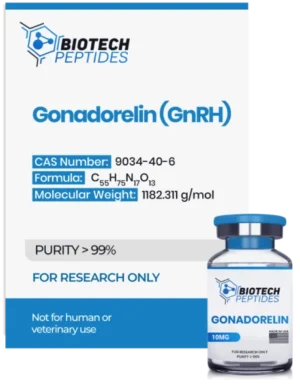
Gonadorelin (GnRH) (10mg)
Gonadorelin (GnRH) is a decapeptide gonadotropin-releasing hormone agonist.[1] It appears to work by stimulating the synthesis and release of luteinizing hormone and follicle-stimulating hormone. It is being researched within the context of infertility and reproductive systems, and hypogonadism. It is also studied for its potential as a diagnostic tool to assess pituitary function.
$79.00 -
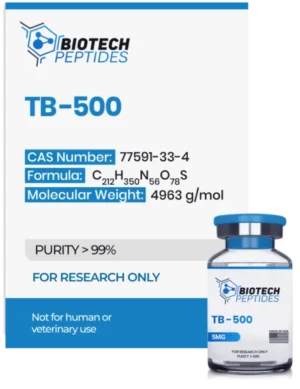
TB-500 (Thymosin Beta-4) (5mg)
TB-500, or Thymosin Beta-4, is a synthetic analog of the endogenous Thymosin beta 4 protein, which is considered ubiquitously present in cells. The peptide belongs to a widespread family of 16 related molecules considered to exhibit a high degree of sequence conservation and localization in the majority of tissues and circulating cells.
Thymosin Beta-4 is speculated to encompass a unique peptide sequence, LKKTETQ, found between the 16th and 24th amino acids. This sequence is thought to assist in actin binding potentially. Actins are proteins believed to be vital to the cell’s cytoskeleton. They appear to maintain the cell’s structural framework and are considered by experts to be crucial for primary cellular activities, such as movement.
It is hypothesized that Thymosin Beta-4 associates with actin by attaching to globular actin (G-actin), the monomeric form of actin, before it forms filamentous actin (F-actin). This suggested interaction between Thymosin Beta-4 and G-actin might impede the polymerization process, a mechanism known as actin sequestration. This interference might potentially increase the concentration of G-actin.
The assumed inhibition of F-actin polymerization by Thymosin Beta-4 might result in alterations to the cellular cytoskeleton’s structure. These changes may impact the cell’s ability to move and undergo shape transformations.[1] TB-500 was developed with the intention of sequestering and blocking actin polymerization in eukaryotic cells and influencing cell motility and transformation in experimental settings.
$70.00 -
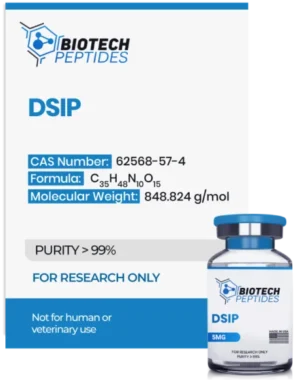
DSIP (5mg)
Specifications
Other Known Titles:Delta Sleep-Inducing Peptide
Molecular Formula: C35H48N10O15
Molecular Weight: 848.82 g/mol
Sequence: Trp-Ala-Gly-Gly-Asp-Ala-Ser-Gly-Glu
$44.00 -
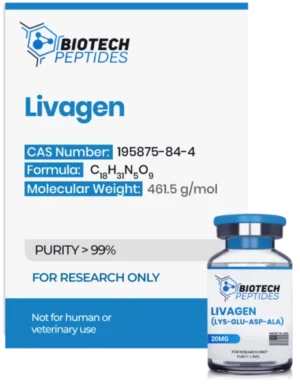
Livagen (20mg)
Livagen is a short peptide bioregulator, similar in structure to Epitalon. It is a tetrapeptide made of the amino acids Lys-Glu-Asp-Ala (KEDA) and is classified amongst Khavinson’s peptides. As a bioregulator, the peptide may interact with genetic material in different cells and consequently unpack and “unlock” various cellular genes. Livagen’s impacts appear to be exhibited directly on the lymphocytes (cells of the immune system), liver, and gastrointestinal tract (GIT). Its direct functions may be widespread, as suggested through research studies on DNA and gene expression patterns. The potential of the Livagen peptide to activate genes enclosed in the GIT and immune system may reflect possible age-mitigating characteristics exerted on cells.
$62.00 -
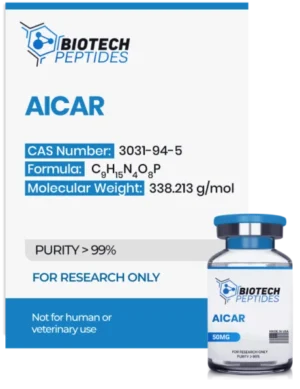
AICAR (50mg)
AICAR or 5-Aminoimidazole-4-carboxamide ribonucleotide, is a synthetic adenosine monophosphate analog. It was developed to stimulate the AMP-dependent protein kinase (AMPK) activity.[1][2] It is currently being investigated as a protective agent against ischemic damage in the cardiac myocytes during cardiac injury. The AMP-activated protein kinase is an enzyme and a protein that may play a regulatory role in several metabolic pathways. Its expression has been observed in several tissues, including the skeletal muscles, liver, and brain. In all these tissues, it is considered to exert a potential net effect on lipogenesis and may inhibit cholesterol synthesis and ketogenesis. It may also modulate insulin secretion and skeletal muscle fatty acid oxidation with glucose uptake. Several energy deficit states may trigger the release of AMPK, like hypoxia or hypoglycemia.
$56.00 -
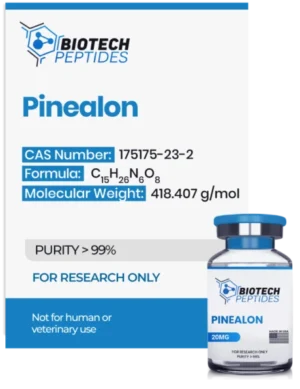
Pinealon (20mg)
Pinealon (also referred to as EDR) is a short peptide comprising only three amino acids (Glu-Asp-Arg). Additionally, it is classified as one of Khavinson’s peptides. EDR is generally extracted from a crude polypeptide extract called Cortexin. Pinealon is considered to be a peptide bioregulator, and it appears to interact directly with DNA. It may contribute to the alteration of gene expression levels. It may potentially exhibit behavior modification and may protect various cell types, including neurons, against hypoxia. Pinealon has been studied for its potential to impact the pineal gland to address issues with metabolism, circadian rhythm disorders, and certain cognitive functions.
$68.00 -
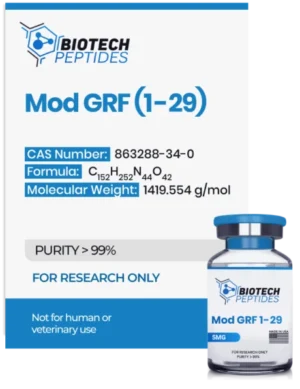
Mod GRF 1-29 (CJC-1295 NO DAC) (5mg)
Modified GRF (1-29), or Mod GRF (1-29), is a synthetic peptide that is a modified fragment of the endogenously occurring growth hormone-releasing hormone (GHRH). It was first developed in the 1980s when studies indicated that the first 29 amino acids of GHRH may possess all of the biological potential associated with the full-length 44 GHRH molecule.[1]
This discovery led to the development of a truncated version called GRF (1-29), also referred to as Sermorelin by researchers. Mod GRF (1-29) introduces specific modifications to support the peptide’s stability and efficacy. Four amino acids in the sequence are substituted at positions 2, 8, 15, and 27.[2] Here is what some researchers believe about these modifications:
– Position 2: The amino acid alanine is replaced with its mirror image, D-alanine. This substitution aims to increase resistance to enzymatic degradation, thereby improving the peptide’s stability.
– Position 8: Asparagine is substituted with lysine, an amino acid with a positively charged side chain. This change may support the peptide’s binding affinity to GHRH receptors, potentially increasing its biological activity.
– Position 15: Histidine is replaced with D-phenylalanine, another D-amino acid. This modification is intended to protect the peptide from further enzymatic breakdown.
– Position 27: Cysteine is substituted with N-methylglycine, also referred to as sarcosine. This alteration may extend the peptide’s half-life by mitigating enzymatic cleavage.These modifications collectively aim to produce a peptide with increased stability, a longer half-life, and better-supported interaction with GHRH receptors compared to the original GRF (1-29). Modified GRF (1-29) is structurally identical to CJC-1295 without DAC. The DAC in CJC-1295 serves to modify its pharmacokinetic properties.
$46.00 -
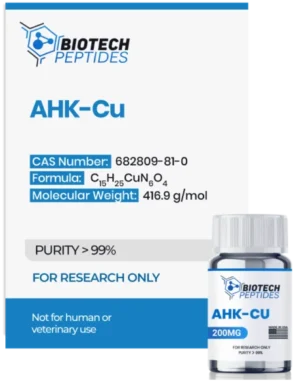
AHK-Cu (200mg)
AHK-Cu is a tripeptide containing a copper atom. It is a short peptide in which the copper atom is attached between the histidine and alanine residues of the alanine-histidine-lysine tripeptide. The copper atom is linked to three nitrogen atoms in this molecule. It is a naturally occurring compound that has been suggested to add support in cell growth and regulation, and cell death, particularly in the case of vascular endothelial cells (the innermost layer of blood vessels). AHK-Cu has also been studied extensively in animal models under laboratory conditions for its suggested impact on collagen synthesis. Researchers posit that the peptide appears to regulate various cellular processes primarily by controlling the production of two compounds: Vascular Endothelial Growth Factor (VEGF) and Transforming Growth Factor beta (TGF-B).[1] According to the researchers “TGF-beta1 induction of angiogenesis requires a rapid and transient apoptotic effect mediated by VEGF/VEGFR2.” AHK-Cu, by enhancing levels of the Vascular Endothelial Growth Factor, may possibly activate fibroblasts and endothelial cells. Fibroblasts are considered to lead to the production of two complex compounds; elastin and collagen. Endothelial cells are considered responsible for the growth and function of blood vessels that supply nutrition to hair follicles and skin cells. The activation of endothelial cells in association with the fibroblasts may lead to a strengthened skin barrier and increased skin elasticity, as well as potential acceleration in tissue repair. Some laboratory studies done on dermal cells indicate an increase in collagen type 1 production to the extent of as much as 300%.
$192.00 -
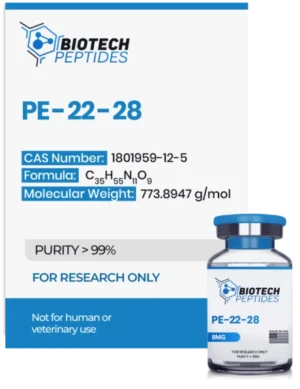
PE-22-28 (8mg)
PE-22-28 is a synthetic variant of the naturally occurring peptide Spadin. Spadin is a secreted peptide obtained from Sortilin. It appears to act as an antagonist of the TREK-1 (TWIK-related-potassium channel) receptor, a two-pore potassium channel identified as a potential target in the context of depression research and as a possible neurogenic regulator. Studies in mice have suggested that TREK-1 receptor deletion may make them resistant to depressive behavior and corresponding chemical imbalances in the brain.[1] PE-22-28 represents a shorter seven amino acid synthetic Spadin analog with potentially higher efficacy and stability. Research in animal models is ongoing.
$55.00 -
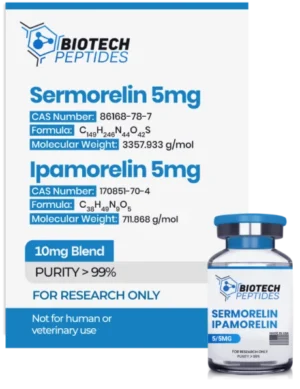
Sermorelin & Ipamorelin Blend (10mg)
Molecular Formula: C149H246N44O42S
Molecular Weight: 3357.9 g/mol
Sequence: Tyr-Ala-Asp-Ala-lle-Phe-DL-Thr-Asn-Ser-Tyr-Arg-Lys-Val-Leu-Gly-Gln-Leu-Ser-Ala-Arg-Lys-Leu-Leu-Gln-Asp-Ile-Met-Ser-Arg-NH2
$81.00