support@biotechpeptides.ca
-
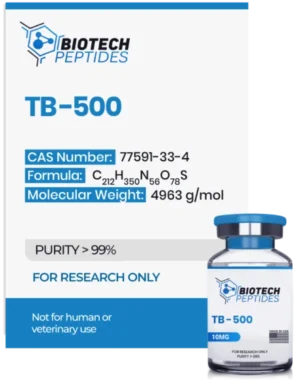
TB-500 (Thymosin Beta-4) (10mg)
TB-500, or synthetic Thymosin Beta-4, also known as synthetic Tβ4, is a synthetic analog of the endogenous Thymosin Beta-4 protein, which is considered to be ubiquitously present in cells. The peptide belongs to a widespread family of 16 related molecules observed to exhibit a high degree of sequence conservation and localization in most tissues and circulating cells. TB-500 was developed to sequester and block actin polymerization in eukaryotic cells.
$119.00 -
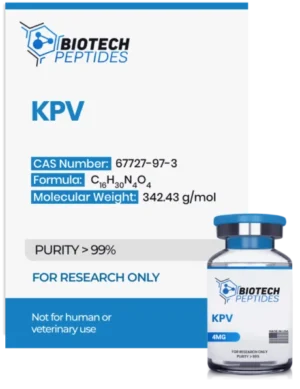
KPV (4mg)
KPV is the C-terminal peptide stretch of alpha-melanocyte-stimulating hormone (alpha-MSH). The peptide consists of the last three amino acids of the alpha-MSH hormone. It has been explored for its potential anti-inflammatory properties at the cellular level. Comprising the amino acids L-Lys-L-Pro-L-Val, KPV represents the minimal sequence that may mitigate inflammation in experimental models. However, the precise mechanisms of its action still need to be further studied in order to be more fully understood.
This peptide’s various mechanisms may potentially differentiate from that of alpha-MSH, which researchers believe interacts with the melanocortin-1 receptors by theoretically activating the cAMP pathway. Instead, studies suggest a rapid and acute increase in intracellular calcium when KPV is introduced alongside N6-(L-2-phenyl isopropyl) adenosine (PIA), an adenosine agonist that inhibits the cAMP pathway.
Further data-gathering investigations using cells transfected with melanocortin-1 receptors have indicated that KPV may, in theory, elevate intracellular calcium levels. This may imply an additional type of interaction with this receptor. This calcium signaling is thought to contribute to the inhibition of the activation of nuclear factor kappa-light-chain-enhancer of activated B cells (NF-κB), a transcription factor involved in inflammatory responses. By potentially inhibiting NF-κB activation, KPV might modulate inflammatory processes within cells.
$39.00 -
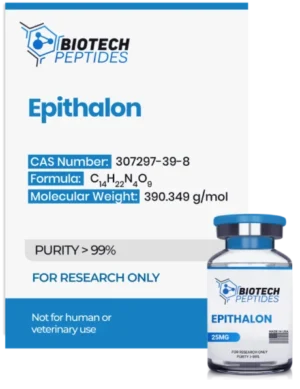
Epithalon (25mg)
Specifications
Molecular Formula: C14H22N4O9
Molecular Weight: 390.34 g/mol
Sequence: Ala-Glu-Asp-Gly
Other Known Titles: Epitalon, Epithalone, Epithalamin
$94.00 -
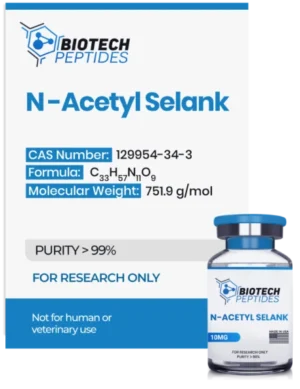
N-Acetyl Selank (10mg)
N-Acetyl Selank is an acetylated form of the Selank peptide. The acetylation of the peptide into N-Acetyl Selank appears to improve its stability. Selank is a synthetic analogue of the natural tetrapeptide Tuftsin. Tuftsin is an immunomodulatory peptide, and N-Acetyl Selank appears to share many of its potential functions. In addition, N-acetyl Selank also appears to exhibit an impact on neurotransmitters, brain signaling, and neuroplasticity.
$65.00 -
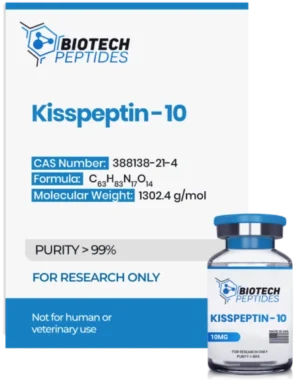
Kisspeptin-10 (10mg)
Kisspeptin-10 is a peptide fragment derived from the full-length Kisspeptin (also referred to as Kisspeptin-54 or Metastin). Specifically, Kisspeptin-10 is a fragment containing the 45-54 sequence from the larger parent molecule. Research into this peptide has suggested that the compound may act as a mediator of endocrine signaling between various endocrine cells.
Originating from the KISS1 gene, which is thought to play a critical role in reproductive cell signaling and physiology, Kisspeptin-10 is particularly interesting to researchers for its potential to influence the secretion of gonadotropin-releasing hormone (GnRH). This, in turn, may affect the release of other reproductive hormones from cells with receptors for GnRH. In addition, researchers posit that the compound may potentially impact the development and regulation of blood vessels and renal function, and some studies have suggested it may mitigate cancer cell proliferation and metastasis.
$52.00 -
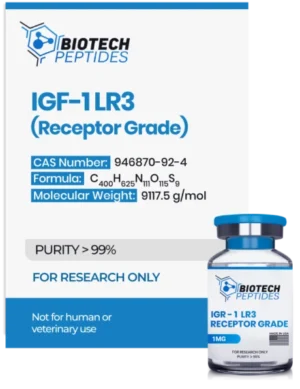
Receptor Grade IGF-1 LR3 (1mg)
Specifications
Molecular Formula: C400H625N111O115S9
Molecular Weight: 9117.5 g/mol
Sequence: MFPAMPLSSL FVNGPRTLCG AELVDALQFV CGDRGFYFNK PTGYGSSSRR APQTGIVDEC CFRSCDLRRL EMYCAPLKPA KSA
$99.00 -
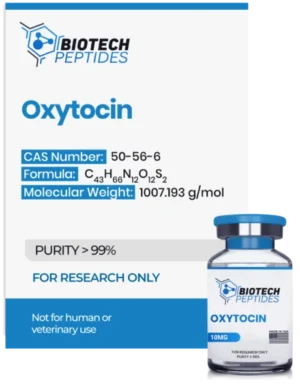
Oxytocin (10mg)
Oxytocin is a small peptide comprising only nine amino acids, naturally produced in the hypothalamus and secreted by the posterior pituitary gland cells. It has also been isolated from placenta, ovaries, testes, adrenal glands, thymus, retina, and pancreas tissues. The active hormone is obtained by proteolytic cleavage of a larger precursor protein. It is no longer considered merely a neurohypophyseal hormone as its actions are considered to be far-reaching and include interaction with additional peptides. Oxytocin appears to be a protein with two independent natural functions. First, it appears to act as a neuropeptide produced by the hypothalamus to regulate bonding, reproduction, and birth. Oxytocin appears to be bloodborne and secreted by the placenta of pregnant animals to influence birth, milk production, and bonding with their young. Small amounts of the protein produced from testes may promote mating behavior and pair bonding.
$45.00 -
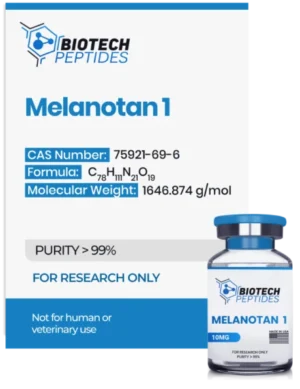
Melanotan 1 (10mg)
Melanotan 1 (MT-1) is a synthetic equivalent of alpha-melanocyte-stimulating hormone (alpha-MSH). The peptide has been exhaustively researched through observation of research models displaying signs of erythropoietic protoporphyria to reduce potential phototoxicity or UV-related damage.[1] It has been suggested that the peptide may have the potential to influence diverse physiological processes like feeding patterns, central nervous system operations, blood pressure, and more.
$38.00 -
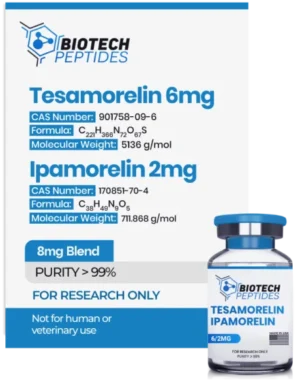
Tesamorelin & Ipamorelin Blend (8mg)
The Tesamorelin & Ipamorelin peptide blend is a mixture of peptide compounds that have been studied for their possible interaction with certain receptors in the cells of the pituitary gland. These receptors include the growth-hormone secretagogue (GHS) receptors and growth hormone-releasing hormone (GHRH) receptors, which are associated with the release of growth hormone (hGH).
Tesamorelin, which is a synthetic peptide, is believed by researchers to act as an analog of growth hormone-releasing hormone through binding to GHRH receptors.[1] Tesamorelin consists of an amino acid chain with 44 amino acids, including a specific sequence similar to GHRH. Additionally, Tesamorelin has been modified in an effort to support its resistance to enzymatic degradation. As an example, the C-terminus of the synthetically developed Tesamorelin has been modified with a trans-3-hexenoic acid group. This modification, known as an omega-amino acid modification, may help improve the peptide’s resistance to enzymatic degradation.
Tesamorelin also has an acetyl group (CH₃CO-) attached to its N-terminus, which may potentially enhance the stability and bioactivity of the peptide. As a result, the peptide is also known as N-(trans-3-hexenoyl)-[Tyr1]hGRF(1–44)NH2 acetate.[2] By interacting with GHRH receptors in the pituitary and hypothalamus, Tesamorelin may trigger the release of hGH from pituitary cells.
Similarly, Ipamorelin is also a synthetic peptide that interacts with pituitary cells and may stimulate the synthesis and release of hGH. Its proposed mechanism of action involves interaction with GHS receptors, also known as ghrelin receptors, which are found in the pituitary and hypothalamus.[3] By activating these receptors, Ipamorelin may mimic the actions of ghrelin on the pituitary gland, potentially leading to the release of growth hormone from pituitary cells.
$90.00 -
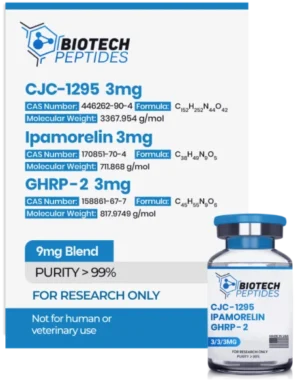
CJC-1295 (Mod GRF 1-29) & Ipamorelin & GHRP-2 Blend (9mg)
CJC-1295 is classified as a Growth Hormone Secretagogue (GHS), also known as DAC:GRF. It is an advanced version of GHRH (1-29), synthetically developed with the intention of producing better pharmacokinetics, potentially increasing Growth Hormone levels and Insulin-Like Growth Factor 1 (IGF-1). According to research, it exhibits the potential to increase the production level of Growth Hormone anywhere from 200-1000%. Moreover, the research developers commented that CJC-1295 may increase “mean plasma IGF-I concentrations by 1.5- to 3-fold.”[1] This apparent rise in growth hormone level has been reported to persist for about 6-8 days under study conditions. A longer half-life would ensure the increased level of growth hormone production even beyond the initial introduction of the peptide.
$80.00 -
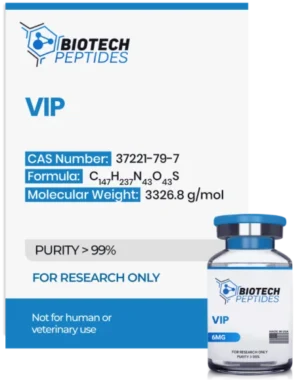
VIP (6mg)
Vasoactive intestinal peptide (VIP, vasoactive intestinal polypeptide, PHM27) is a short peptide hormone endogenously produced in the gastrointestinal tract, pancreas, and brain of most vertebrate animals. Researchers have suggested that the peptide may exhibit potential to influence inflammation, particularly in the cases of neurodegenerative disease, pulmonary fibrosis, inflammatory bowel disease, and cardiac fibrosis. VIP has been suggested to act as an immune system regulator and has been classified by scientists as an anti-inflammatory peptide. It is of active scientific interest for its proposed ability to support cognitive function in the setting of neurodegenerative disease. VIP has been hypothesized to bind to class II G protein-coupled receptors.
$71.00 -
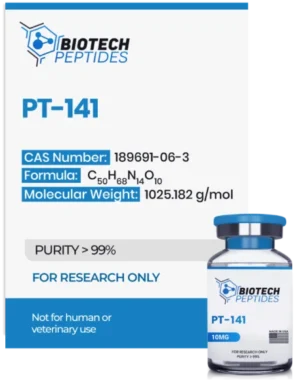
PT-141 (Bremelanotide) (10mg)
PT-141, also known as Bremelanotide, was derived from a synthetic melanocortin analog known as Melanotan 2 (MT-2). A melanocortin analog, such as PT-141 and MT-2, is considered to be any synthetic compound designed to mimic or influence the functions of natural melanocortin peptides. These peptides, such as the alpha-melanocyte stimulating hormone (α-MSH), may be involved in a range of physiological processes including appetite regulation, energy homeostasis, immune responses, and skin cell pigmentation. PT-141 is a melanocortin analog that was developed to interact with Melanocortin-4 Receptor (MC-4R). It has been studied for a variety of potential characteristics and bioactivities through its interaction with this receptor. Apart from MC-4R, there are other melanocortin receptors like MC-1R, MC-2R, MC-3R, and MC-5R, each associated with different potential functions. For instance, MC-1R may be primarily involved in skin cell and hair follicle pigmentation, MC-2R appears to play a crucial role in the adrenal axis and stress response, MC-3R is implicated in the regulation of energy homeostasis, and MC-5R has been linked to exocrine function and thus impacts processes such as sweating and sebum production.
$45.00 -
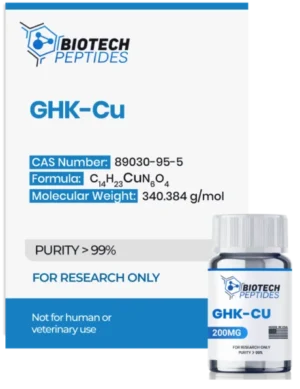
GHK-Cu (200mg)
GHK-Cu (Copper Tripeptide) is a tripeptide that scientists assert is naturally present in blood plasma. It has a sequence of Gly-His-Lys (glycine, histidine, and lysine,) which readily binds with copper to form the copper tripeptide. Scientific studies carried out in different research laboratories worldwide have explored its various biological roles. GHK-Cu exhibits some potential to influence various biological pathways, including an apparent induction of tissue repair, attraction of immune cells, antioxidant and anti-inflammatory characteristics, activation of collagen and glycosaminoglycan synthesis in skin fibroblasts, regulation of extracellular matrix components like decorin, and possible promotion of blood vessel growth. Recent studies indicate its potential role in stem cell biology and anti-tumor research as well.
$186.00 -
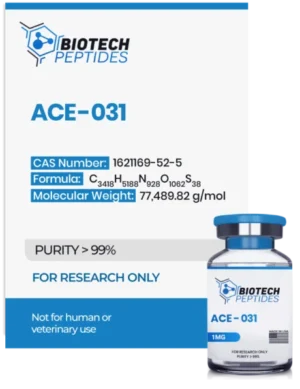
ACE-031 (1mg)
ACE-031 is a soluble protein comprising the type IIB activin receptor (ACVR2B) and the immunoglobulin G1-Fc (IgG1-Fc), and has been studied for its potential in binding and inactivating myostatin, a protein that hampers muscle cell growth. It has been examined during the course of various research studies involved in muscle-wasting disorders and neuromuscular conditions such as Duchenne Muscular Dystrophy (DMD), as well as certain cancers such as those of the prostate or colorectal regions and lipid storage and bone metabolism.
$161.00 -
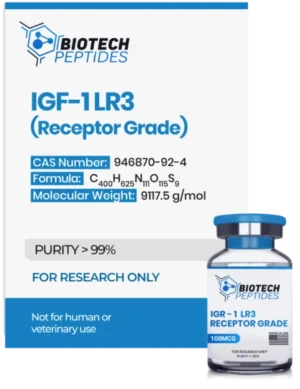
Receptor Grade IGF-1 LR3 (100mcg)
Specifications
Molecular Formula: C400H625N111O115S9
Molecular Weight: 9117.5 g/mol
Sequence: MFPAMPLSSL FVNGPRTLCG AELVDALQFV CGDRGFYFNK PTGYGSSSRR APQTGIVDEC CFRSCDLRRL EMYCAPLKPA KSA
$27.00