support@biotechpeptides.ca
-
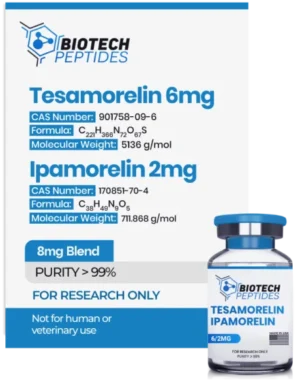
Tesamorelin & Ipamorelin Blend (8mg)
The Tesamorelin & Ipamorelin peptide blend is a mixture of peptide compounds that have been studied for their possible interaction with certain receptors in the cells of the pituitary gland. These receptors include the growth-hormone secretagogue (GHS) receptors and growth hormone-releasing hormone (GHRH) receptors, which are associated with the release of growth hormone (hGH).
Tesamorelin, which is a synthetic peptide, is believed by researchers to act as an analog of growth hormone-releasing hormone through binding to GHRH receptors.[1] Tesamorelin consists of an amino acid chain with 44 amino acids, including a specific sequence similar to GHRH. Additionally, Tesamorelin has been modified in an effort to support its resistance to enzymatic degradation. As an example, the C-terminus of the synthetically developed Tesamorelin has been modified with a trans-3-hexenoic acid group. This modification, known as an omega-amino acid modification, may help improve the peptide’s resistance to enzymatic degradation.
Tesamorelin also has an acetyl group (CH₃CO-) attached to its N-terminus, which may potentially enhance the stability and bioactivity of the peptide. As a result, the peptide is also known as N-(trans-3-hexenoyl)-[Tyr1]hGRF(1–44)NH2 acetate.[2] By interacting with GHRH receptors in the pituitary and hypothalamus, Tesamorelin may trigger the release of hGH from pituitary cells.
Similarly, Ipamorelin is also a synthetic peptide that interacts with pituitary cells and may stimulate the synthesis and release of hGH. Its proposed mechanism of action involves interaction with GHS receptors, also known as ghrelin receptors, which are found in the pituitary and hypothalamus.[3] By activating these receptors, Ipamorelin may mimic the actions of ghrelin on the pituitary gland, potentially leading to the release of growth hormone from pituitary cells.
$90.00 -
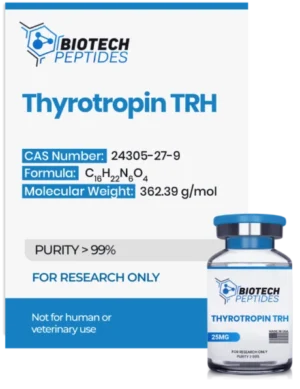
TRH Thyrotropin (Protirelin) (25mg)
Thyrotropin Releasing Hormone (TRH), often called Protirelin, is a small peptide hormone made of 3 amino acids and synthesized in the hypothalamus. The hormone is thought to function via binding to the thyrotropin-releasing hormone receptors TRH-1 and TRH-2. It was developed by researchers with the intention to stimulate the release of both thyroid-stimulating hormone (TSH) and prolactin from the anterior pituitary. TSH, in turn, acts directly on the thyroid gland to promote the synthesis and release of thyroid hormones, primarily triiodothyronine (T3) and thyroxine (T4). TRH has been employed in the study of anterior pituitary gland function in models of thyroid disorders. TRH may exhibit potential roles in TREK-1 channel, in the regulation of cellular aging, arousal, feeding behaviors, autonomic regulation, and mitigating free radical damage.
$93.00 -
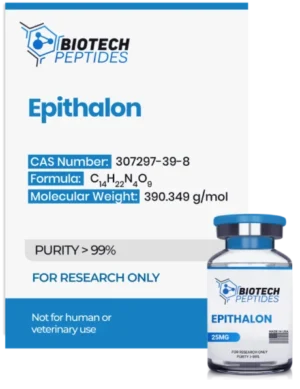
Epithalon (25mg)
Specifications
Molecular Formula: C14H22N4O9
Molecular Weight: 390.34 g/mol
Sequence: Ala-Glu-Asp-Gly
Other Known Titles: Epitalon, Epithalone, Epithalamin
$94.00 -
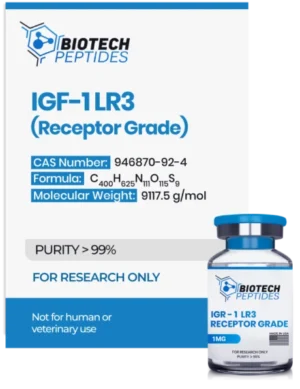
Receptor Grade IGF-1 LR3 (1mg)
Specifications
Molecular Formula: C400H625N111O115S9
Molecular Weight: 9117.5 g/mol
Sequence: MFPAMPLSSL FVNGPRTLCG AELVDALQFV CGDRGFYFNK PTGYGSSSRR APQTGIVDEC CFRSCDLRRL EMYCAPLKPA KSA
$99.00 -
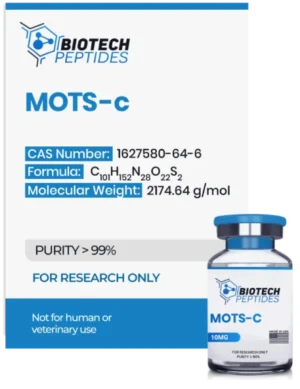
MOTS-c (10mg)
MOTS-c (mitochondrial open-reading-frame of the 12S rRNA-c) is a 16 amino acid peptide classified as a Mitochondrial-Derived Peptide (MDP), aka “mitochondrial hormone” or “mitokine.” Recent research indicates that MOTS-c is a bioactive peptide closely associated with mitochondrial communication and energy regulation. Initially, researchers hypothesized that it might be most active in the mitochondria, however recent studies suggest otherwise, that MOTS-c may operate via the bloodstream, exhibiting a potentially systemic action.
It is important to note that MOTS-c is a newly identified MDP. Its primary roles are under investigation, but studies include MOTS-c peptide’s influence in cell function and longevity, muscle contractile force, metabolic function and weight regulation.
$99.00 -
-
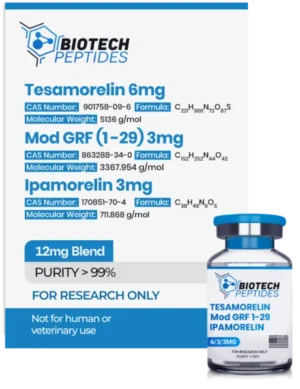
Tesamorelin & CJC-1295 (Mod GRF 1-29) & Ipamorelin Blend (12mg)
Tesamorelin & CJC-1295 (Mod GRF 1-29) & Ipamorelin peptide blend is a combination of peptides that may potentially interact with receptors in the pituitary gland. This blend may activate pituitary cells responsible for growth hormone (hGH) production.
Tesamorelin is a synthetic peptide that appears to act as an analog for growth hormone-releasing hormone (GHRH).[1] It may potentially interact with specific receptors in the pituitary and the hypothalamus, known as GHRH receptors. The activation of these receptors appears to trigger a release of growth hormone from pituitary cells.
Mod GRF (Modified Growth Hormone-Releasing Factor), also known as CJC-1295 without DAC (Drug Affinity Complex), is a synthetic peptide analog of the endogenous growth hormone-releasing hormone (GHRH).[2] It is a tetrasubstituted version of the shortest GHRH sequence. The peptide may potentially trigger GHRH receptors – GRF (1-29). It appears to bind to GHRH receptors in the pituitary cells associated with the release of hGH.
Ipamorelin is another synthetic peptide that may interact with pituitary cells, although it appears to do so by triggering a different receptor called the growth hormone secretagogue (GHS) receptor.[3] These receptors, also called ghrelin receptors, are apparently found in the pituitary and the hypothalamus. By activating these receptors in an organism’s brain, Ipamorelin may potentially trigger the synthesis of HGH by pituitary cells.
$109.00 -
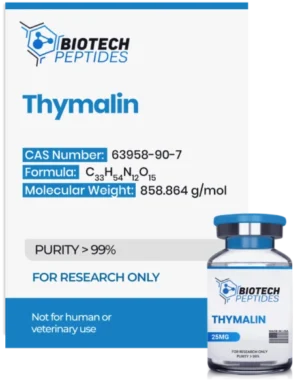
Thymalin (25mg)
Thymalin, sometimes referred to as Thymalin Alpha-1, is the synthetic variant of the endogenous Thymulin, which was first isolated from the thymus in 1977. The endogenously produced Thymalin has been researched for its potential in a wide landscape of research areas, with its influence speculated to extend to regulatory action on inflammation, mitigation of pain perception, neuroprotective action, and immune function support. Early studies have suggested that Thymalin and other thymus and pineal gland secretions may also support cell longevity.
$114.00 -
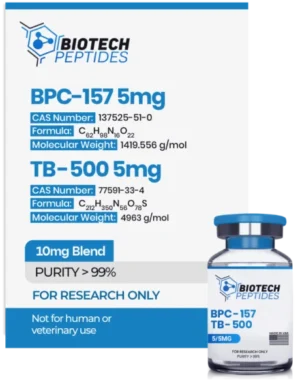
BPC-157 & TB-500 Blend (10mg)
BPC-157 and TB-500 peptides have both been examined in research on tissue repair processes, although study findings indicate that the compounds may use different biochemical pathways to achieve this potential. Researchers also hypothesize that the two molecules may exhibit synergistic effects in the healing process when exposed in combination.[1] The synergistic effect of the blend may improve the overall flexibility and adjustability of the tissues following damage.
$115.00 -
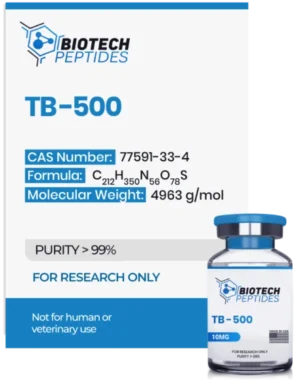
TB-500 (Thymosin Beta-4) (10mg)
TB-500, or synthetic Thymosin Beta-4, also known as synthetic Tβ4, is a synthetic analog of the endogenous Thymosin Beta-4 protein, which is considered to be ubiquitously present in cells. The peptide belongs to a widespread family of 16 related molecules observed to exhibit a high degree of sequence conservation and localization in most tissues and circulating cells. TB-500 was developed to sequester and block actin polymerization in eukaryotic cells.
$119.00 -
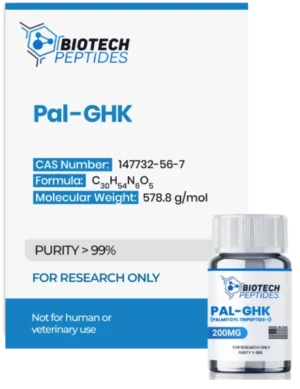
Pal-GHK (Palmitoyl Tripeptide-1) (200mg)
Pal-GHK, also known as Palmitoyl Tripeptide-1 and Palmitoyl Oligopeptide, is a synthetic peptide developed to function in protein production to support the skin’s extracellular matrix (ECM), and skin pigmentation. Pal-GHK is a synthetic hybrid peptide with one fatty acid and one peptide. “Pal” represents Palmitoyl—the covalent attachment of fatty acid to the end of the structure. “GHK” represents glycine-histidine-lysine—the peptide’s amino acid structure. This sequence is thought to be a small fraction of the large protein collagen, which is one of the main proteins in the extracellular matrix of skin and other tissues. The GHK sequence appears to be present in the “alpha 2(I) chain of type I collagen”, and researchers suggest that such a “tripeptide might be liberated by proteases at the site of a wound” as a signal of injury and thus, may be a powerful stimulant for repair.[1] Particularly, it may signal and attract fibroblasts—cells responsible for synthesizing collagen, elastin, and other proteins in the skin’s extracellular matrix, bones, and connective tissues. “Pal” represents Palmitoyl—the covalent attachment of fatty acid to the end of the structure. The addition of palmitoyl to the molecule is thought to result in better penetration through skin cells and, more specifically, stratum corneum.
$119.00 -
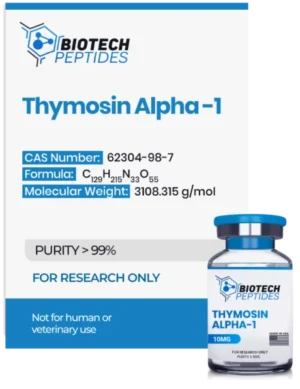
Thymosin Alpha-1 (10mg)
Thymosin Alpha-1, also known as TA1 or Tα1, is a naturally occurring peptide fragment that was discovered in 1972 and researched for its potential action within the context of studies relating to cystic fibrosis, infection (e.g., tuberculosis, cytomegalovirus), respiratory disorders, chronic hepatitis, and cancer. It is also referred to as Thymalfasin when synthetically developed. Originally, research on Thymosin Alpha-1 centered around its potential role in immune modulation. It is hypothesized that it might increase levels of Major Histocompatibility Complex (MHC) class I molecules and boost cytokine production, key components of the immune system that may enhance immune responses.[1][2] There is also a possibility that it might improve the activity of natural killer cells, which target virus-infected cells and tumors. Furthermore, it might enhance the expression of specific markers on T cells that are considered critical for their identification and function in the immune system, indicating a significant role in immune regulation. Thymosin Alpha-1 is also thought to possibly increase the presence of high-affinity interleukin-2 receptors on cell surfaces, potentially leading to the vigorous activation and proliferation of T lymphocytes, elements of immune response. There is speculation that it may affect both T-helper and cytotoxic T-cell populations, deemed essential for eliminating infected cells. Additionally, it might prompt the differentiation of thymocytes—precursor cells in the thymus—and peripheral blood lymphocytes into mature immune cells, increase natural killer cell numbers, and promote cytokine-driven inflammatory responses. Research also explores its potential role in enhancing macrophage efficiency—cells that engulf and digest pathogens—and in regulating the activity of alpha thrombin, a protein involved in blood clotting, highlighting its broad potential on immune function.
$130.00 -
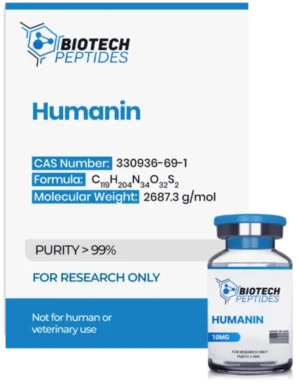
Humanin (10mg)
Humanin is an endogenously occurring unique peptide encoded by mitochondrial DNA. The peptide may exist in two different forms found in the cell: a 21 amino acid sequence found inside the cell’s mitochondria, and a 24 amino acid sequence found outside the cell’s cytosol. Both forms appear to act as cytoprotective proteins and may protect cells from the process of apoptosis (programmed cell death) by interfering with the operation of the Bcl2-related X protein (Bax).[1]
Bax is considered a pro-apoptotic protein that promotes apoptosis by disrupting the mitochondrial outer membrane. It is believed to facilitate the release of cytochrome c from mitochondria into the cytosol, which then triggers a cascade of events leading to cell death. By interfering with Bax’s function, Humanin may help support the initiation of this apoptotic pathway. Researchers posit that Humanin may “[support] the translocation of Bax from the cytosol to mitochondria. Conversely, reducing Humanin expression by small interfering RNAs sensitizes cells to Bax and increases Bax translocation to membranes.”
Apart from research into its possible interaction with Bax, Humanin studies suggest the peptide may also bind with other intracellular molecules, such as actinin-4 and phosphoprotein 8, which are both involved in cellular apoptosis. Binding with these proteins is also thought to contribute to Humanin’s cytoprotective potential.[2] Thus, studies suggest that Humanin may be important for protecting a variety of cells, most notably neurons. In addition, studies also suggest it may have a protective potential for cells in heart tissue, muscle cells, the retina of the eye, and the lining of blood vessels.
$140.00 -
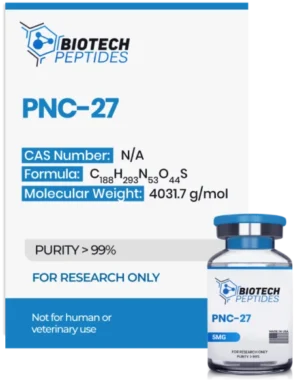
PNC-27 (5mg)
PNC-27 is a synthetic peptide initially developed for its proposed inhibitive action on cancer cell proliferation. It is a member of the PNC family of probe proteins and is designed to attach to malformed cancer cells and induce cell necrosis, but bypass normal functioning cells. The PNC-27 peptide contains the HDM2 binding domain and transmembrane domain corresponding to residue 1226 on p53. Researchers suggest that it exhibits potential to bind to and kill cancer cells through membrane lysis or cell membrane destruction. Research studies have suggested that the PNC-27 peptide may be selective in targeting specific cancer cell types, prompting further research within the context of pancreatic cancer, breast cancer, leukemia, melanoma, and other cancer strains.[1]
The PNC protein was first developed in 2000. The PNC-27 peptide appears to be a non-toxic compound, attaching to and puncturing the membranes of individual cancer cells. As a result, rapid implosion may occur, leading to immediate cell death due to differences in osmotic pressure inside and outside the tumor cells. PNC-27 appears to have this potential through an affinity for binding to a protein called HDM2. Cancer cells typically display HDM2 in their cell membranes.[2] According to the researchers “PNC-27 targets HDM-2 in the membranes of cancer cells, allowing it to induce membranolysis of these cells selectively.” Immediately after exposure to the PNC-27 peptide, studies have observed that the peptide appears to move to HDM2. Binding to them creates pores or holes in the cell membrane, causing “membrane lysis” or death of the cell membrane. This process, in turn, may lead to the destruction of cancer cells. Research is ongoing.
$142.00 -
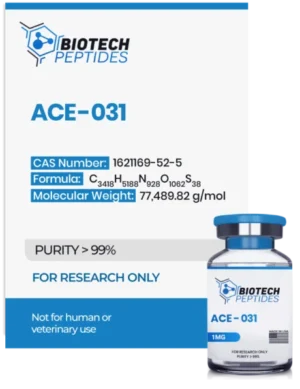
ACE-031 (1mg)
ACE-031 is a soluble protein comprising the type IIB activin receptor (ACVR2B) and the immunoglobulin G1-Fc (IgG1-Fc), and has been studied for its potential in binding and inactivating myostatin, a protein that hampers muscle cell growth. It has been examined during the course of various research studies involved in muscle-wasting disorders and neuromuscular conditions such as Duchenne Muscular Dystrophy (DMD), as well as certain cancers such as those of the prostate or colorectal regions and lipid storage and bone metabolism.
$161.00