support@biotechpeptides.ca
-
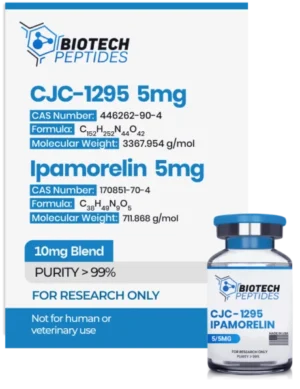
CJC-1295 & Ipamorelin Blend (10mg)
Ipamorelin is a growth hormone (GH) secretagogue that has been extensively studied in the diverse biological milieu. It is considered by researchers to be one of the most selective secretagogues and is an apparent agonist of the growth hormone/ghrelin secretagogue receptor.[1] This potential selectivity is attributed to the fact that Ipamorelin does not appear, in any way, to affect the secretion of other pituitary hormones. These include prolactin, follicle-stimulating hormone (FSH), luteinizing hormone (LH), thyroid-stimulating hormone (TSH), or Adrenocorticotropic hormone (ACTH). Ipamorelin appears to act via the molecular mimicry of the natural hormone ghrelin, which triggers and stimulates the release of the growth hormone.[2] This whole process may be regulated by a negative feedback mechanism, which may nullify any ancillary impacts of excess GH production. Researchers suggest that Ipamorelin may impact all physiological processes in which ghrelin is active. Based on their observations, researchers have suggested that Ipamorelin may improve bowel movement and gastric function, enhancing the development and repair of muscles, facilitating the release of insulin hormone from the pancreas, and stimulating the growth of bones. In addition to these potentials, Ipamorelin may also be involved in cellular repair and increased collagen production.[3] It has also been hypothesized that the peptide may act to improve cognitive function and sleep cycle regulation.
$81.00 -
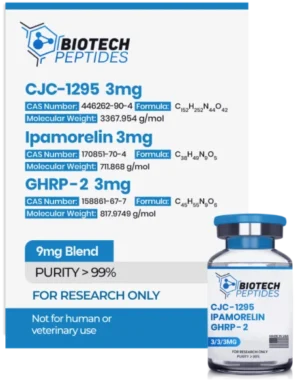
CJC-1295 (Mod GRF 1-29) & Ipamorelin & GHRP-2 Blend (9mg)
CJC-1295 is classified as a Growth Hormone Secretagogue (GHS), also known as DAC:GRF. It is an advanced version of GHRH (1-29), synthetically developed with the intention of producing better pharmacokinetics, potentially increasing Growth Hormone levels and Insulin-Like Growth Factor 1 (IGF-1). According to research, it exhibits the potential to increase the production level of Growth Hormone anywhere from 200-1000%. Moreover, the research developers commented that CJC-1295 may increase “mean plasma IGF-I concentrations by 1.5- to 3-fold.”[1] This apparent rise in growth hormone level has been reported to persist for about 6-8 days under study conditions. A longer half-life would ensure the increased level of growth hormone production even beyond the initial introduction of the peptide.
$80.00 -
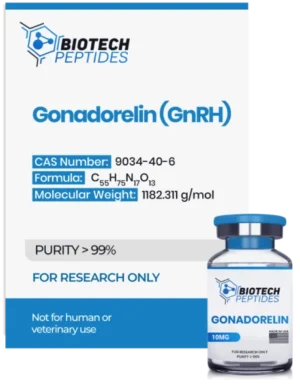
Gonadorelin (GnRH) (10mg)
Gonadorelin (GnRH) is a decapeptide gonadotropin-releasing hormone agonist.[1] It appears to work by stimulating the synthesis and release of luteinizing hormone and follicle-stimulating hormone. It is being researched within the context of infertility and reproductive systems, and hypogonadism. It is also studied for its potential as a diagnostic tool to assess pituitary function.
$79.00 -
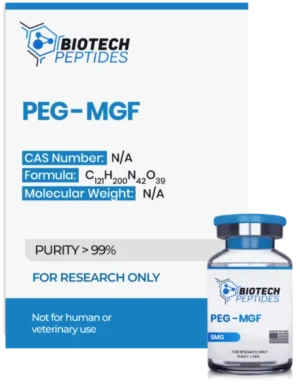
PEG-MGF (Pegylated MGF) (5mg)
Pegylated Mechano-growth factor (PEG-MGF) is a peptide that originates from the IGF-I (main anabolic mediator of growth hormone) gene sequence, which undergoes a process called alternative splicing.[1] This process allows for the synthesis of additional segments, which form new functional molecules. During stress or injury, it has been suggested that muscles produce an alternative peptide called IGF-IEc, which contains extra “exons” or domains. This is thought to result in an additional segment at the C-terminus of IGF-I, known as the Ec-peptide, which comprises 40 amino acids.[2]
MGF, or mechano-growth factor, is a synthetic peptide that represents the last 24 amino acids from the naturally occurring IGF-IEc molecule (the Ec-peptide). This 24 amino acid fragment is also called the E-domain or MGF-E and is thought to mediate the beneficial actions of IGF-IEc on muscle recovery and cell proliferation.[5]. It appears to stimulate myoblast (muscle cell) proliferation and differentiation. It has further been researched for its potential to increase endurance, stimulate the function of the immune system, and possible applications that may decrease cholesterol. PEG-MGF may also hasten wound healing via immune function regulation. The up-regulation of IGF-IEc, sometimes referred to as full-length MGF, during periods of stress or injury has been correlated by researchers with the proliferation of satellite cells and muscle cells. This suggests a potential role in muscle tissue repair and regeneration.[3][4]
The attachment of a polyethylene glycol moiety to another chemical compound is termed “Pegylation.” Pegylation appears to increase the plasma stability of a compound like MGF by decreasing its clearance and potentially masking its immunogenicity. Pegylation may be considered a common and typically advantageous modification. MGF appears to have a shorter half-life than other peptides. With this in mind, the pegylation of the peptide may overcome any rapid clearance.
$79.00 -
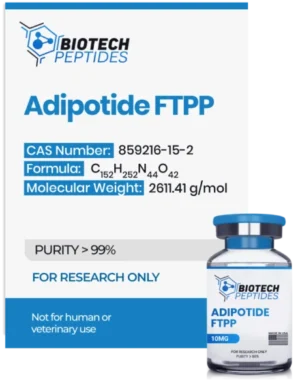
Adipotide FTPP (10mg)
Specifications
Other Known Titles: Adipotide
Molecular Formula: C152H252N44O42
Molecular Weight: 2611.41 g/mol
Sequence: Cys-Lys-Gly-Gly-Arg-Ala-Lys-Asp-Cys—Gly-Gly–(Lys-Leu-Ala-Lys-Leu-Ala-Lys)2
$77.00 -
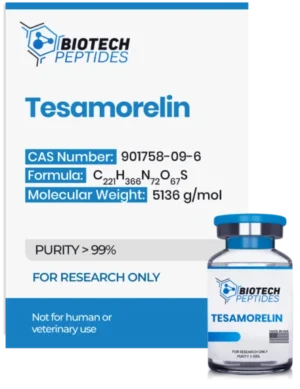
Tesamorelin (5mg & 10mg)
Tesamorelin is a chemically altered growth hormone-releasing hormone (GHRH) analog, that similar to the original is made of 44 amino acids. This peptide is a trans-3-hexanoic acid version of natural GHRH. The trans-3-hexanoic acid group is added to the N-terminus, while the C-terminus is amidated and acetylated. Tesamorelin appears to mediate the positive influence of GHRH and other GHRH analogs such as GRF (1-29), CJC-1295, and Sermorelin. The trans-3-hexanoic acid modification may increase its stability and half-life. Both Tesamorelin and CJC-1295 appear to maintain the physiological activity of GHRH, without disrupting the physiological rhythm of GH release.
Price range: $38.00 through $73.00Tesamorelin (5mg & 10mg)
Price range: $38.00 through $73.00 Select options This product has multiple variants. The options may be chosen on the product page -
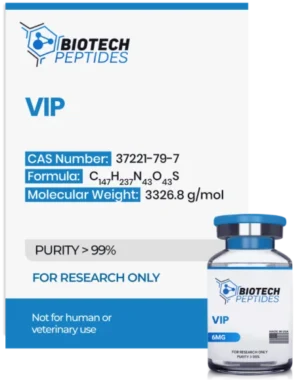
VIP (6mg)
Vasoactive intestinal peptide (VIP, vasoactive intestinal polypeptide, PHM27) is a short peptide hormone endogenously produced in the gastrointestinal tract, pancreas, and brain of most vertebrate animals. Researchers have suggested that the peptide may exhibit potential to influence inflammation, particularly in the cases of neurodegenerative disease, pulmonary fibrosis, inflammatory bowel disease, and cardiac fibrosis. VIP has been suggested to act as an immune system regulator and has been classified by scientists as an anti-inflammatory peptide. It is of active scientific interest for its proposed ability to support cognitive function in the setting of neurodegenerative disease. VIP has been hypothesized to bind to class II G protein-coupled receptors.
$71.00 -
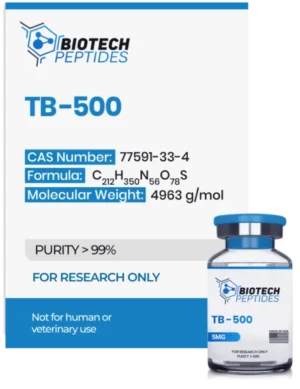
TB-500 (Thymosin Beta-4) (5mg)
TB-500, or Thymosin Beta-4, is a synthetic analog of the endogenous Thymosin beta 4 protein, which is considered ubiquitously present in cells. The peptide belongs to a widespread family of 16 related molecules considered to exhibit a high degree of sequence conservation and localization in the majority of tissues and circulating cells.
Thymosin Beta-4 is speculated to encompass a unique peptide sequence, LKKTETQ, found between the 16th and 24th amino acids. This sequence is thought to assist in actin binding potentially. Actins are proteins believed to be vital to the cell’s cytoskeleton. They appear to maintain the cell’s structural framework and are considered by experts to be crucial for primary cellular activities, such as movement.
It is hypothesized that Thymosin Beta-4 associates with actin by attaching to globular actin (G-actin), the monomeric form of actin, before it forms filamentous actin (F-actin). This suggested interaction between Thymosin Beta-4 and G-actin might impede the polymerization process, a mechanism known as actin sequestration. This interference might potentially increase the concentration of G-actin.
The assumed inhibition of F-actin polymerization by Thymosin Beta-4 might result in alterations to the cellular cytoskeleton’s structure. These changes may impact the cell’s ability to move and undergo shape transformations.[1] TB-500 was developed with the intention of sequestering and blocking actin polymerization in eukaryotic cells and influencing cell motility and transformation in experimental settings.
$70.00 -
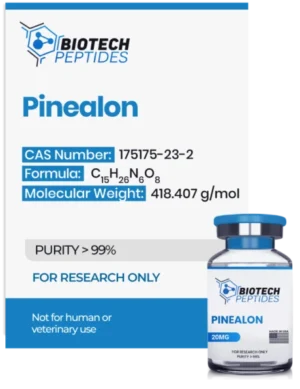
Pinealon (20mg)
Pinealon (also referred to as EDR) is a short peptide comprising only three amino acids (Glu-Asp-Arg). Additionally, it is classified as one of Khavinson’s peptides. EDR is generally extracted from a crude polypeptide extract called Cortexin. Pinealon is considered to be a peptide bioregulator, and it appears to interact directly with DNA. It may contribute to the alteration of gene expression levels. It may potentially exhibit behavior modification and may protect various cell types, including neurons, against hypoxia. Pinealon has been studied for its potential to impact the pineal gland to address issues with metabolism, circadian rhythm disorders, and certain cognitive functions.
$68.00 -
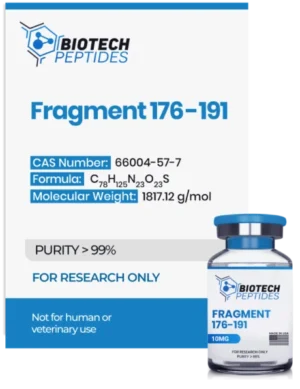
Fragment 176-191 (10mg)
Specifications
Other Known Titles: Frag 176-191
Molecular Formula: C78H125N23O23S2
Molecular Weight: 1817.1 g/mol
Sequence: Tyr-Leu-Arg-Ile-Val-Gin-Cys-Arg-Ser-Val-Glu-Gly-Ser-Cys-Gly-Phe
$67.00 -
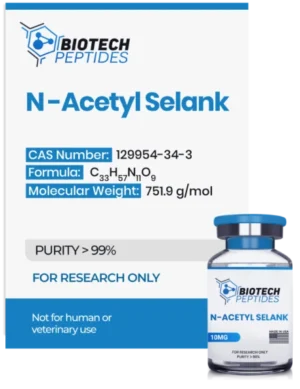
N-Acetyl Selank (10mg)
N-Acetyl Selank is an acetylated form of the Selank peptide. The acetylation of the peptide into N-Acetyl Selank appears to improve its stability. Selank is a synthetic analogue of the natural tetrapeptide Tuftsin. Tuftsin is an immunomodulatory peptide, and N-Acetyl Selank appears to share many of its potential functions. In addition, N-acetyl Selank also appears to exhibit an impact on neurotransmitters, brain signaling, and neuroplasticity.
$65.00 -
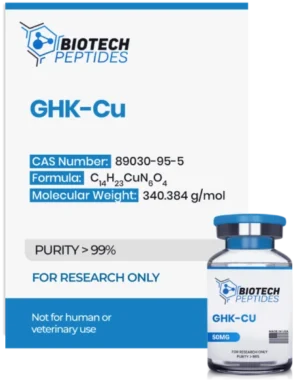
GHK-CU (Copper) (50mg)
Specifications
Molecular Formula: C14H23CuN6O4
Molecular Weight: 340.38 g/mol
Sequence: Gly-His-LysCu.xHAc
$64.00 -
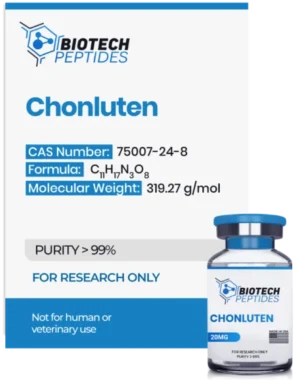
Chonluten (T-34) (20mg)
Chonluten is also known as Tripeptide T-34 or EDG, due to its sequence (Glu-Asp-Gly). It is a cytogenetic complex consisting of short peptides that are suggested to normalize the mucous membrane cells of the lungs and the bronchial tube. It is a gene regulator associated with inflammation and antioxidant activity, and is considered to be involved in proliferation responses.[1] It appears to function in animal test models as an anti-inflammatory in the lungs, normalizing the mucosal functions of the lungs in conditions like asthma and chronic obstructive pulmonary disease (COPD).
$62.00 -
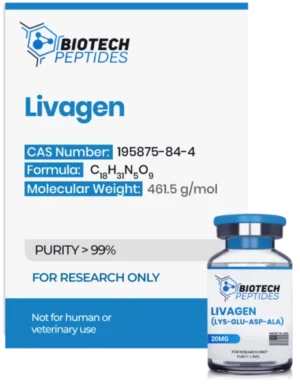
Livagen (20mg)
Livagen is a short peptide bioregulator, similar in structure to Epitalon. It is a tetrapeptide made of the amino acids Lys-Glu-Asp-Ala (KEDA) and is classified amongst Khavinson’s peptides. As a bioregulator, the peptide may interact with genetic material in different cells and consequently unpack and “unlock” various cellular genes. Livagen’s impacts appear to be exhibited directly on the lymphocytes (cells of the immune system), liver, and gastrointestinal tract (GIT). Its direct functions may be widespread, as suggested through research studies on DNA and gene expression patterns. The potential of the Livagen peptide to activate genes enclosed in the GIT and immune system may reflect possible age-mitigating characteristics exerted on cells.
$62.00 -
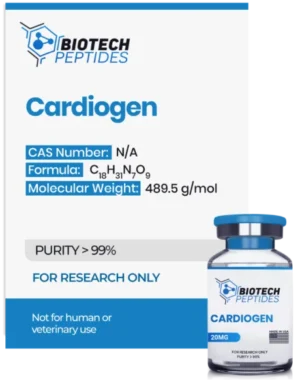
Cardiogen (20mg)
Cardiogen is a cardiovascular bioregulator peptide complex. Results obtained from research studies suggest that Cardiogen’s primary functions may be correlated to fibroblast action, cells considered responsible for scar formation and tissue repair. The peptide has a sequence of H-Ala-Glu-Asp-Arg-OH (AEDR).[1] Research posits that the synthetic tetrapeptide Cardiogen may potentially stimulate cell proliferation in myocardial tissue. Additionally, it appears that Cardiogen may possibly inhibit myocardial cell apoptosis (cell death), hypothetically through the reduction of p53 protein expression.
$62.00