support@biotechpeptides.ca
-
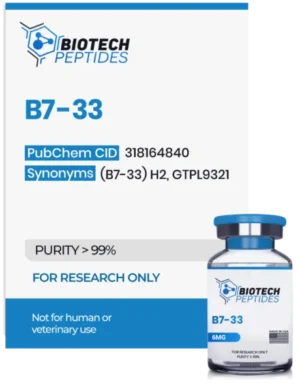
B7-33 (6mg)
B7-33 is a soluble synthetic single-chain peptide obtained from the larger, naturally occurring protein H2-relaxin (Relaxin), which is considered to induce pleiotropic actions impacting the musculoskeletal system, cardiovascular system, and reproduction.[1] B7-33 appears to retain the anti-fibrotic properties of Relaxin without enhancing cAMP production, it may also stimulate ERK1/2 phosphorylation and promote matrix metalloproteinase 2 (MMP2) expression and the degradation of extracellular collagen. The Relaxin family of peptides has four endogenous receptors divided into two pairs (RXFP1/2 and RXFP3/4).[2] The Relaxin receptors appear to be stimulated by cAMP, orexin, corticotropin-releasing factor (CRF), several insulin-like peptides, and GLP-1. The agonists have been observed to exhibit anti-inflammatory, antioxidant, and tissue-repairing characteristics.
$62.00 -
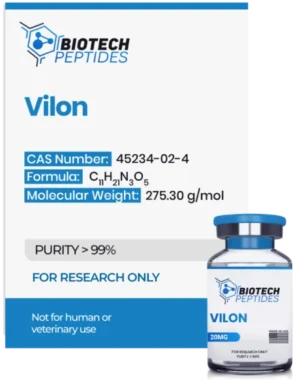
Vilon (20mg)
Vilon (or Lyslglutamic Acid) is a peptide with apparent immunomodulatory and anti-aging bioregulation potential. It is a short peptide with just two amino acids in length. Scientific research suggests it may potentially act to regulate the vascular system and encourage hemostasis. Its functions may be more widespread, with studies indicating its possible influence in reducing the prevalence and growth of spontaneous tumors. Advocate researchers like Dr. Vladimir Anisimov believe that the peptide may become more widespread in contemporary research within the context of geroprotection.
$61.00 -
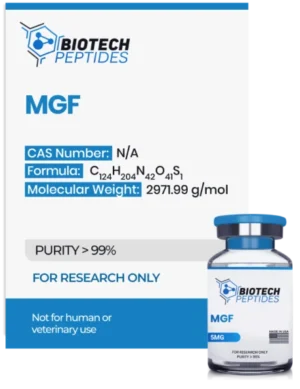
MGF (Mechano-Growth Factor) (5mg)
Mechano-Growth Factor (MGF) is an alternative name for the Insulin-like Growth Factor-1Eb (IGF-1Eb), an isoform of IGF-1. It has been studied for its potential in remodeling muscles, cellular survival, and cellular proliferation.[1] New studies on this specific isoform highlight its potential for activating satellite cells in skeletal muscle, suggesting that this particular isoform may also activate satellite cells in skeletal muscle, protect neurons, and help overcome muscle mass loss.[2] The principal function of MGF is its possible efficacy in reparating severe muscle wear and tear. Further, its concentration appears to correspond with skeletal muscle growth and differentiation found in rodent models.
$59.00 -
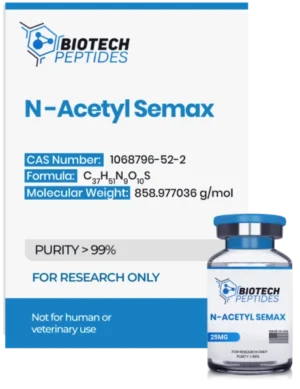
N-Acetyl Semax (25mg)
N-Acetyl Semax is posited to be an acetylated form of the Semax peptide. The peptide consists of a 4 amino acid fragment (Met-Glu-His-Phe) from the chain of melanocortin hormones. These include the adrenocorticotropic hormone (ACTH) and a Pro-Gly-Pro fragment. The integration of Pro-Gly-Pro (PGP) into N-Acetyl Semax may potentially enhance the permeability of the peptide through the blood-brain barrier (BBB). This enhancement might occur by increasing the peptide’s lipophilicity, thereby potentially improving passive diffusion or uptake via lipid raft-mediated endocytosis.
This process may hypothetically allow the peptide to bypass the BBB’s tight junctions, which researchers claim are usually highly restrictive. Adding PGP at the C-terminus might also modify the peptide’s interactions with specific BBB transporters or receptors, possibly facilitating receptor-mediated transcytosis. Receptor-mediated transcytosis is a process where substances are transported across cells via specific receptors, and alterations at the C-terminus might influence this pathway.
Researchers have noted that the acetylation of the peptide into N-Acetyl Semax appears to reduce the affinity of other ions, such as Cu++, to its N-terminus.[1] Acetylation may contribute to an increase in the peptide’s resistance to enzymatic degradation, potentially leading to an extended half-life observed in experimental models. Increased resistance to degradation might mean that the peptide potentially remains active for a longer period, which may enhance its stability.
$57.00 -
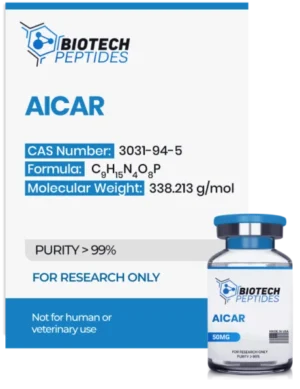
AICAR (50mg)
AICAR or 5-Aminoimidazole-4-carboxamide ribonucleotide, is a synthetic adenosine monophosphate analog. It was developed to stimulate the AMP-dependent protein kinase (AMPK) activity.[1][2] It is currently being investigated as a protective agent against ischemic damage in the cardiac myocytes during cardiac injury. The AMP-activated protein kinase is an enzyme and a protein that may play a regulatory role in several metabolic pathways. Its expression has been observed in several tissues, including the skeletal muscles, liver, and brain. In all these tissues, it is considered to exert a potential net effect on lipogenesis and may inhibit cholesterol synthesis and ketogenesis. It may also modulate insulin secretion and skeletal muscle fatty acid oxidation with glucose uptake. Several energy deficit states may trigger the release of AMPK, like hypoxia or hypoglycemia.
$56.00 -

Retatrutide (6mg)
AMP-3P 6mg is a ≥ 99 % pure triple-agonist peptide supplied as a lyophilized
powder.$55.00 -
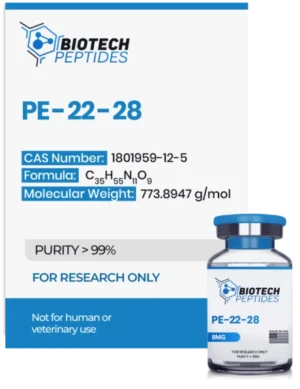
PE-22-28 (8mg)
PE-22-28 is a synthetic variant of the naturally occurring peptide Spadin. Spadin is a secreted peptide obtained from Sortilin. It appears to act as an antagonist of the TREK-1 (TWIK-related-potassium channel) receptor, a two-pore potassium channel identified as a potential target in the context of depression research and as a possible neurogenic regulator. Studies in mice have suggested that TREK-1 receptor deletion may make them resistant to depressive behavior and corresponding chemical imbalances in the brain.[1] PE-22-28 represents a shorter seven amino acid synthetic Spadin analog with potentially higher efficacy and stability. Research in animal models is ongoing.
$55.00 -
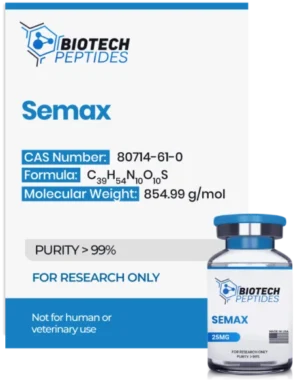
Semax (25mg)
Semax is a synthetic analog of adrenocorticotropic hormone (ACTH) comprising the amino acids 4 through 10 of ACTH. Semax has primarily been implicated in research on cognitive impairment and stroke. The peptide has also been studied closely within the context of dementia and certain inflammations of the optic nerve. Researchers posit that the peptide may exert neurotrophic action, suggesting that the peptide may act to increase the production of brain-derived neurotrophic factor (BDNF) in the central nervous system, with potential consequences in serotonin and dopamine release. Some researchers also suggest that Semax may interact with serotonin and enkephalin levels in the central nervous system.
$53.00 -
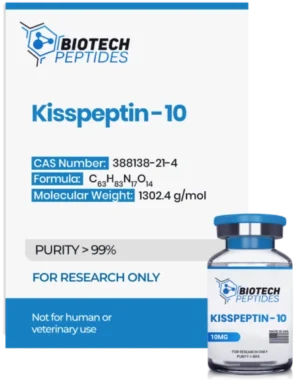
Kisspeptin-10 (10mg)
Kisspeptin-10 is a peptide fragment derived from the full-length Kisspeptin (also referred to as Kisspeptin-54 or Metastin). Specifically, Kisspeptin-10 is a fragment containing the 45-54 sequence from the larger parent molecule. Research into this peptide has suggested that the compound may act as a mediator of endocrine signaling between various endocrine cells.
Originating from the KISS1 gene, which is thought to play a critical role in reproductive cell signaling and physiology, Kisspeptin-10 is particularly interesting to researchers for its potential to influence the secretion of gonadotropin-releasing hormone (GnRH). This, in turn, may affect the release of other reproductive hormones from cells with receptors for GnRH. In addition, researchers posit that the compound may potentially impact the development and regulation of blood vessels and renal function, and some studies have suggested it may mitigate cancer cell proliferation and metastasis.
$52.00 -
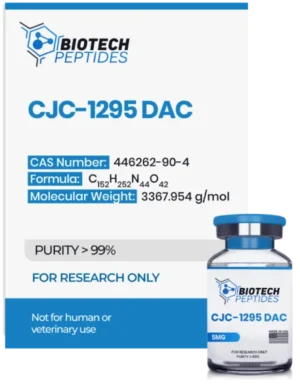
CJC-1295 DAC (5mg)
Specifications
Other Known Titles: CJC-1295 with DAC
Molecular Formula: C152H252N44O42
Molecular Weight: 3367.954 g/mol
Sequence: H-Tyr-D-Ala-Asp-Ala-Ile-Phe-Thr-Gln-Ser-Tyr-Arg-Lys-Val-Leu-Ala-Gln-Leu-Ser-Ala-Arg-Lys-Leu-Leu-Gln-Asp-Ile-Leu-Ser-Arg-Lys(Mal)-NH2
$52.00 -
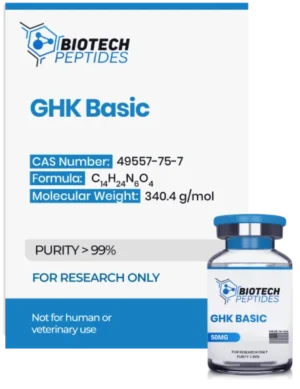
GHK Basic (50mg)
GHK is a copper peptide that occurs naturally in a copper complex of the tripeptide glycyl-L-histidyl-L-lysine. It has two variants — GHK with or without Cu. GHK appears to have a strong affinity for copper (II), and it is synthesized naturally from plasma, although it has been isolated in other areas. In cases of injury, GHK may be released from tissue cells. The copper peptide appears to affect genes that control injury and stress responses. Its functions appear to include the following: tissue remodeling, anti-inflammatory response, pain perception inhibition, nootropic action anti-cancer action, blood vessel growth, and nerve outgrowth. A decrease in the regenerative capacity of an organism may be traced to a decline in GHK-level. Its potential functions extend to infection control, follicle growth, collagen and elastin production increases, tissue repair, and glycosaminoglycan synthesis. Endogenous GHK production is considered to decline over time.
$51.00 -
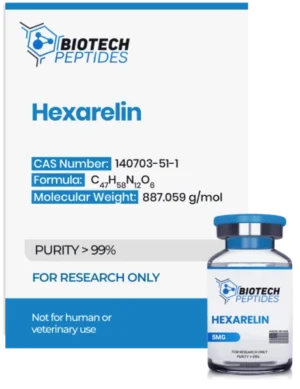
Hexarelin (5mg)
Specifications
Molecular Formula: C47H58N12O6
Molecular Weight: 887.05 g/mol
Sequence: His-2-Me-D-Trp-Ala-Trp-D-Phe-Lys-NH2
$49.00 -
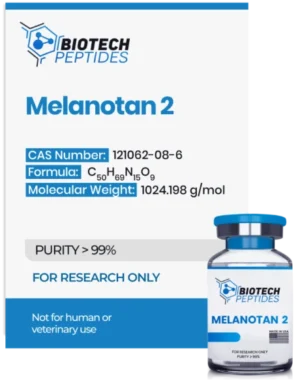
Melanotan 2 (2mg & 10mg)
Melanotan 2 (MT-2) is a synthetic analog of the alpha-melanocyte-stimulating hormone (alpha-MSH). A study conducted at the University of Arizona observed the involvement of alpha-MSH in skin pigmentation in rodents.[1] This finding then led to the development of MT-2 in the 1980s by a team of researchers at the university. It has been examined frequently in laboratory settings to determine its potential in melanin production and various ancillary impacts on the brain.
Price range: $16.00 through $47.00Melanotan 2 (2mg & 10mg)
Price range: $16.00 through $47.00 Select options This product has multiple variants. The options may be chosen on the product page -
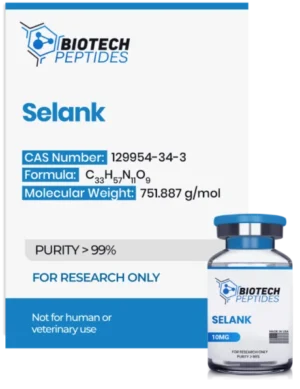
Selank (10mg)
Selank is a small peptide studied for its potential nootropic and behavior-modifying functions in experimental models. It is a synthetic analog of naturally occurring Tuftsin. This immunomodulatory peptide is a short fragment from the immunoglobulin G (IgG), a natural tetrapeptide involved in certain functions that may regulate the immune system. Selank is also posited to possess additional potential for regulating immune cells, IL-6, a wide range of neurotransmitter systems, and brain-derived neurotrophic factor (BDNF).
Selank differs in structure from the endogenous Tuftsin by an additional three amino acids in its chain, which have been supposed to enhance the metabolic stability and half-life of the synthetic peptide. Specifically, that is the Pro-Gly-Pro segment at the C-terminus of Selank, which might enhance its ability to move through various models, including the blood-brain barrier (BBB). The BBB is a highly selective and semi-permeable barrier that separates circulating blood from the tissues and extracellular fluid of the central nervous system, playing a vital role in regulating substance passage.
The inclusion of Pro-Gly-Pro may possibly increase BBB permeability by affecting the peptide’s hydrophilicity or lipophilicity, which may enhance its affinity for the BBB’s lipid-rich environment. Furthermore, the Pro-Gly-Pro sequence might interact with specific transport mechanisms or receptors at the BBB, possibly initiating facilitated transport or receptor-mediated endocytosis. These processes may enable Selank to circumvent the tight junctions that are said to typically restrict larger molecules.
$46.00 -
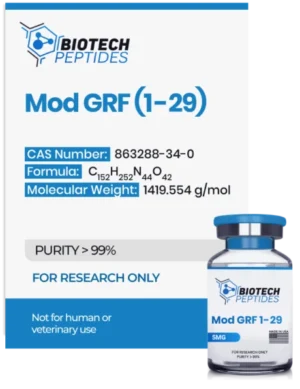
Mod GRF 1-29 (CJC-1295 NO DAC) (5mg)
Modified GRF (1-29), or Mod GRF (1-29), is a synthetic peptide that is a modified fragment of the endogenously occurring growth hormone-releasing hormone (GHRH). It was first developed in the 1980s when studies indicated that the first 29 amino acids of GHRH may possess all of the biological potential associated with the full-length 44 GHRH molecule.[1]
This discovery led to the development of a truncated version called GRF (1-29), also referred to as Sermorelin by researchers. Mod GRF (1-29) introduces specific modifications to support the peptide’s stability and efficacy. Four amino acids in the sequence are substituted at positions 2, 8, 15, and 27.[2] Here is what some researchers believe about these modifications:
– Position 2: The amino acid alanine is replaced with its mirror image, D-alanine. This substitution aims to increase resistance to enzymatic degradation, thereby improving the peptide’s stability.
– Position 8: Asparagine is substituted with lysine, an amino acid with a positively charged side chain. This change may support the peptide’s binding affinity to GHRH receptors, potentially increasing its biological activity.
– Position 15: Histidine is replaced with D-phenylalanine, another D-amino acid. This modification is intended to protect the peptide from further enzymatic breakdown.
– Position 27: Cysteine is substituted with N-methylglycine, also referred to as sarcosine. This alteration may extend the peptide’s half-life by mitigating enzymatic cleavage.These modifications collectively aim to produce a peptide with increased stability, a longer half-life, and better-supported interaction with GHRH receptors compared to the original GRF (1-29). Modified GRF (1-29) is structurally identical to CJC-1295 without DAC. The DAC in CJC-1295 serves to modify its pharmacokinetic properties.
$46.00