support@biotechpeptides.ca
-
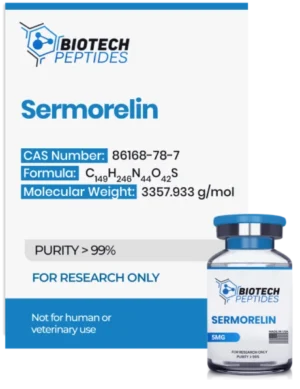
Sermorelin (5mg)
Sermorelin is among the growth hormone-releasing hormone (GHRH) analogs. It is classified as a GHRH as researchers have suggested that the peptide acts to induce the endogenous production and release of growth hormone (hGH). Growth hormone has been associated with numerous physiological activities, making Sermorelin and other GHRH analogs, potentially relevant in growth hormone-related research. Examples of studies employing GHRH analogs include research in the context of tissue scarring following cardiac dysfunction, as well as those examining bone density, renal function, dementia and seizure activity.
$43.00 -
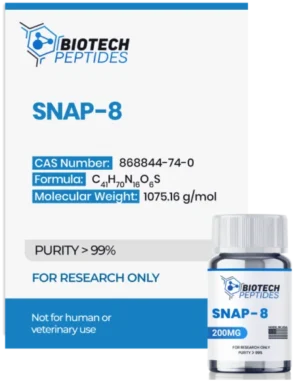
SNAP-8 (200mg)
SNAP-8, or Synaptosomal-associated protein 8, is a synthetic octapeptide believed to mimic certain functionalities of its larger counterpart, SNAP-25, a protein deemed integral to neurotransmitter release and muscle contraction.[1] Constructed from eight amino acids, SNAP-8’s structure is designed with specific modifications: an acetylated N-terminus and an amidated C-terminus, culminating in the sequence Ac-Glu-Glu-Met-Gln-Arg-Arg-Ala-Asp-NH2. It is structurally similar to another peptide known as acetyl hexapeptide-3, which also reportedly mimics a fragment of SNAP-25 and inhibits its function, leading to similar anti-wrinkle potential. By adding two amino acids to the chain of acetyl hexapeptide-3, the resultant acetyl octapeptide further enriches the field of research compounds studying cell aging and skin cell rejuvenation.[2]
The synthesis and manufacturing of SNAP-8 comprises a final freeze-drying step called lyophilization. Generally, the crystalline powder obtained due to freeze-drying is in the form of a polymorphous compound. It may be present in aggregates and show variation in the crystal size. However, this does not appear to lead to any chemical discrepancy in its composition. Extensive experimental studies have supported the homogeneity of this compound. The usual shelf life of SNAP-8 is posited to be at least 12 months, provided the compound is stored in a clean, cool, and dry place. If the compound is intended to be stored longer than a year, the temperature should be maintained at 4 degrees Celsius. This may extend the shelf life to approximately 18 months. Refrigeration of the SNAP-8 may potentially lead to its precipitation; however, this doesn’t appear to change the integrity of the compound.
$172.00 -
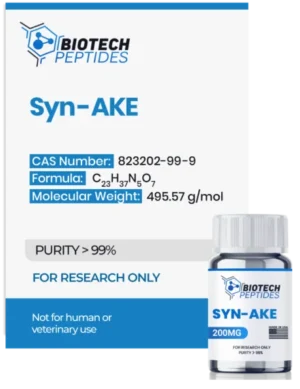
Syn-AKE (200mg)
Syn-AKE is a peptide, also known as tripeptide-3 or dipeptide diaminobutyroyl benzyl amide diacetate. Syn-AKE, a synthetic peptide ingredient, appears to mimic the actions of the Waglerin-1 peptide, which is 21 amino acids in length. Waglerin-1 functions primarily as a muscle relaxant by inhibiting the activity of acetylcholine at the neuromuscular junction, which may potentially result in reduced muscle contractions. Acetylcholine is a neurotransmitter considered essential for muscle movement, and its inhibition at the neuromuscular junction prevents the normal contraction signals from reaching muscles. In the development of Syn-AKE, researchers sought to synthesize a peptide that might potentially mimic this action. Thus, the peptide Syn-AKE was engineered to emulate the mechanism by which Waglerin-1 acts, but in a more selective manner. Researchers suggest Syn-AKE may act to reduce transmission between muscles and nerves, working similarly to botulinum toxin to relax muscles and thus reduce instances of creasing and wrinkle development along epidermal surfaces, as suggested in animal model research. The apparent reduction of this transmission appears to be reversible when triggered by Syn-AKE. Therefore its action is temporary.[1] According to Pentapharm, “the Syn-AKE invokes its action by blocking the muscle nAChR in a reversible manner by blocking the ion channel. As a result, the Na+ uptake is substantially disturbed, and the muscles remain relaxed.”
$210.00 -
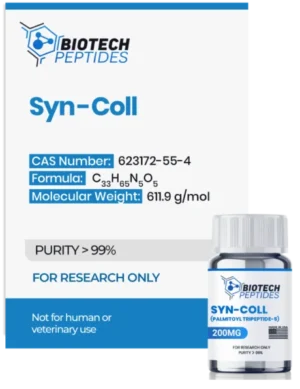
Syn-Coll (Palmitoyl Tripeptide-5) (200mg)
Syn-Coll, otherwise known as Palmitoyl Tripeptide-5 or Tripeptide-5, is a synthetic peptide that was developed to enhance the production of type I collagen. It appears to repair damages caused by photo-aging, and Syn-Coll has also been suggested to support the regeneration of skin protein production, such as elastin or collagen. Syn-Coll (Palmitoyl Tripeptide-5) is the synthetic equivalent of Thrombospondin 1 (TSP-1). TSP-1 is an extracellular matrix protein and is found in the skin near collagen and elastin. Syn-Coll appears to mimic the functions of TSP-1, possibly aiding in the prevention of collagen degeneration via stimulating the release of TGF- induced by TSP-1.[1] TGF-β is an essential growth factor potentially significant in preserving skin integrity and facilitating the development of skin structures, mainly through the promotion of collagen synthesis. Additionally, Syn-Coll, a synthetic peptide, has been the subject of extensive research in animal models and laboratory experiments. The findings tentatively indicate that Syn-Coll might enhance collagen production and potentially inhibit its degradation. The inhibition of collagen breakdown by Syn-Coll is possibly due to its ability to suppress the activity of matrix metalloproteinases (MMPs), including MMP1 and MMP3, which are enzymes studied for their role in the degradation of collagen in the skin. The peptide is palmitoylated, to potentially extend its bioavailability in experiments involving different skin tissue models.
$217.00 -
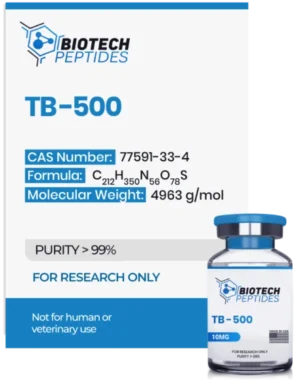
TB-500 (Thymosin Beta-4) (10mg)
TB-500, or synthetic Thymosin Beta-4, also known as synthetic Tβ4, is a synthetic analog of the endogenous Thymosin Beta-4 protein, which is considered to be ubiquitously present in cells. The peptide belongs to a widespread family of 16 related molecules observed to exhibit a high degree of sequence conservation and localization in most tissues and circulating cells. TB-500 was developed to sequester and block actin polymerization in eukaryotic cells.
$119.00 -
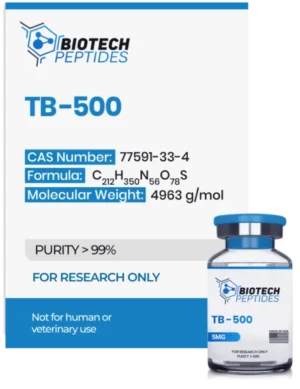
TB-500 (Thymosin Beta-4) (5mg)
TB-500, or Thymosin Beta-4, is a synthetic analog of the endogenous Thymosin beta 4 protein, which is considered ubiquitously present in cells. The peptide belongs to a widespread family of 16 related molecules considered to exhibit a high degree of sequence conservation and localization in the majority of tissues and circulating cells.
Thymosin Beta-4 is speculated to encompass a unique peptide sequence, LKKTETQ, found between the 16th and 24th amino acids. This sequence is thought to assist in actin binding potentially. Actins are proteins believed to be vital to the cell’s cytoskeleton. They appear to maintain the cell’s structural framework and are considered by experts to be crucial for primary cellular activities, such as movement.
It is hypothesized that Thymosin Beta-4 associates with actin by attaching to globular actin (G-actin), the monomeric form of actin, before it forms filamentous actin (F-actin). This suggested interaction between Thymosin Beta-4 and G-actin might impede the polymerization process, a mechanism known as actin sequestration. This interference might potentially increase the concentration of G-actin.
The assumed inhibition of F-actin polymerization by Thymosin Beta-4 might result in alterations to the cellular cytoskeleton’s structure. These changes may impact the cell’s ability to move and undergo shape transformations.[1] TB-500 was developed with the intention of sequestering and blocking actin polymerization in eukaryotic cells and influencing cell motility and transformation in experimental settings.
$70.00 -
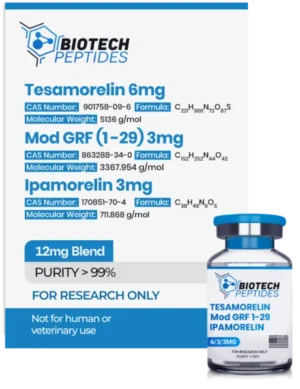
Tesamorelin & CJC-1295 (Mod GRF 1-29) & Ipamorelin Blend (12mg)
Tesamorelin & CJC-1295 (Mod GRF 1-29) & Ipamorelin peptide blend is a combination of peptides that may potentially interact with receptors in the pituitary gland. This blend may activate pituitary cells responsible for growth hormone (hGH) production.
Tesamorelin is a synthetic peptide that appears to act as an analog for growth hormone-releasing hormone (GHRH).[1] It may potentially interact with specific receptors in the pituitary and the hypothalamus, known as GHRH receptors. The activation of these receptors appears to trigger a release of growth hormone from pituitary cells.
Mod GRF (Modified Growth Hormone-Releasing Factor), also known as CJC-1295 without DAC (Drug Affinity Complex), is a synthetic peptide analog of the endogenous growth hormone-releasing hormone (GHRH).[2] It is a tetrasubstituted version of the shortest GHRH sequence. The peptide may potentially trigger GHRH receptors – GRF (1-29). It appears to bind to GHRH receptors in the pituitary cells associated with the release of hGH.
Ipamorelin is another synthetic peptide that may interact with pituitary cells, although it appears to do so by triggering a different receptor called the growth hormone secretagogue (GHS) receptor.[3] These receptors, also called ghrelin receptors, are apparently found in the pituitary and the hypothalamus. By activating these receptors in an organism’s brain, Ipamorelin may potentially trigger the synthesis of HGH by pituitary cells.
$109.00 -
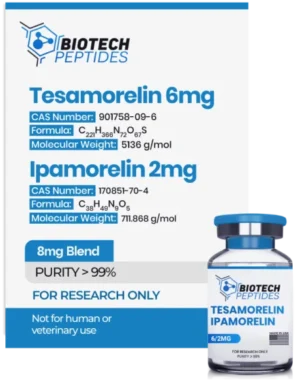
Tesamorelin & Ipamorelin Blend (8mg)
The Tesamorelin & Ipamorelin peptide blend is a mixture of peptide compounds that have been studied for their possible interaction with certain receptors in the cells of the pituitary gland. These receptors include the growth-hormone secretagogue (GHS) receptors and growth hormone-releasing hormone (GHRH) receptors, which are associated with the release of growth hormone (hGH).
Tesamorelin, which is a synthetic peptide, is believed by researchers to act as an analog of growth hormone-releasing hormone through binding to GHRH receptors.[1] Tesamorelin consists of an amino acid chain with 44 amino acids, including a specific sequence similar to GHRH. Additionally, Tesamorelin has been modified in an effort to support its resistance to enzymatic degradation. As an example, the C-terminus of the synthetically developed Tesamorelin has been modified with a trans-3-hexenoic acid group. This modification, known as an omega-amino acid modification, may help improve the peptide’s resistance to enzymatic degradation.
Tesamorelin also has an acetyl group (CH₃CO-) attached to its N-terminus, which may potentially enhance the stability and bioactivity of the peptide. As a result, the peptide is also known as N-(trans-3-hexenoyl)-[Tyr1]hGRF(1–44)NH2 acetate.[2] By interacting with GHRH receptors in the pituitary and hypothalamus, Tesamorelin may trigger the release of hGH from pituitary cells.
Similarly, Ipamorelin is also a synthetic peptide that interacts with pituitary cells and may stimulate the synthesis and release of hGH. Its proposed mechanism of action involves interaction with GHS receptors, also known as ghrelin receptors, which are found in the pituitary and hypothalamus.[3] By activating these receptors, Ipamorelin may mimic the actions of ghrelin on the pituitary gland, potentially leading to the release of growth hormone from pituitary cells.
$90.00 -
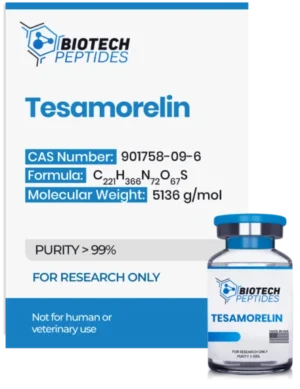
Tesamorelin (5mg & 10mg)
Tesamorelin is a chemically altered growth hormone-releasing hormone (GHRH) analog, that similar to the original is made of 44 amino acids. This peptide is a trans-3-hexanoic acid version of natural GHRH. The trans-3-hexanoic acid group is added to the N-terminus, while the C-terminus is amidated and acetylated. Tesamorelin appears to mediate the positive influence of GHRH and other GHRH analogs such as GRF (1-29), CJC-1295, and Sermorelin. The trans-3-hexanoic acid modification may increase its stability and half-life. Both Tesamorelin and CJC-1295 appear to maintain the physiological activity of GHRH, without disrupting the physiological rhythm of GH release.
Price range: $38.00 through $73.00Tesamorelin (5mg & 10mg)
Price range: $38.00 through $73.00 Select options This product has multiple variants. The options may be chosen on the product page -
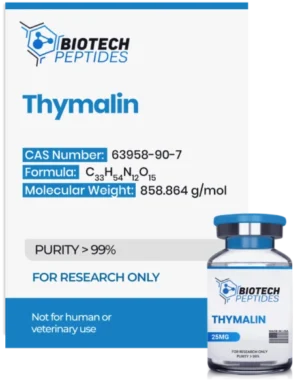
Thymalin (25mg)
Thymalin, sometimes referred to as Thymalin Alpha-1, is the synthetic variant of the endogenous Thymulin, which was first isolated from the thymus in 1977. The endogenously produced Thymalin has been researched for its potential in a wide landscape of research areas, with its influence speculated to extend to regulatory action on inflammation, mitigation of pain perception, neuroprotective action, and immune function support. Early studies have suggested that Thymalin and other thymus and pineal gland secretions may also support cell longevity.
$114.00 -
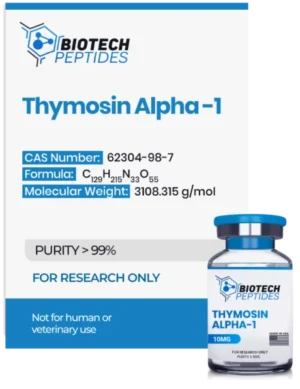
Thymosin Alpha-1 (10mg)
Thymosin Alpha-1, also known as TA1 or Tα1, is a naturally occurring peptide fragment that was discovered in 1972 and researched for its potential action within the context of studies relating to cystic fibrosis, infection (e.g., tuberculosis, cytomegalovirus), respiratory disorders, chronic hepatitis, and cancer. It is also referred to as Thymalfasin when synthetically developed. Originally, research on Thymosin Alpha-1 centered around its potential role in immune modulation. It is hypothesized that it might increase levels of Major Histocompatibility Complex (MHC) class I molecules and boost cytokine production, key components of the immune system that may enhance immune responses.[1][2] There is also a possibility that it might improve the activity of natural killer cells, which target virus-infected cells and tumors. Furthermore, it might enhance the expression of specific markers on T cells that are considered critical for their identification and function in the immune system, indicating a significant role in immune regulation. Thymosin Alpha-1 is also thought to possibly increase the presence of high-affinity interleukin-2 receptors on cell surfaces, potentially leading to the vigorous activation and proliferation of T lymphocytes, elements of immune response. There is speculation that it may affect both T-helper and cytotoxic T-cell populations, deemed essential for eliminating infected cells. Additionally, it might prompt the differentiation of thymocytes—precursor cells in the thymus—and peripheral blood lymphocytes into mature immune cells, increase natural killer cell numbers, and promote cytokine-driven inflammatory responses. Research also explores its potential role in enhancing macrophage efficiency—cells that engulf and digest pathogens—and in regulating the activity of alpha thrombin, a protein involved in blood clotting, highlighting its broad potential on immune function.
$130.00 -
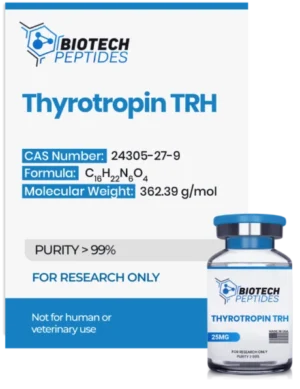
TRH Thyrotropin (Protirelin) (25mg)
Thyrotropin Releasing Hormone (TRH), often called Protirelin, is a small peptide hormone made of 3 amino acids and synthesized in the hypothalamus. The hormone is thought to function via binding to the thyrotropin-releasing hormone receptors TRH-1 and TRH-2. It was developed by researchers with the intention to stimulate the release of both thyroid-stimulating hormone (TSH) and prolactin from the anterior pituitary. TSH, in turn, acts directly on the thyroid gland to promote the synthesis and release of thyroid hormones, primarily triiodothyronine (T3) and thyroxine (T4). TRH has been employed in the study of anterior pituitary gland function in models of thyroid disorders. TRH may exhibit potential roles in TREK-1 channel, in the regulation of cellular aging, arousal, feeding behaviors, autonomic regulation, and mitigating free radical damage.
$93.00 -
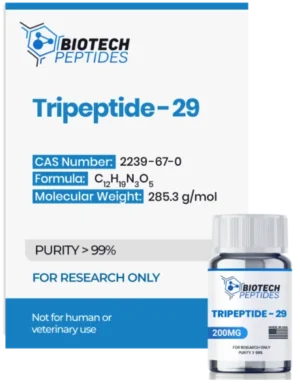
Tripeptide-29 (200mg)
Tripeptide-29 is a peptide that is one of the basic monomers of collagen. Collagen is a long-chain polymer composed of short monomers made of three consecutive amino acids. These monomers combine to form a secondary structure, which then may form tertiary and even quaternary structures. These complex structures may have many potential emergent properties. For example, most collagen molecules are thought to play roles in providing structural integrity and elasticity to the cellular complexes in tissues like the stratum corneum, tendons, and bones.
Collagen subunits most often follow the pattern of Gly-Pro-X, Gly-Xo-X, or Gly-X-Hyp. Tripeptide-29 is a GlyPro Hyp peptide, a complete synthetic analog of common collagen building blocks. Beyond its proposed involvement in collagen synthesis, researchers speculate that Tripeptide-29 may have additional biological implications. For instance, some preliminary studies suggest it may act as an antioxidant, potentially aiding in the protection of cells against oxidative stress, which is the imbalance between free radicals and antioxidants that may lead to cellular damage.
It is hypothesized that Tripeptide-29 might exhibit anti-inflammatory properties, possibly reducing inflammation; anti-fibrotic actions, which may help mitigate excessive formation of fibrous connective tissue; and anti-melanogenic characteristics, potentially influencing melanin production and affecting pigmentation processes in the dermal and epidermal layer.
$189.00 -
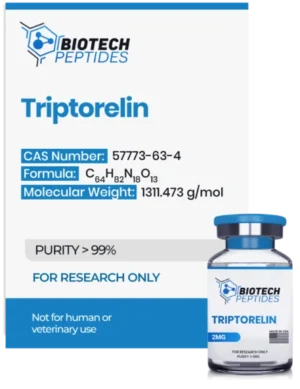
Triptorelin (GnRH) (2mg)
Triptorelin is a synthetic analog of gonadotropin-releasing hormone (GnRH), potentially mimicking the structure and function of the natural hormone. It may bind to GnRH receptors, initially stimulating the hypothalamic-pituitary-gonadal (HPG) axis, leading to a temporary surge in luteinizing hormone (LH) and follicle-stimulating hormone (FSH) levels. In turn, LH and FSH are thought to stimulate endocrine cells, like testicular cells that produce testosterone (T). However, with prolonged exposure, Triptorelin appears to desensitize the GnRH receptors, resulting in suppressed production of LH and FSH, thereby apparently reducing testosterone and estrogen levels. This potential mechanism has been extensively researched in models of androgen deprivation, exploring its potential in various contexts such as prostate cancer cells and receptor-positive breast cancer cells.
$36.00 -
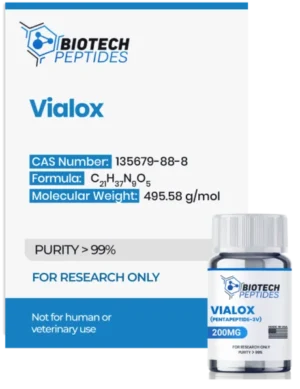
Vialox (Pentapeptide-3V) (200mg)
Vialox, also known as Pentapeptide-3V, is a peptide with a five amino acid sequence (Gly-Pro-Arg-Pro-Ala). It was originally isolated from endogenously produced snake venom. The peptide appears to replicate temporary muscular paralysis. This result has been observed by researchers in paralytic compounds such as botulinum toxin, which are believed to reduce wrinkle depth. Vialox appears to inhibit nicotinic acetylcholine receptors. This potential may enable curare-like actions at the neuromuscular junction, which might block nervous system electrical impulses from reaching muscles. A block like this may ultimately halt muscle contraction.
This mechanism appears to be analogous to the function of tubocurarine. This function is observed through Vialox’s hypothetical interaction with acetylcholine receptors on the postsynaptic membrane of muscle cells. Tubocurarine, a naturally occurring alkaloid compound, is primarily found in the bark of certain plants. This includes Chondrodendron tomentosum, commonly referred to as “curare.” Experts recognize this compound as a potent neurotoxin. Its mode of action is considered to function as a non-depolarizing neuromuscular blocker. It is hypothesized that this function obstructs the activity of acetylcholine—a neurotransmitter deemed by researchers to be critical for muscle contraction—at the neuromuscular junction, which might inhibit muscle contraction.
$210.00