support@biotechpeptides.ca
-
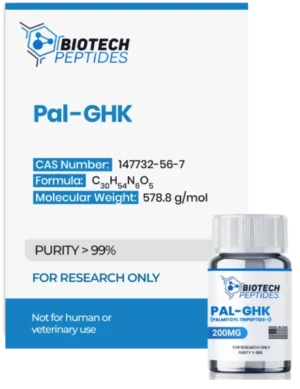
Pal-GHK (Palmitoyl Tripeptide-1) (200mg)
Pal-GHK, also known as Palmitoyl Tripeptide-1 and Palmitoyl Oligopeptide, is a synthetic peptide developed to function in protein production to support the skin’s extracellular matrix (ECM), and skin pigmentation. Pal-GHK is a synthetic hybrid peptide with one fatty acid and one peptide. “Pal” represents Palmitoyl—the covalent attachment of fatty acid to the end of the structure. “GHK” represents glycine-histidine-lysine—the peptide’s amino acid structure. This sequence is thought to be a small fraction of the large protein collagen, which is one of the main proteins in the extracellular matrix of skin and other tissues. The GHK sequence appears to be present in the “alpha 2(I) chain of type I collagen”, and researchers suggest that such a “tripeptide might be liberated by proteases at the site of a wound” as a signal of injury and thus, may be a powerful stimulant for repair.[1] Particularly, it may signal and attract fibroblasts—cells responsible for synthesizing collagen, elastin, and other proteins in the skin’s extracellular matrix, bones, and connective tissues. “Pal” represents Palmitoyl—the covalent attachment of fatty acid to the end of the structure. The addition of palmitoyl to the molecule is thought to result in better penetration through skin cells and, more specifically, stratum corneum.
$119.00 -
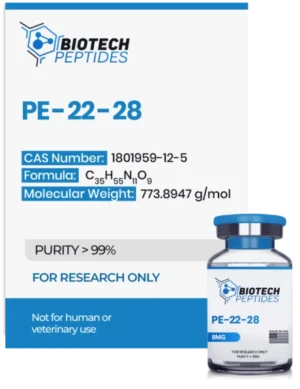
PE-22-28 (8mg)
PE-22-28 is a synthetic variant of the naturally occurring peptide Spadin. Spadin is a secreted peptide obtained from Sortilin. It appears to act as an antagonist of the TREK-1 (TWIK-related-potassium channel) receptor, a two-pore potassium channel identified as a potential target in the context of depression research and as a possible neurogenic regulator. Studies in mice have suggested that TREK-1 receptor deletion may make them resistant to depressive behavior and corresponding chemical imbalances in the brain.[1] PE-22-28 represents a shorter seven amino acid synthetic Spadin analog with potentially higher efficacy and stability. Research in animal models is ongoing.
$55.00 -
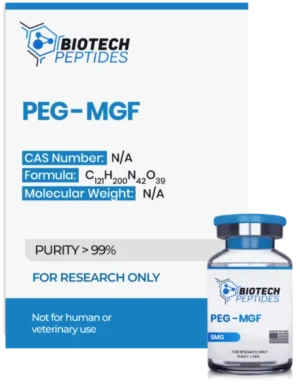
PEG-MGF (Pegylated MGF) (5mg)
Pegylated Mechano-growth factor (PEG-MGF) is a peptide that originates from the IGF-I (main anabolic mediator of growth hormone) gene sequence, which undergoes a process called alternative splicing.[1] This process allows for the synthesis of additional segments, which form new functional molecules. During stress or injury, it has been suggested that muscles produce an alternative peptide called IGF-IEc, which contains extra “exons” or domains. This is thought to result in an additional segment at the C-terminus of IGF-I, known as the Ec-peptide, which comprises 40 amino acids.[2]
MGF, or mechano-growth factor, is a synthetic peptide that represents the last 24 amino acids from the naturally occurring IGF-IEc molecule (the Ec-peptide). This 24 amino acid fragment is also called the E-domain or MGF-E and is thought to mediate the beneficial actions of IGF-IEc on muscle recovery and cell proliferation.[5]. It appears to stimulate myoblast (muscle cell) proliferation and differentiation. It has further been researched for its potential to increase endurance, stimulate the function of the immune system, and possible applications that may decrease cholesterol. PEG-MGF may also hasten wound healing via immune function regulation. The up-regulation of IGF-IEc, sometimes referred to as full-length MGF, during periods of stress or injury has been correlated by researchers with the proliferation of satellite cells and muscle cells. This suggests a potential role in muscle tissue repair and regeneration.[3][4]
The attachment of a polyethylene glycol moiety to another chemical compound is termed “Pegylation.” Pegylation appears to increase the plasma stability of a compound like MGF by decreasing its clearance and potentially masking its immunogenicity. Pegylation may be considered a common and typically advantageous modification. MGF appears to have a shorter half-life than other peptides. With this in mind, the pegylation of the peptide may overcome any rapid clearance.
$79.00 -
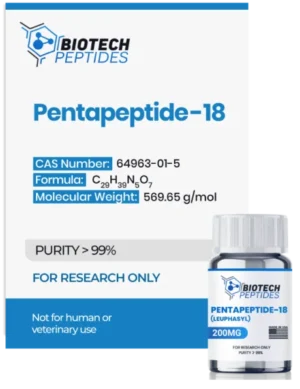
Pentapeptide-18 (Leuphasyl) (200mg)
Pentapeptide-18 (Leuphasyl) is a modified analog of the naturally occurring pentapeptide leu-enkephalin, which is part of a class of peptides called enkephalins which are believed to directly interact with opioid receptors.[1] Structurally, Pentapeptide-18 differs from leu-enkephalin by the addition of D-Alanine in place of glycine at its second position. Pentapeptide-18 is thought to penetrate the epidermal barrier and influence cellular processes that affect muscle cell contraction. Studies suggest that it acts by modulating calcium release in neuronal synapses. By interfering with the signals that trigger muscle contraction, Pentapeptide-18 may help to relax muscles, reducing the formation of fine lines and wrinkles across the skin barrier. Additionally, modified versions of Pentapeptide-18 may interact with melanin production pathways, which is a pigment responsible for adding color to tissues and may play a protective role against UV radiation. By potentially influencing melanin synthesis, modified versions of Pentapeptide-18 may offer research value in skin tissue studies.
$215.00 -
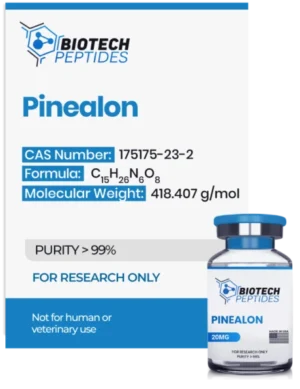
Pinealon (20mg)
Pinealon (also referred to as EDR) is a short peptide comprising only three amino acids (Glu-Asp-Arg). Additionally, it is classified as one of Khavinson’s peptides. EDR is generally extracted from a crude polypeptide extract called Cortexin. Pinealon is considered to be a peptide bioregulator, and it appears to interact directly with DNA. It may contribute to the alteration of gene expression levels. It may potentially exhibit behavior modification and may protect various cell types, including neurons, against hypoxia. Pinealon has been studied for its potential to impact the pineal gland to address issues with metabolism, circadian rhythm disorders, and certain cognitive functions.
$68.00 -
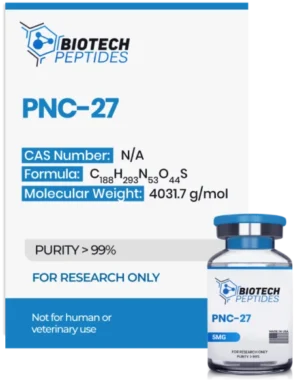
PNC-27 (5mg)
PNC-27 is a synthetic peptide initially developed for its proposed inhibitive action on cancer cell proliferation. It is a member of the PNC family of probe proteins and is designed to attach to malformed cancer cells and induce cell necrosis, but bypass normal functioning cells. The PNC-27 peptide contains the HDM2 binding domain and transmembrane domain corresponding to residue 1226 on p53. Researchers suggest that it exhibits potential to bind to and kill cancer cells through membrane lysis or cell membrane destruction. Research studies have suggested that the PNC-27 peptide may be selective in targeting specific cancer cell types, prompting further research within the context of pancreatic cancer, breast cancer, leukemia, melanoma, and other cancer strains.[1]
The PNC protein was first developed in 2000. The PNC-27 peptide appears to be a non-toxic compound, attaching to and puncturing the membranes of individual cancer cells. As a result, rapid implosion may occur, leading to immediate cell death due to differences in osmotic pressure inside and outside the tumor cells. PNC-27 appears to have this potential through an affinity for binding to a protein called HDM2. Cancer cells typically display HDM2 in their cell membranes.[2] According to the researchers “PNC-27 targets HDM-2 in the membranes of cancer cells, allowing it to induce membranolysis of these cells selectively.” Immediately after exposure to the PNC-27 peptide, studies have observed that the peptide appears to move to HDM2. Binding to them creates pores or holes in the cell membrane, causing “membrane lysis” or death of the cell membrane. This process, in turn, may lead to the destruction of cancer cells. Research is ongoing.
$142.00 -
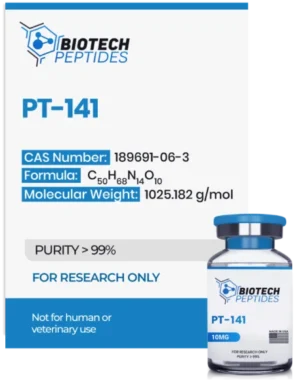
PT-141 (Bremelanotide) (10mg)
PT-141, also known as Bremelanotide, was derived from a synthetic melanocortin analog known as Melanotan 2 (MT-2). A melanocortin analog, such as PT-141 and MT-2, is considered to be any synthetic compound designed to mimic or influence the functions of natural melanocortin peptides. These peptides, such as the alpha-melanocyte stimulating hormone (α-MSH), may be involved in a range of physiological processes including appetite regulation, energy homeostasis, immune responses, and skin cell pigmentation. PT-141 is a melanocortin analog that was developed to interact with Melanocortin-4 Receptor (MC-4R). It has been studied for a variety of potential characteristics and bioactivities through its interaction with this receptor. Apart from MC-4R, there are other melanocortin receptors like MC-1R, MC-2R, MC-3R, and MC-5R, each associated with different potential functions. For instance, MC-1R may be primarily involved in skin cell and hair follicle pigmentation, MC-2R appears to play a crucial role in the adrenal axis and stress response, MC-3R is implicated in the regulation of energy homeostasis, and MC-5R has been linked to exocrine function and thus impacts processes such as sweating and sebum production.
$45.00 -

PTD-DBM (5mg)
PTD-DBM stands for Protein Transduction Domain-fused Disheveled Binding Motif. It is a synthetic peptide which has been studied within a wide range of research areas, including tissue damage and hair follicle development. Researchers have focused on the peptide specifically within the context of follicle development, suggested it may exert stimulating action through interaction with the endogenous proteins linked to follicle damage called CXXC5.[1] It was discovered by Professor Kang-Yell Choi and his team of researchers at the Yonsei University in South Korea. The researchers studied the mechanism of hair follicle loss, and suggested that the cellular pathway Wnt/β-catenin may be crucial for follicle development.
The Wnt/β-catenin pathway is often studied in the context of tissue development and regeneration, Wnt proteins are a family of secreted signaling molecules that bind to cell surface receptors to trigger a cascade of intracellular events. β-catenin is a protein that normally resides in the cytoplasm of cells. Upon activation of the Wnt pathway, β-catenin is thought to accumulate in the cell and translocate to the nucleus, where it may activate the transcription of specific target genes involved in cell growth and differentiation. The activation of β-catenin may have a role in supporting and even increasing hair follicle development and possibly initiating the anagen phase, which represents the growth stage of hair follicles, as observed in murine models.
It has been hypothesized that PTD-DBM may interfere with the binding of CXXC5 and Dishevelled (Dvl) proteins by acting as a competitor. Specifically the peptide might inhibit the interaction between CXXC5 and Dishevelled (Dvl) proteins by binding to the PDZ domain of Dvl, thus interfering with CXXC5’s inhibitory actions on Wnt/β‐catenin signaling. Such a disruption might support the Wnt/β-catenin signaling pathway, thereby possibly promoting the onset of the anagen phase. Data from such murine studies suggests elevated expression levels of β-catenin, alkaline phosphatase (ALP), and proliferating cell nuclear antigen (PCNA), which are markers linked to cellular proliferation and hair follicle functionality.
$86.00 -
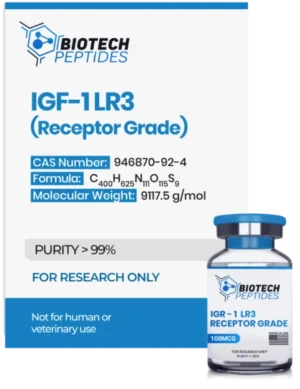
Receptor Grade IGF-1 LR3 (100mcg)
Specifications
Molecular Formula: C400H625N111O115S9
Molecular Weight: 9117.5 g/mol
Sequence: MFPAMPLSSL FVNGPRTLCG AELVDALQFV CGDRGFYFNK PTGYGSSSRR APQTGIVDEC CFRSCDLRRL EMYCAPLKPA KSA
$27.00 -
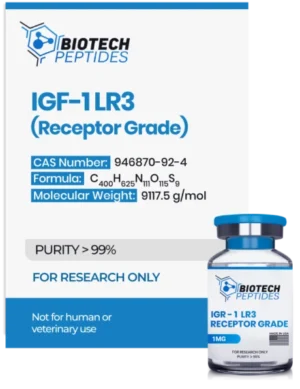
Receptor Grade IGF-1 LR3 (1mg)
Specifications
Molecular Formula: C400H625N111O115S9
Molecular Weight: 9117.5 g/mol
Sequence: MFPAMPLSSL FVNGPRTLCG AELVDALQFV CGDRGFYFNK PTGYGSSSRR APQTGIVDEC CFRSCDLRRL EMYCAPLKPA KSA
$99.00 -

Retatrutide (6mg)
AMP-3P 6mg is a ≥ 99 % pure triple-agonist peptide supplied as a lyophilized
powder.$55.00 -
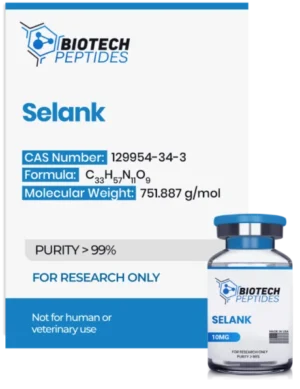
Selank (10mg)
Selank is a small peptide studied for its potential nootropic and behavior-modifying functions in experimental models. It is a synthetic analog of naturally occurring Tuftsin. This immunomodulatory peptide is a short fragment from the immunoglobulin G (IgG), a natural tetrapeptide involved in certain functions that may regulate the immune system. Selank is also posited to possess additional potential for regulating immune cells, IL-6, a wide range of neurotransmitter systems, and brain-derived neurotrophic factor (BDNF).
Selank differs in structure from the endogenous Tuftsin by an additional three amino acids in its chain, which have been supposed to enhance the metabolic stability and half-life of the synthetic peptide. Specifically, that is the Pro-Gly-Pro segment at the C-terminus of Selank, which might enhance its ability to move through various models, including the blood-brain barrier (BBB). The BBB is a highly selective and semi-permeable barrier that separates circulating blood from the tissues and extracellular fluid of the central nervous system, playing a vital role in regulating substance passage.
The inclusion of Pro-Gly-Pro may possibly increase BBB permeability by affecting the peptide’s hydrophilicity or lipophilicity, which may enhance its affinity for the BBB’s lipid-rich environment. Furthermore, the Pro-Gly-Pro sequence might interact with specific transport mechanisms or receptors at the BBB, possibly initiating facilitated transport or receptor-mediated endocytosis. These processes may enable Selank to circumvent the tight junctions that are said to typically restrict larger molecules.
$46.00 -
-
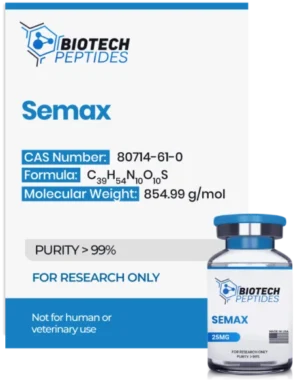
Semax (25mg)
Semax is a synthetic analog of adrenocorticotropic hormone (ACTH) comprising the amino acids 4 through 10 of ACTH. Semax has primarily been implicated in research on cognitive impairment and stroke. The peptide has also been studied closely within the context of dementia and certain inflammations of the optic nerve. Researchers posit that the peptide may exert neurotrophic action, suggesting that the peptide may act to increase the production of brain-derived neurotrophic factor (BDNF) in the central nervous system, with potential consequences in serotonin and dopamine release. Some researchers also suggest that Semax may interact with serotonin and enkephalin levels in the central nervous system.
$53.00 -
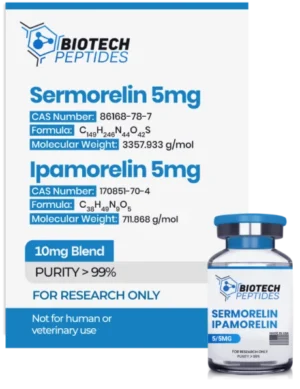
Sermorelin & Ipamorelin Blend (10mg)
Molecular Formula: C149H246N44O42S
Molecular Weight: 3357.9 g/mol
Sequence: Tyr-Ala-Asp-Ala-lle-Phe-DL-Thr-Asn-Ser-Tyr-Arg-Lys-Val-Leu-Gly-Gln-Leu-Ser-Ala-Arg-Lys-Leu-Leu-Gln-Asp-Ile-Met-Ser-Arg-NH2
$81.00