support@biotechpeptides.ca
-
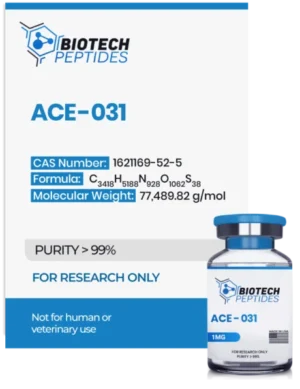
ACE-031 (1mg)
ACE-031 is a soluble protein comprising the type IIB activin receptor (ACVR2B) and the immunoglobulin G1-Fc (IgG1-Fc), and has been studied for its potential in binding and inactivating myostatin, a protein that hampers muscle cell growth. It has been examined during the course of various research studies involved in muscle-wasting disorders and neuromuscular conditions such as Duchenne Muscular Dystrophy (DMD), as well as certain cancers such as those of the prostate or colorectal regions and lipid storage and bone metabolism.
$161.00 -
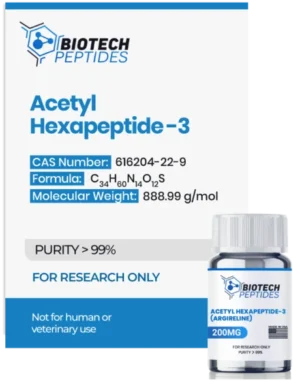
Acetyl Hexapeptide-3 (Argireline) (200mg)
Acetyl Hexapeptide-3 (Argireline) is a peptide chain of amino acids with the following sequence: Ac-Glu-Glu-Met-Gln-Arg-Arg-NH2. It is a fragment of the SNAP-25 (synaptosome-associated protein 25 kDa).[1] SNAP-25 is a key component of the SNARE (Soluble N-ethylmaleimide-sensitive factor Attachment protein Receptor)-Synaptotagmin-1 complex. This is a protein assembly that facilitates the release of neurotransmitters, such as acetylcholine, into the synaptic cleft between nerve cells and muscle cells. SNAP-25 is considered to be critical in this process because it appears to be in the assembly of the SNARE complex. This may also lead to the release of acetylcholine, thus triggering muscle contraction. Acetyl Hexapeptide-3 resembles the SNAP-25 protein, particularly the portion that is believed essential for SNARE complex formation.
By inhibiting its formation, the peptide may also prevent neurotransmitter release and muscle contraction. Researchers have investigated Acetyl Hexapeptide-3 (Argireline) for its potential to support skin cell structure and reduce wrinkling along the stratum corneum. Continuous muscle movements result in wrinkling, and the devitalization of muscle contractions may possibly inhibit the development of new lines and decrease the depth of existing skin tissue creases and wrinkles. Acetyl Hexapeptide-3 (Argireline) may prevent muscles from moving or contracting. Researchers also posit that the peptide may support endogenous collagen production to preserve the skin’s extracellular matrix.
$210.00 -
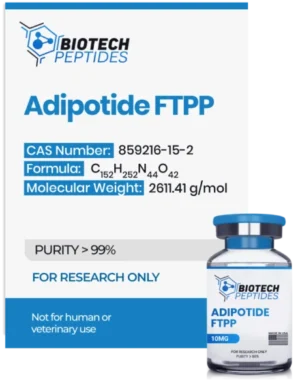
Adipotide FTPP (10mg)
Specifications
Other Known Titles: Adipotide
Molecular Formula: C152H252N44O42
Molecular Weight: 2611.41 g/mol
Sequence: Cys-Lys-Gly-Gly-Arg-Ala-Lys-Asp-Cys—Gly-Gly–(Lys-Leu-Ala-Lys-Leu-Ala-Lys)2
$77.00 -
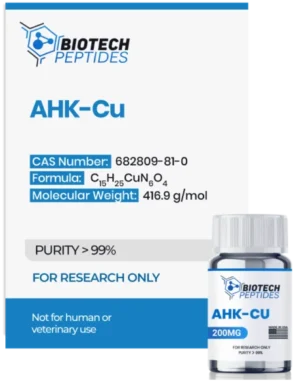
AHK-Cu (200mg)
AHK-Cu is a tripeptide containing a copper atom. It is a short peptide in which the copper atom is attached between the histidine and alanine residues of the alanine-histidine-lysine tripeptide. The copper atom is linked to three nitrogen atoms in this molecule. It is a naturally occurring compound that has been suggested to add support in cell growth and regulation, and cell death, particularly in the case of vascular endothelial cells (the innermost layer of blood vessels). AHK-Cu has also been studied extensively in animal models under laboratory conditions for its suggested impact on collagen synthesis. Researchers posit that the peptide appears to regulate various cellular processes primarily by controlling the production of two compounds: Vascular Endothelial Growth Factor (VEGF) and Transforming Growth Factor beta (TGF-B).[1] According to the researchers “TGF-beta1 induction of angiogenesis requires a rapid and transient apoptotic effect mediated by VEGF/VEGFR2.” AHK-Cu, by enhancing levels of the Vascular Endothelial Growth Factor, may possibly activate fibroblasts and endothelial cells. Fibroblasts are considered to lead to the production of two complex compounds; elastin and collagen. Endothelial cells are considered responsible for the growth and function of blood vessels that supply nutrition to hair follicles and skin cells. The activation of endothelial cells in association with the fibroblasts may lead to a strengthened skin barrier and increased skin elasticity, as well as potential acceleration in tissue repair. Some laboratory studies done on dermal cells indicate an increase in collagen type 1 production to the extent of as much as 300%.
$192.00 -
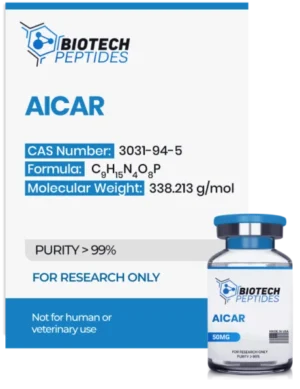
AICAR (50mg)
AICAR or 5-Aminoimidazole-4-carboxamide ribonucleotide, is a synthetic adenosine monophosphate analog. It was developed to stimulate the AMP-dependent protein kinase (AMPK) activity.[1][2] It is currently being investigated as a protective agent against ischemic damage in the cardiac myocytes during cardiac injury. The AMP-activated protein kinase is an enzyme and a protein that may play a regulatory role in several metabolic pathways. Its expression has been observed in several tissues, including the skeletal muscles, liver, and brain. In all these tissues, it is considered to exert a potential net effect on lipogenesis and may inhibit cholesterol synthesis and ketogenesis. It may also modulate insulin secretion and skeletal muscle fatty acid oxidation with glucose uptake. Several energy deficit states may trigger the release of AMPK, like hypoxia or hypoglycemia.
$56.00 -
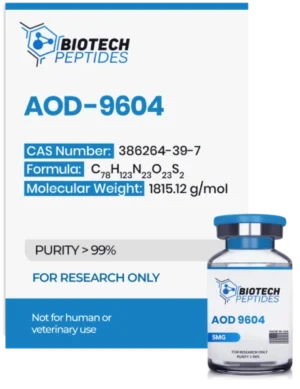
AOD 9604 (5mg)
Specifications
Other Known Titles: AOD-9604
Molecular Formula: C78H123N23O23S2
Molecular Weight: 1815.1 g/mol
Sequence: Tyr-Leu-Arg-Ile-Val-Gln-Cys-Arg-Ser-Val-Glu-Gly-Ser-Cys-Gly-Phe
$44.00 -
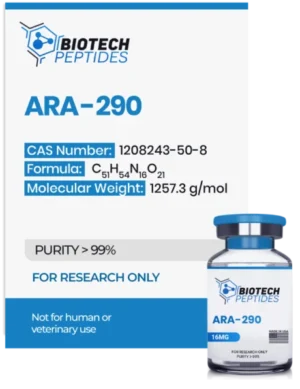
ARA-290 (16mg)
Erythropoietin (EPO) is a kidney-derived glycoprotein made of 11 amino acids that has been studied for its potential to promote blood vessel growth and repair, and possible neuroprotection in the case of diabetic neuropathy. ARA-290 is a peptide derived from the beta-helix domain of EPO.[1] ARA-290 was developed with the intention of stimulating pain-mitigating and neuroprotective activity of EPO, though without promoting blood cell formation. ARA-290 has been proposed by researchers to exhibit anti-apoptotic, anti-inflammatory, and anti-permeability characteristics, akin to the endogenous glycoprotein, EPO. The peptide is being evaluated for its potential in neuropathic wound healing, immunomodulation, and within the context of Systemic Lupus Erythematosus (SLE) research.
$88.00 -
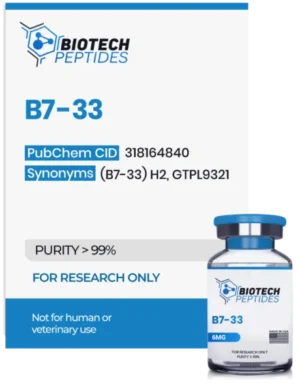
B7-33 (6mg)
B7-33 is a soluble synthetic single-chain peptide obtained from the larger, naturally occurring protein H2-relaxin (Relaxin), which is considered to induce pleiotropic actions impacting the musculoskeletal system, cardiovascular system, and reproduction.[1] B7-33 appears to retain the anti-fibrotic properties of Relaxin without enhancing cAMP production, it may also stimulate ERK1/2 phosphorylation and promote matrix metalloproteinase 2 (MMP2) expression and the degradation of extracellular collagen. The Relaxin family of peptides has four endogenous receptors divided into two pairs (RXFP1/2 and RXFP3/4).[2] The Relaxin receptors appear to be stimulated by cAMP, orexin, corticotropin-releasing factor (CRF), several insulin-like peptides, and GLP-1. The agonists have been observed to exhibit anti-inflammatory, antioxidant, and tissue-repairing characteristics.
$62.00 -
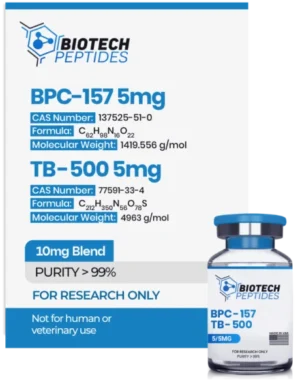
BPC-157 & TB-500 Blend (10mg)
BPC-157 and TB-500 peptides have both been examined in research on tissue repair processes, although study findings indicate that the compounds may use different biochemical pathways to achieve this potential. Researchers also hypothesize that the two molecules may exhibit synergistic effects in the healing process when exposed in combination.[1] The synergistic effect of the blend may improve the overall flexibility and adjustability of the tissues following damage.
$115.00 -
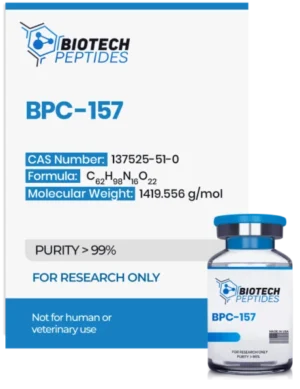
BPC-157 (5mg & 10mg)
Specifications
Molecular Formula: C62H98N16O22
Molecular Weight: 1419.556 g/mol
Sequence: L-Valine,glycyl-L-alpha-glutamyl-L-prolyl-L-prolyl-Lprolylglycyl-L-lysyl-L-prolyl-L-alanyl-L-alpha-aspartyl-L-alpha-aspartyl-L-alanylglycyl-L-leucyl-;glycyl-L-alpha-glutamyl-L-prolyl-L-prolyl-L-prolylglycyllysyl-L-prolyl-L-alanyl-L- alpha-aspartylL-alpha-aspartyl-L-alanylglycyl-L-leucyl-L-valine
Price range: $52.00 through $92.00BPC-157 (5mg & 10mg)
Price range: $52.00 through $92.00 Select options This product has multiple variants. The options may be chosen on the product page -
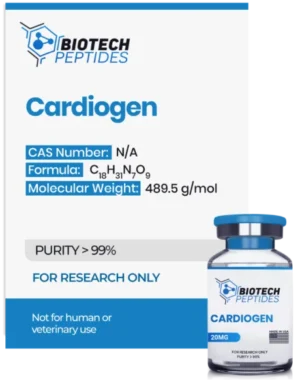
Cardiogen (20mg)
Cardiogen is a cardiovascular bioregulator peptide complex. Results obtained from research studies suggest that Cardiogen’s primary functions may be correlated to fibroblast action, cells considered responsible for scar formation and tissue repair. The peptide has a sequence of H-Ala-Glu-Asp-Arg-OH (AEDR).[1] Research posits that the synthetic tetrapeptide Cardiogen may potentially stimulate cell proliferation in myocardial tissue. Additionally, it appears that Cardiogen may possibly inhibit myocardial cell apoptosis (cell death), hypothetically through the reduction of p53 protein expression.
$62.00 -
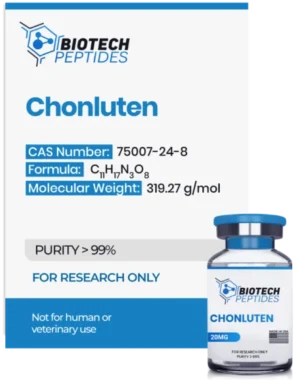
Chonluten (T-34) (20mg)
Chonluten is also known as Tripeptide T-34 or EDG, due to its sequence (Glu-Asp-Gly). It is a cytogenetic complex consisting of short peptides that are suggested to normalize the mucous membrane cells of the lungs and the bronchial tube. It is a gene regulator associated with inflammation and antioxidant activity, and is considered to be involved in proliferation responses.[1] It appears to function in animal test models as an anti-inflammatory in the lungs, normalizing the mucosal functions of the lungs in conditions like asthma and chronic obstructive pulmonary disease (COPD).
$62.00 -
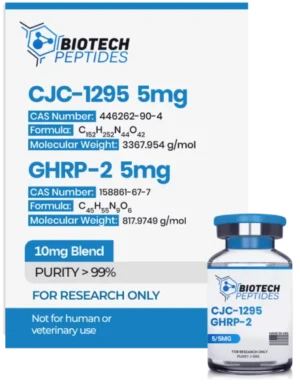
CJC-1295 & GHRP-2 Blend (10mg)
CJC-1295 & GHRP-2 blend combines two peptides with different structures; both have been researched for their proposed affinity for receptors in the pituitary gland and other parts of the central nervous system. Despite activating different receptors, CJC-1295 & GHRP-2 may exhibit similar action.
CJC-1295 is a molecule that appears to bind to the growth hormone-releasing hormone (GHRH) receptors, which may cause the release of growth hormone by pituitary cells. CJC-1295 is derived from GHRH 1-29, the shortest functional sequence of GHRH consisting of the first 29 amino acids. CJC-1295 is a tetrasubstituted version of the peptide that is also modified by adding a drug affinity complex (DAC) component called N-epsilon-3-maleimidopropionamide, which appears to bind to plasma proteins and may improve CJC-1295 pharmacokinetics.
GHRP-2, or Growth Hormone Releasing Peptide 2, is a synthetic hexapeptide composed of six amino acids. This peptide appears to bind to ghrelin or growth hormone secretagogue 1a receptors (GHS-R1a) found in the hypothalamus and the pituitary gland. As a result, GHRP-2 also appears to stimulate the production of growth hormone (GH) in pituitary cells that express this receptor.
$84.00 -
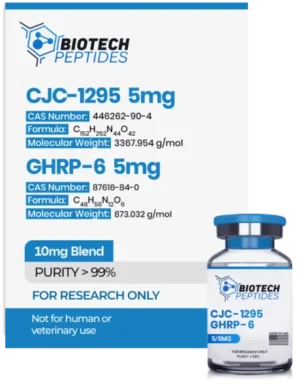
CJC-1295 & GHRP-6 Blend (10mg)
The CJC-1295 & GHRP-6 blend have been posited by researchers to display a synergistic action on cells that participate in the release of growth hormone. More specifically, the mix includes CJC-1295, which appears to be similar in action to growth hormone-releasing hormone (GHRH), and GHRP-6 (Growth Hormone Releasing Peptide 6), which appears to bind to the receptors of the hunger hormone ghrelin.This combination of peptides may possibly increase both the strength and the number of growth hormone signals from somatotroph cells. CJC-1295 appears to target the GHRH receptor pathway, while GHRP-6, is considered by researchers to act on the ghrelin receptor pathway. This may explain why the combination of CJC-1295 and GHRP-6 exhibits potential to interact with somatotroph cells in the pituitary gland and the hypothalamus. Both of these regions in the central nervous system are considered to be comprised of cells that are believed to be important in making and controlling growth hormone synthesis.
$86.00 -
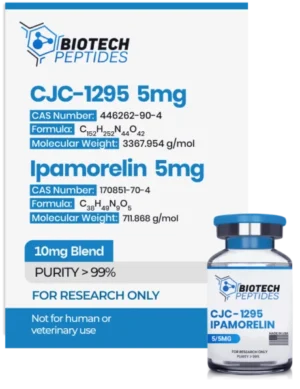
CJC-1295 & Ipamorelin Blend (10mg)
Ipamorelin is a growth hormone (GH) secretagogue that has been extensively studied in the diverse biological milieu. It is considered by researchers to be one of the most selective secretagogues and is an apparent agonist of the growth hormone/ghrelin secretagogue receptor.[1] This potential selectivity is attributed to the fact that Ipamorelin does not appear, in any way, to affect the secretion of other pituitary hormones. These include prolactin, follicle-stimulating hormone (FSH), luteinizing hormone (LH), thyroid-stimulating hormone (TSH), or Adrenocorticotropic hormone (ACTH). Ipamorelin appears to act via the molecular mimicry of the natural hormone ghrelin, which triggers and stimulates the release of the growth hormone.[2] This whole process may be regulated by a negative feedback mechanism, which may nullify any ancillary impacts of excess GH production. Researchers suggest that Ipamorelin may impact all physiological processes in which ghrelin is active. Based on their observations, researchers have suggested that Ipamorelin may improve bowel movement and gastric function, enhancing the development and repair of muscles, facilitating the release of insulin hormone from the pancreas, and stimulating the growth of bones. In addition to these potentials, Ipamorelin may also be involved in cellular repair and increased collagen production.[3] It has also been hypothesized that the peptide may act to improve cognitive function and sleep cycle regulation.
$81.00