support@biotechpeptides.ca
-
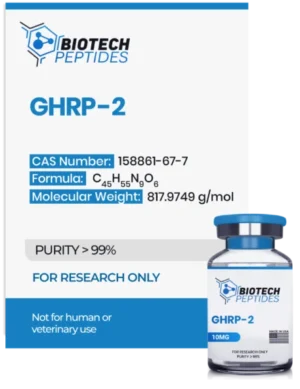
GHRP-2 (10mg)
Specifications
Other Known Titles: Thymosin Beta 4
Molecular Formula: C45H55N9O6
Molecular Weight: 817.9 g/mol
Sequence: H-D-Ala-D-2-Nal-Ala-Trp-D-Phe-Lys-NH2
$39.00 -
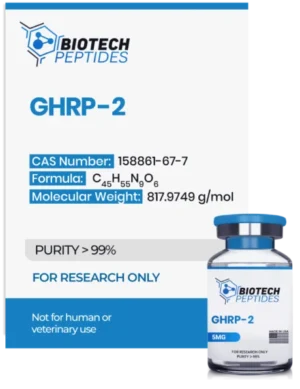
GHRP-2 (5mg)
Specifications
Other Known Titles: Pralmorelin
Molecular Formula: C45H55N9O6
Molecular Weight: 817.9 g/mol
Sequence: H-D-Ala-D-2-Nal-Ala-Trp-D-Phe-Lys-NH2
$20.00 -
-
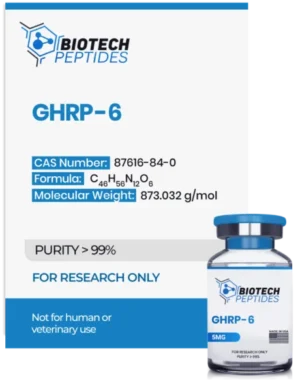
GHRP-6 (5mg)
Specifications
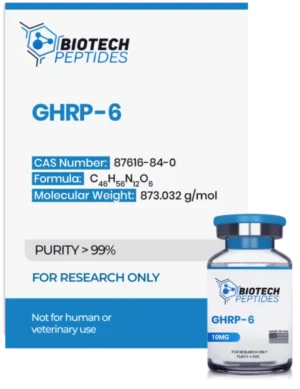
Molecular Formula: C46H56N12O6
Molecular Weight: 873.032 g/mol
Sequence: His-D-Trp-Ala-Trp-D-Phe-Lys
$21.00 -
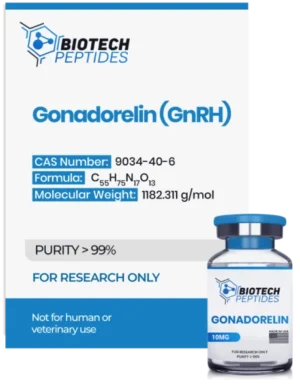
Gonadorelin (GnRH) (10mg)
Gonadorelin (GnRH) is a decapeptide gonadotropin-releasing hormone agonist.[1] It appears to work by stimulating the synthesis and release of luteinizing hormone and follicle-stimulating hormone. It is being researched within the context of infertility and reproductive systems, and hypogonadism. It is also studied for its potential as a diagnostic tool to assess pituitary function.
$79.00 -
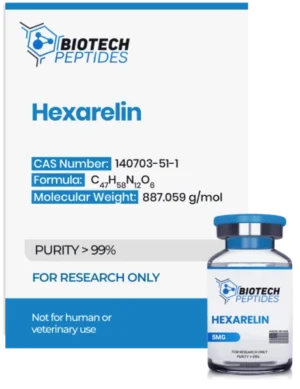
Hexarelin (5mg)
Specifications
Molecular Formula: C47H58N12O6
Molecular Weight: 887.05 g/mol
Sequence: His-2-Me-D-Trp-Ala-Trp-D-Phe-Lys-NH2
$49.00 -
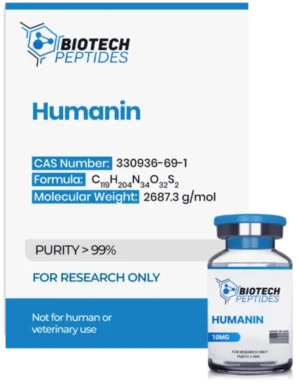
Humanin (10mg)
Humanin is an endogenously occurring unique peptide encoded by mitochondrial DNA. The peptide may exist in two different forms found in the cell: a 21 amino acid sequence found inside the cell’s mitochondria, and a 24 amino acid sequence found outside the cell’s cytosol. Both forms appear to act as cytoprotective proteins and may protect cells from the process of apoptosis (programmed cell death) by interfering with the operation of the Bcl2-related X protein (Bax).[1]
Bax is considered a pro-apoptotic protein that promotes apoptosis by disrupting the mitochondrial outer membrane. It is believed to facilitate the release of cytochrome c from mitochondria into the cytosol, which then triggers a cascade of events leading to cell death. By interfering with Bax’s function, Humanin may help support the initiation of this apoptotic pathway. Researchers posit that Humanin may “[support] the translocation of Bax from the cytosol to mitochondria. Conversely, reducing Humanin expression by small interfering RNAs sensitizes cells to Bax and increases Bax translocation to membranes.”
Apart from research into its possible interaction with Bax, Humanin studies suggest the peptide may also bind with other intracellular molecules, such as actinin-4 and phosphoprotein 8, which are both involved in cellular apoptosis. Binding with these proteins is also thought to contribute to Humanin’s cytoprotective potential.[2] Thus, studies suggest that Humanin may be important for protecting a variety of cells, most notably neurons. In addition, studies also suggest it may have a protective potential for cells in heart tissue, muscle cells, the retina of the eye, and the lining of blood vessels.
$140.00 -
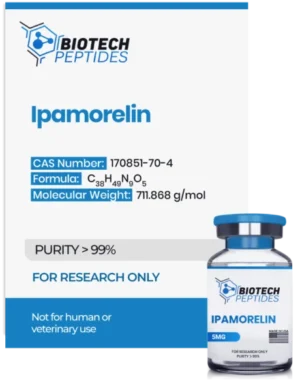
Ipamorelin (5mg)
Ipamorelin is a small pentapeptide that binds to the receptor of ghrelin/growth hormone secretagogue (GHS), and is speculated to trigger the release of growth hormone via pituitary cells. Research has suggested the peptide to be selective in its mode of action.[1] Ipamorelin, researchers report, does not appear to induce non-specific release of hormones like prolactin, thyroid-stimulating hormone, ACTH, luteinizing hormone, follicle-stimulating hormone, or cortisol. The high specificity of the peptide makes it an ideal model for the study of selectivity in receptor binding. It appears to function through interaction with cognate receptors on the target cell surface and mediates a cellular response. Ipamorelin may induce secretions from the pituitary gland, promoting growth in animal study models.[2] In addition, it may not only trigger the expression of insulin-like growth factor-1(IGF-1) but may also inhibit the secretion of somatostatin. IGF-1 is considered to be the main anabolic mediator of growth hormone.
$46.00 -
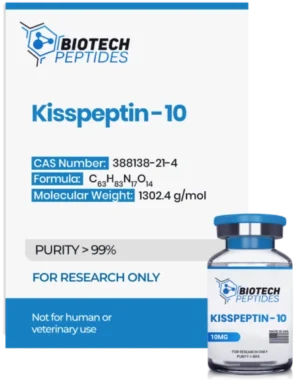
Kisspeptin-10 (10mg)
Kisspeptin-10 is a peptide fragment derived from the full-length Kisspeptin (also referred to as Kisspeptin-54 or Metastin). Specifically, Kisspeptin-10 is a fragment containing the 45-54 sequence from the larger parent molecule. Research into this peptide has suggested that the compound may act as a mediator of endocrine signaling between various endocrine cells.
Originating from the KISS1 gene, which is thought to play a critical role in reproductive cell signaling and physiology, Kisspeptin-10 is particularly interesting to researchers for its potential to influence the secretion of gonadotropin-releasing hormone (GnRH). This, in turn, may affect the release of other reproductive hormones from cells with receptors for GnRH. In addition, researchers posit that the compound may potentially impact the development and regulation of blood vessels and renal function, and some studies have suggested it may mitigate cancer cell proliferation and metastasis.
$52.00 -
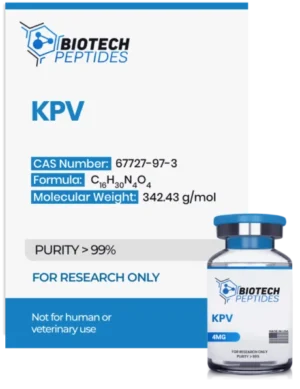
KPV (4mg)
KPV is the C-terminal peptide stretch of alpha-melanocyte-stimulating hormone (alpha-MSH). The peptide consists of the last three amino acids of the alpha-MSH hormone. It has been explored for its potential anti-inflammatory properties at the cellular level. Comprising the amino acids L-Lys-L-Pro-L-Val, KPV represents the minimal sequence that may mitigate inflammation in experimental models. However, the precise mechanisms of its action still need to be further studied in order to be more fully understood.
This peptide’s various mechanisms may potentially differentiate from that of alpha-MSH, which researchers believe interacts with the melanocortin-1 receptors by theoretically activating the cAMP pathway. Instead, studies suggest a rapid and acute increase in intracellular calcium when KPV is introduced alongside N6-(L-2-phenyl isopropyl) adenosine (PIA), an adenosine agonist that inhibits the cAMP pathway.
Further data-gathering investigations using cells transfected with melanocortin-1 receptors have indicated that KPV may, in theory, elevate intracellular calcium levels. This may imply an additional type of interaction with this receptor. This calcium signaling is thought to contribute to the inhibition of the activation of nuclear factor kappa-light-chain-enhancer of activated B cells (NF-κB), a transcription factor involved in inflammatory responses. By potentially inhibiting NF-κB activation, KPV might modulate inflammatory processes within cells.
$39.00 -
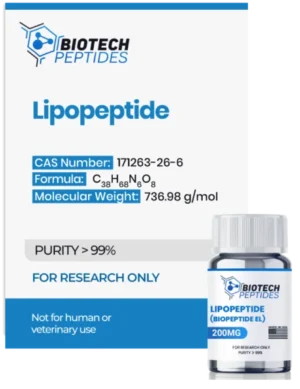
Lipopeptide (Biopeptide EL) (200mg)
Lipopeptide is a common name for Biopeptide EL, also known as palmitoyl hexapeptide-12. As the name suggests, this peptide is made of six amino acids and has a palmitic fatty acid addition. The inclusion of palmitic acid within the Lipopeptide structure is thought to enhance penetration to the deeper layers of various structures made of skin cells. The amino acids in the peptide are valine-glycine-valine-alanine-proline-glycine (VGVAPG), and the sequence is one of the most common found in naturally occurring proteins like elastin and its precursor, tropoelastin.
By mimicking fragments of elastin, the peptide is thought to interact with fibroblast cells and exert a potential impact on the production of vital proteins to the skin’s extracellular matrix (ECM). Fibroblasts are a subset of cells found in connective tissue, such as the one that provides support for skin cells. Fibroblasts can actively produce ECM proteins, and some of the most important proteins are considered to be collagen, elastin, and hyaluronic acid. According to scientific research, Lipopeptide may potentially enhance the creation and growth of collagen and hyaluronic acid within the ECM.
$220.00 -
-
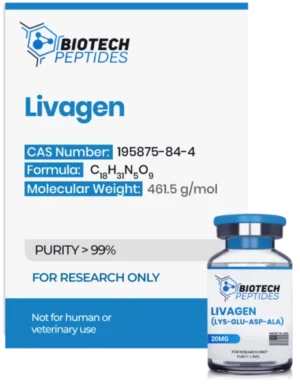
Livagen (20mg)
Livagen is a short peptide bioregulator, similar in structure to Epitalon. It is a tetrapeptide made of the amino acids Lys-Glu-Asp-Ala (KEDA) and is classified amongst Khavinson’s peptides. As a bioregulator, the peptide may interact with genetic material in different cells and consequently unpack and “unlock” various cellular genes. Livagen’s impacts appear to be exhibited directly on the lymphocytes (cells of the immune system), liver, and gastrointestinal tract (GIT). Its direct functions may be widespread, as suggested through research studies on DNA and gene expression patterns. The potential of the Livagen peptide to activate genes enclosed in the GIT and immune system may reflect possible age-mitigating characteristics exerted on cells.
$62.00 -
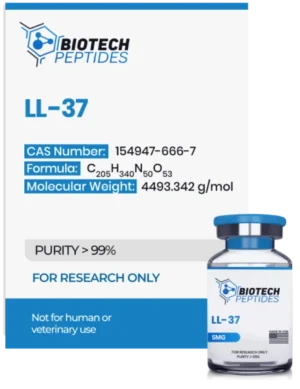
LL-37 (5mg)
LL-37 is a Cathelicidin, a protein family of unique and diverse functions. These peptides, produced by macrophages and polymorphonuclear leukocytes (both types of white blood cells), have been suggested to exhibit bactericidal action. The entire group is classified as antimicrobial peptides (AMPs). The peptide, in particular, has been researched in relation to autoimmune disease, cancer, and wound recovery.[1] For example, researchers note that “Corneal and conjunctival epithelia express LL-37 as part of mucosal innate immunity to protect against bacterial and viral ocular infections.”
$86.00 -
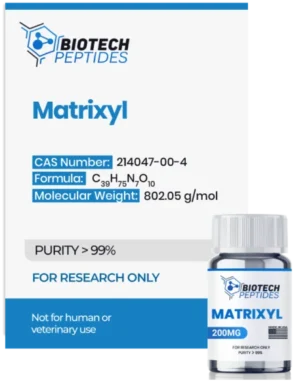
Matrixyl (200mg)
Matrixyl is a lipopeptide that combines fatty acids with amino acids. The peptide is also sometimes referred to as palmitoyl pentapeptide-4 or palmitoyl pentapeptide-3. The palmitoylated sequence of Lys-Thr-Thr-Lys-Ser-OH, which makes up the peptide, is posited to be a signal peptide fragment of the C-terminal propeptide of type I collagen.[1] Researchers report that “The conjugation with the palmitoyl moiety [may] result in more [impactful] delivery across the skin and better stability to skin proteases.” Overall, this signal peptide is posited to act as a stimulus to fibroblasts and stimulate them into producing extracellular matrix (ECM) proteins such as collagen. Therefore, Matrixyl is considered by researchers to be a matrikine – a messenger peptide capable of regulating cell activities by interacting with their specific receptors.
$190.00