support@biotechpeptides.ca
-
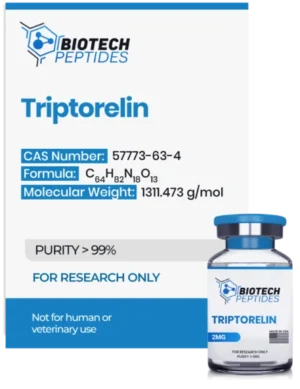
Triptorelin (GnRH) (2mg)
Triptorelin is a synthetic analog of gonadotropin-releasing hormone (GnRH), potentially mimicking the structure and function of the natural hormone. It may bind to GnRH receptors, initially stimulating the hypothalamic-pituitary-gonadal (HPG) axis, leading to a temporary surge in luteinizing hormone (LH) and follicle-stimulating hormone (FSH) levels. In turn, LH and FSH are thought to stimulate endocrine cells, like testicular cells that produce testosterone (T). However, with prolonged exposure, Triptorelin appears to desensitize the GnRH receptors, resulting in suppressed production of LH and FSH, thereby apparently reducing testosterone and estrogen levels. This potential mechanism has been extensively researched in models of androgen deprivation, exploring its potential in various contexts such as prostate cancer cells and receptor-positive breast cancer cells.
$36.00 -
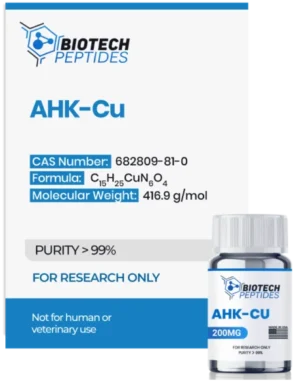
AHK-Cu (200mg)
AHK-Cu is a tripeptide containing a copper atom. It is a short peptide in which the copper atom is attached between the histidine and alanine residues of the alanine-histidine-lysine tripeptide. The copper atom is linked to three nitrogen atoms in this molecule. It is a naturally occurring compound that has been suggested to add support in cell growth and regulation, and cell death, particularly in the case of vascular endothelial cells (the innermost layer of blood vessels). AHK-Cu has also been studied extensively in animal models under laboratory conditions for its suggested impact on collagen synthesis. Researchers posit that the peptide appears to regulate various cellular processes primarily by controlling the production of two compounds: Vascular Endothelial Growth Factor (VEGF) and Transforming Growth Factor beta (TGF-B).[1] According to the researchers “TGF-beta1 induction of angiogenesis requires a rapid and transient apoptotic effect mediated by VEGF/VEGFR2.” AHK-Cu, by enhancing levels of the Vascular Endothelial Growth Factor, may possibly activate fibroblasts and endothelial cells. Fibroblasts are considered to lead to the production of two complex compounds; elastin and collagen. Endothelial cells are considered responsible for the growth and function of blood vessels that supply nutrition to hair follicles and skin cells. The activation of endothelial cells in association with the fibroblasts may lead to a strengthened skin barrier and increased skin elasticity, as well as potential acceleration in tissue repair. Some laboratory studies done on dermal cells indicate an increase in collagen type 1 production to the extent of as much as 300%.
$192.00 -
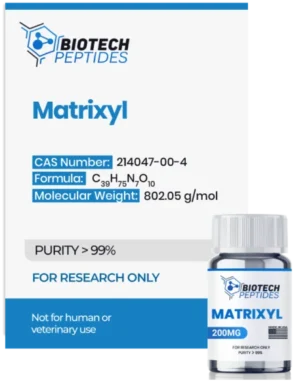
Matrixyl (200mg)
Matrixyl is a lipopeptide that combines fatty acids with amino acids. The peptide is also sometimes referred to as palmitoyl pentapeptide-4 or palmitoyl pentapeptide-3. The palmitoylated sequence of Lys-Thr-Thr-Lys-Ser-OH, which makes up the peptide, is posited to be a signal peptide fragment of the C-terminal propeptide of type I collagen.[1] Researchers report that “The conjugation with the palmitoyl moiety [may] result in more [impactful] delivery across the skin and better stability to skin proteases.” Overall, this signal peptide is posited to act as a stimulus to fibroblasts and stimulate them into producing extracellular matrix (ECM) proteins such as collagen. Therefore, Matrixyl is considered by researchers to be a matrikine – a messenger peptide capable of regulating cell activities by interacting with their specific receptors.
$190.00 -
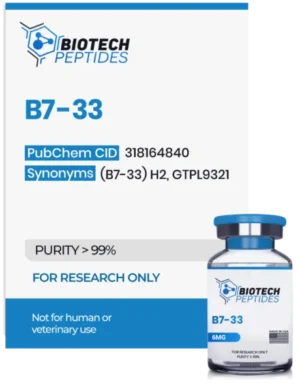
B7-33 (6mg)
B7-33 is a soluble synthetic single-chain peptide obtained from the larger, naturally occurring protein H2-relaxin (Relaxin), which is considered to induce pleiotropic actions impacting the musculoskeletal system, cardiovascular system, and reproduction.[1] B7-33 appears to retain the anti-fibrotic properties of Relaxin without enhancing cAMP production, it may also stimulate ERK1/2 phosphorylation and promote matrix metalloproteinase 2 (MMP2) expression and the degradation of extracellular collagen. The Relaxin family of peptides has four endogenous receptors divided into two pairs (RXFP1/2 and RXFP3/4).[2] The Relaxin receptors appear to be stimulated by cAMP, orexin, corticotropin-releasing factor (CRF), several insulin-like peptides, and GLP-1. The agonists have been observed to exhibit anti-inflammatory, antioxidant, and tissue-repairing characteristics.
$62.00 -
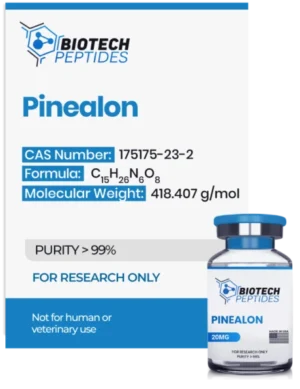
Pinealon (20mg)
Pinealon (also referred to as EDR) is a short peptide comprising only three amino acids (Glu-Asp-Arg). Additionally, it is classified as one of Khavinson’s peptides. EDR is generally extracted from a crude polypeptide extract called Cortexin. Pinealon is considered to be a peptide bioregulator, and it appears to interact directly with DNA. It may contribute to the alteration of gene expression levels. It may potentially exhibit behavior modification and may protect various cell types, including neurons, against hypoxia. Pinealon has been studied for its potential to impact the pineal gland to address issues with metabolism, circadian rhythm disorders, and certain cognitive functions.
$68.00 -
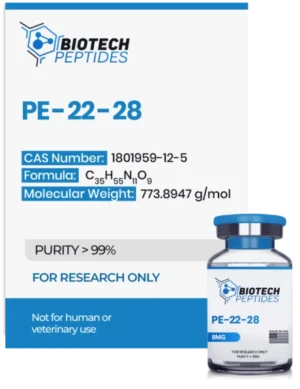
PE-22-28 (8mg)
PE-22-28 is a synthetic variant of the naturally occurring peptide Spadin. Spadin is a secreted peptide obtained from Sortilin. It appears to act as an antagonist of the TREK-1 (TWIK-related-potassium channel) receptor, a two-pore potassium channel identified as a potential target in the context of depression research and as a possible neurogenic regulator. Studies in mice have suggested that TREK-1 receptor deletion may make them resistant to depressive behavior and corresponding chemical imbalances in the brain.[1] PE-22-28 represents a shorter seven amino acid synthetic Spadin analog with potentially higher efficacy and stability. Research in animal models is ongoing.
$55.00 -
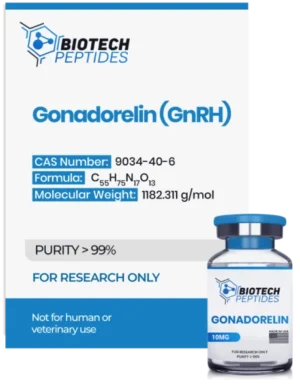
Gonadorelin (GnRH) (10mg)
Gonadorelin (GnRH) is a decapeptide gonadotropin-releasing hormone agonist.[1] It appears to work by stimulating the synthesis and release of luteinizing hormone and follicle-stimulating hormone. It is being researched within the context of infertility and reproductive systems, and hypogonadism. It is also studied for its potential as a diagnostic tool to assess pituitary function.
$79.00 -
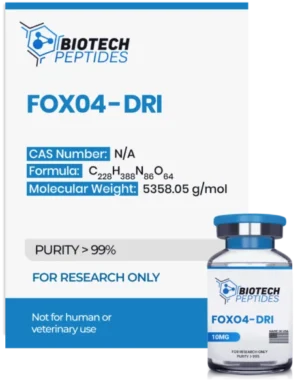
FOXO4-DRI (Proxofim) (10mg)
FOXO4-DRI is a synthetic version of FOXO4, containing D amino acids instead of L amino acids. This modification is intended to allow the peptide to retain the functionality of the original protein but with a longer shelf life and lower clearance. Its most prominent function has been suggested to regulate apoptosis in senescent cells.[1] It has been suggested in scientific studies that senescent cells might exhibit resistance to apoptosis, aka programmed cell death. This resistance has been associated with increased binding of FOXO4 with another protein, p53, which should trigger apoptosis but become inactivated.
$270.00 -
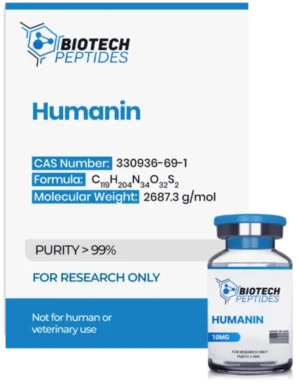
Humanin (10mg)
Humanin is an endogenously occurring unique peptide encoded by mitochondrial DNA. The peptide may exist in two different forms found in the cell: a 21 amino acid sequence found inside the cell’s mitochondria, and a 24 amino acid sequence found outside the cell’s cytosol. Both forms appear to act as cytoprotective proteins and may protect cells from the process of apoptosis (programmed cell death) by interfering with the operation of the Bcl2-related X protein (Bax).[1]
Bax is considered a pro-apoptotic protein that promotes apoptosis by disrupting the mitochondrial outer membrane. It is believed to facilitate the release of cytochrome c from mitochondria into the cytosol, which then triggers a cascade of events leading to cell death. By interfering with Bax’s function, Humanin may help support the initiation of this apoptotic pathway. Researchers posit that Humanin may “[support] the translocation of Bax from the cytosol to mitochondria. Conversely, reducing Humanin expression by small interfering RNAs sensitizes cells to Bax and increases Bax translocation to membranes.”
Apart from research into its possible interaction with Bax, Humanin studies suggest the peptide may also bind with other intracellular molecules, such as actinin-4 and phosphoprotein 8, which are both involved in cellular apoptosis. Binding with these proteins is also thought to contribute to Humanin’s cytoprotective potential.[2] Thus, studies suggest that Humanin may be important for protecting a variety of cells, most notably neurons. In addition, studies also suggest it may have a protective potential for cells in heart tissue, muscle cells, the retina of the eye, and the lining of blood vessels.
$140.00 -
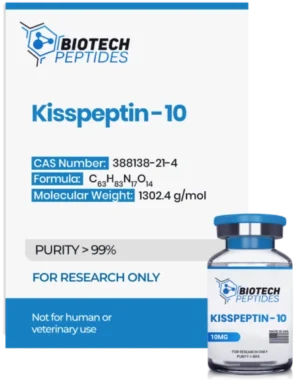
Kisspeptin-10 (10mg)
Kisspeptin-10 is a peptide fragment derived from the full-length Kisspeptin (also referred to as Kisspeptin-54 or Metastin). Specifically, Kisspeptin-10 is a fragment containing the 45-54 sequence from the larger parent molecule. Research into this peptide has suggested that the compound may act as a mediator of endocrine signaling between various endocrine cells.
Originating from the KISS1 gene, which is thought to play a critical role in reproductive cell signaling and physiology, Kisspeptin-10 is particularly interesting to researchers for its potential to influence the secretion of gonadotropin-releasing hormone (GnRH). This, in turn, may affect the release of other reproductive hormones from cells with receptors for GnRH. In addition, researchers posit that the compound may potentially impact the development and regulation of blood vessels and renal function, and some studies have suggested it may mitigate cancer cell proliferation and metastasis.
$52.00 -
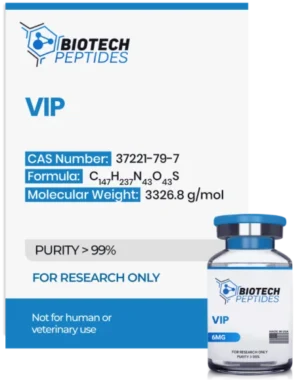
VIP (6mg)
Vasoactive intestinal peptide (VIP, vasoactive intestinal polypeptide, PHM27) is a short peptide hormone endogenously produced in the gastrointestinal tract, pancreas, and brain of most vertebrate animals. Researchers have suggested that the peptide may exhibit potential to influence inflammation, particularly in the cases of neurodegenerative disease, pulmonary fibrosis, inflammatory bowel disease, and cardiac fibrosis. VIP has been suggested to act as an immune system regulator and has been classified by scientists as an anti-inflammatory peptide. It is of active scientific interest for its proposed ability to support cognitive function in the setting of neurodegenerative disease. VIP has been hypothesized to bind to class II G protein-coupled receptors.
$71.00 -
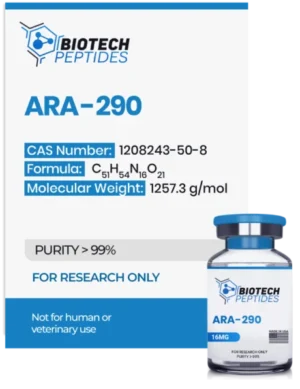
ARA-290 (16mg)
Erythropoietin (EPO) is a kidney-derived glycoprotein made of 11 amino acids that has been studied for its potential to promote blood vessel growth and repair, and possible neuroprotection in the case of diabetic neuropathy. ARA-290 is a peptide derived from the beta-helix domain of EPO.[1] ARA-290 was developed with the intention of stimulating pain-mitigating and neuroprotective activity of EPO, though without promoting blood cell formation. ARA-290 has been proposed by researchers to exhibit anti-apoptotic, anti-inflammatory, and anti-permeability characteristics, akin to the endogenous glycoprotein, EPO. The peptide is being evaluated for its potential in neuropathic wound healing, immunomodulation, and within the context of Systemic Lupus Erythematosus (SLE) research.
$88.00 -
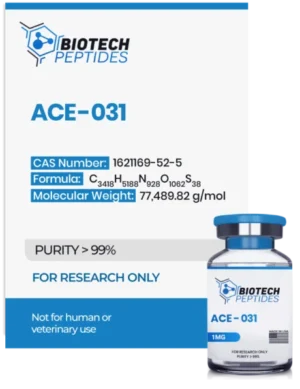
ACE-031 (1mg)
ACE-031 is a soluble protein comprising the type IIB activin receptor (ACVR2B) and the immunoglobulin G1-Fc (IgG1-Fc), and has been studied for its potential in binding and inactivating myostatin, a protein that hampers muscle cell growth. It has been examined during the course of various research studies involved in muscle-wasting disorders and neuromuscular conditions such as Duchenne Muscular Dystrophy (DMD), as well as certain cancers such as those of the prostate or colorectal regions and lipid storage and bone metabolism.
$161.00 -
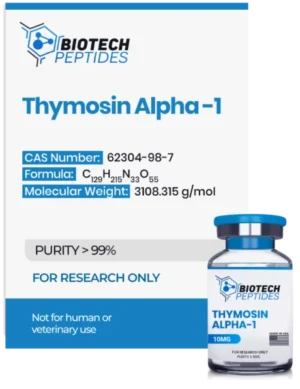
Thymosin Alpha-1 (10mg)
Thymosin Alpha-1, also known as TA1 or Tα1, is a naturally occurring peptide fragment that was discovered in 1972 and researched for its potential action within the context of studies relating to cystic fibrosis, infection (e.g., tuberculosis, cytomegalovirus), respiratory disorders, chronic hepatitis, and cancer. It is also referred to as Thymalfasin when synthetically developed. Originally, research on Thymosin Alpha-1 centered around its potential role in immune modulation. It is hypothesized that it might increase levels of Major Histocompatibility Complex (MHC) class I molecules and boost cytokine production, key components of the immune system that may enhance immune responses.[1][2] There is also a possibility that it might improve the activity of natural killer cells, which target virus-infected cells and tumors. Furthermore, it might enhance the expression of specific markers on T cells that are considered critical for their identification and function in the immune system, indicating a significant role in immune regulation. Thymosin Alpha-1 is also thought to possibly increase the presence of high-affinity interleukin-2 receptors on cell surfaces, potentially leading to the vigorous activation and proliferation of T lymphocytes, elements of immune response. There is speculation that it may affect both T-helper and cytotoxic T-cell populations, deemed essential for eliminating infected cells. Additionally, it might prompt the differentiation of thymocytes—precursor cells in the thymus—and peripheral blood lymphocytes into mature immune cells, increase natural killer cell numbers, and promote cytokine-driven inflammatory responses. Research also explores its potential role in enhancing macrophage efficiency—cells that engulf and digest pathogens—and in regulating the activity of alpha thrombin, a protein involved in blood clotting, highlighting its broad potential on immune function.
$130.00 -
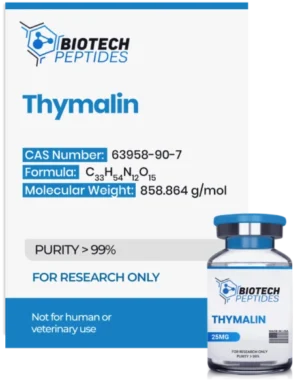
Thymalin (25mg)
Thymalin, sometimes referred to as Thymalin Alpha-1, is the synthetic variant of the endogenous Thymulin, which was first isolated from the thymus in 1977. The endogenously produced Thymalin has been researched for its potential in a wide landscape of research areas, with its influence speculated to extend to regulatory action on inflammation, mitigation of pain perception, neuroprotective action, and immune function support. Early studies have suggested that Thymalin and other thymus and pineal gland secretions may also support cell longevity.
$114.00